
Light
Bright Indirect Light
Bright indirect light or filtered sun; shield from harsh direct afternoon sun.
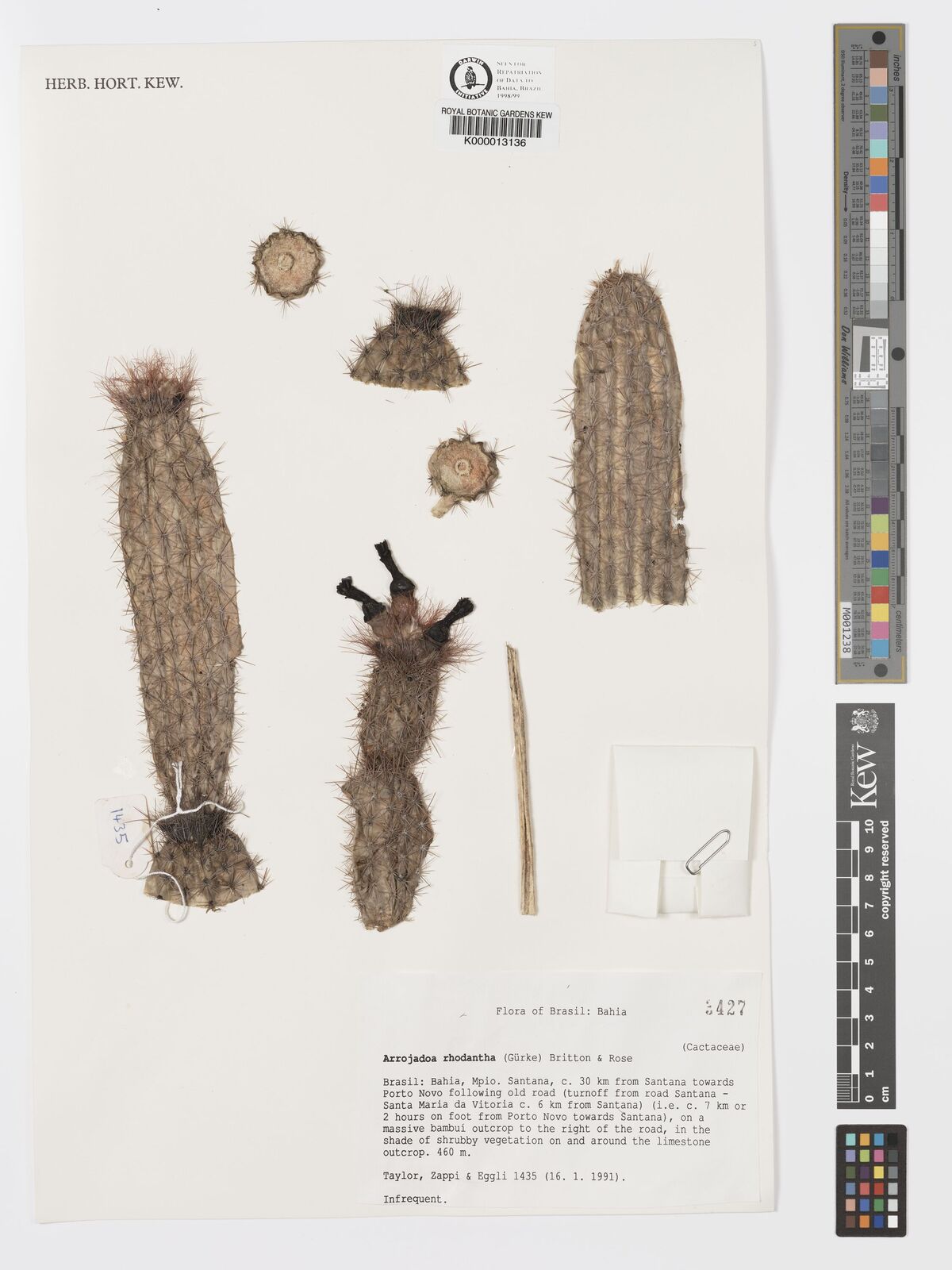 Reference image
Red-flowered Bush Cactus
Arrojadoa rhodantha is a unique, semi-scandent or shrubby cactus species belonging to the Cactaceae family, native to the seasonally dry regions of Brazil. Known for its slender, branching stems and characteristic woolly cephalium, it is a highly prized specimen among cactus enthusiasts and specialized collectors 1.
The genus Arrojadoa was named in honor of Miguel Arrojado Lisboa, a Brazilian railway engineer and plant collector. The specific epithet rhodantha derives from Greek, meaning "rose-colored flowers", directly referencing the vibrant pinkish-red tubular blossoms that emerge from its crown 2.
This species is native to eastern and central Brazil, particularly in the states of Bahia, Minas Gerais, and Piauí. It thrives within the Caatinga biome, characterized by seasonally dry tropical forests, where it grows on rocky outcrops or scrambled among deciduous shrubs in partial shade 1.
The stems are cylindrical, relatively thin, and can grow up to 1-2 meters long, often requiring support from surrounding vegetation. They feature 10 to 12 low ribs lined with densely spiny areoles. Its most outstanding feature is the apical cephalium—a ring of wool and bristles at the stem tips from which brilliant pink to magenta tubular flowers emerge 2.
Unlike desert cacti, Arrojadoa rhodantha prefers bright, filtered light rather than harsh, direct sun. It requires a highly porous potting medium with excellent drainage. Water thoroughly during the active growing season once the soil dries out, and keep nearly dry in winter. Minimum winter temperatures should be kept above 10°C.
Overwatering and poor drainage are the leading causes of root rot. Insufficient light leads to weak, etiolated stems and prevents the formation of the woolly cephalium and flowers.
Bright indirect light or filtered sun; shield from harsh direct afternoon sun.
Water thoroughly when soil is completely dry in summer; keep dry in winter.
Excellent drainage is essential; use mineral-rich cactus soil with plenty of pumice.
Features fine, sharp spines. Handle with gloves. Non-toxic to domestic pets.
Moderate difficulty due to specific moisture and temperature requirements in winter.
Native to the Caatinga vegetation zone of Brazil, growing under the shelter of shrubs or within rocky crevices in seasonally dry tropical environments.
