
Light
Full Sun
Requires full, unfiltered sun. The dense white hair protects it from sunburn, making it highly tolerant of intense light.
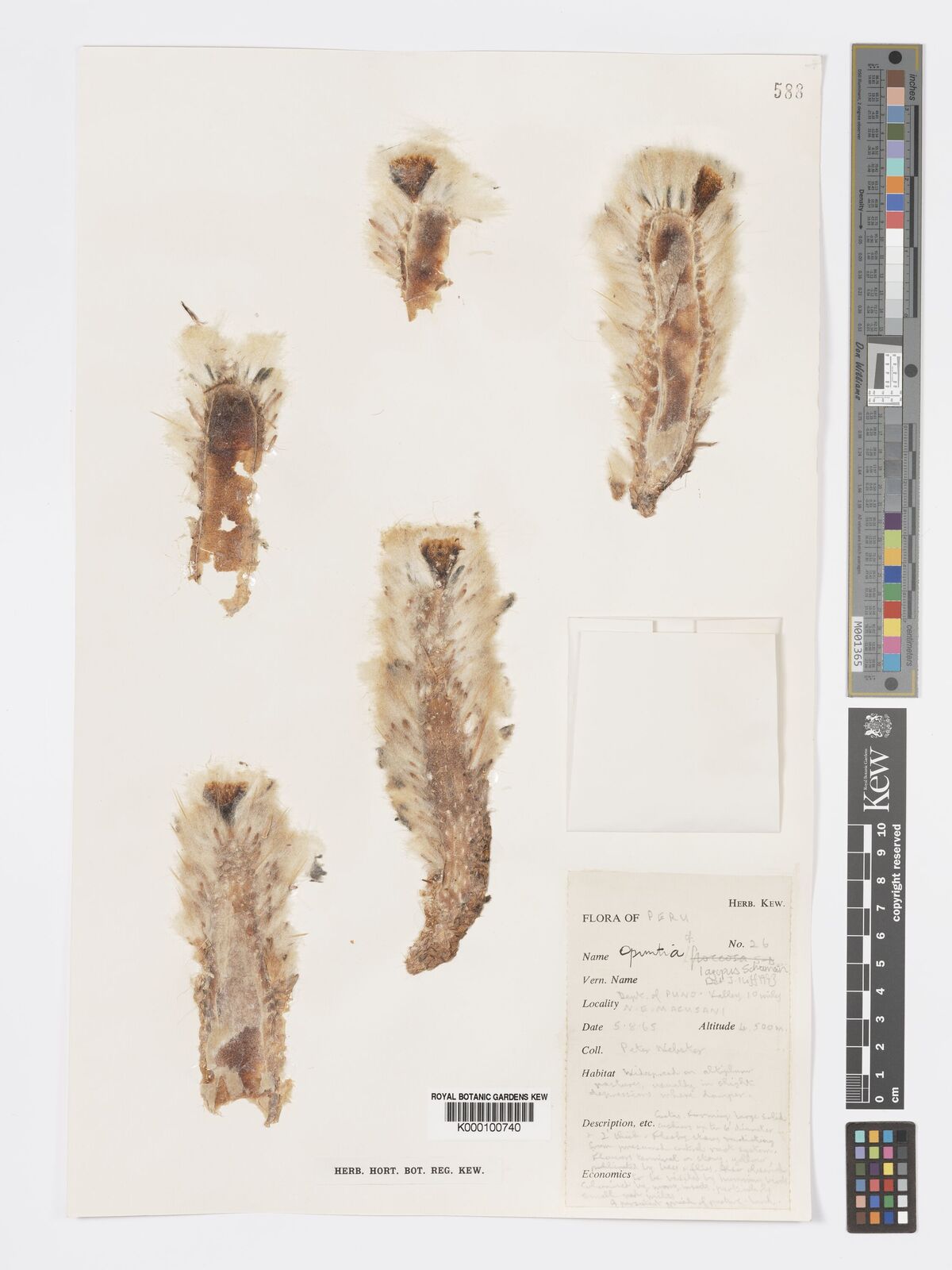 Reference image
Hare's Foot Cactus
Austrocylindropuntia lagopus is a fascinating high-altitude cactus species native to the Andean highlands. Characterized by its dense cushion-forming growth habit and a thick blanket of soft, white woolly hairs, this plant is evolutionary designed to withstand extreme cold and intense solar radiation 1. It is highly sought after by succulent collectors for its unique, cloud-like appearance.
Originally described by Alexandre Charles Meyen in 1834 as Opuntia lagopus, it was later transferred to the genus Austrocylindropuntia 2. The specific epithet 'lagopus' derives from ancient Greek, meaning 'hare's foot', referring to the incredibly soft, hairy stems that look like the paws of a rabbit.
This species is native to the high-elevation Altiplano grasslands of Peru and Bolivia, occurring at elevations between 3,600 and 4,700 meters above sea level 1. In this extreme alpine environment, it experiences severe diurnal temperature fluctuations and low atmospheric pressure.
The stems are short, cylindrical, and branch profusely from the base to form large, dense mounds that can measure over a meter across. The green body of the cactus is completely enveloped in long, silky white hairs. From this woolly mass, bright yellow to golden-orange flowers emerge during the peak of summer 2.
In cultivation, it requires conditions that mimic its high-altitude habitat: intense light, exceptional ventilation, and sharp soil drainage. It is surprisingly cold-hardy if kept bone dry during the winter months.
Overwatering is the primary cause of failure. Water should never be allowed to sit on the dense white hairs, as trapped moisture will quickly trigger fungal rot. Poor air circulation in warm indoor spaces is also highly detrimental.
Requires full, unfiltered sun. The dense white hair protects it from sunburn, making it highly tolerant of intense light.
Water sparingly in spring and summer. Keep completely dry in winter to prevent root and stem rot.
Use a mineral-heavy potting mix consisting of pumice, coarse sand, and grit, with very little organic matter.
Although the long white hairs look soft, they can hide tiny, sharp spines or glochids underneath. Handle with care.
Moderate to hard. Needs specialized care regarding ventilation and watering to survive indoors.
Found in the high-altitude Andes of Peru and Bolivia, where it thrives in the harsh, wind-swept, cold alpine grasslands known as the Altiplano.
