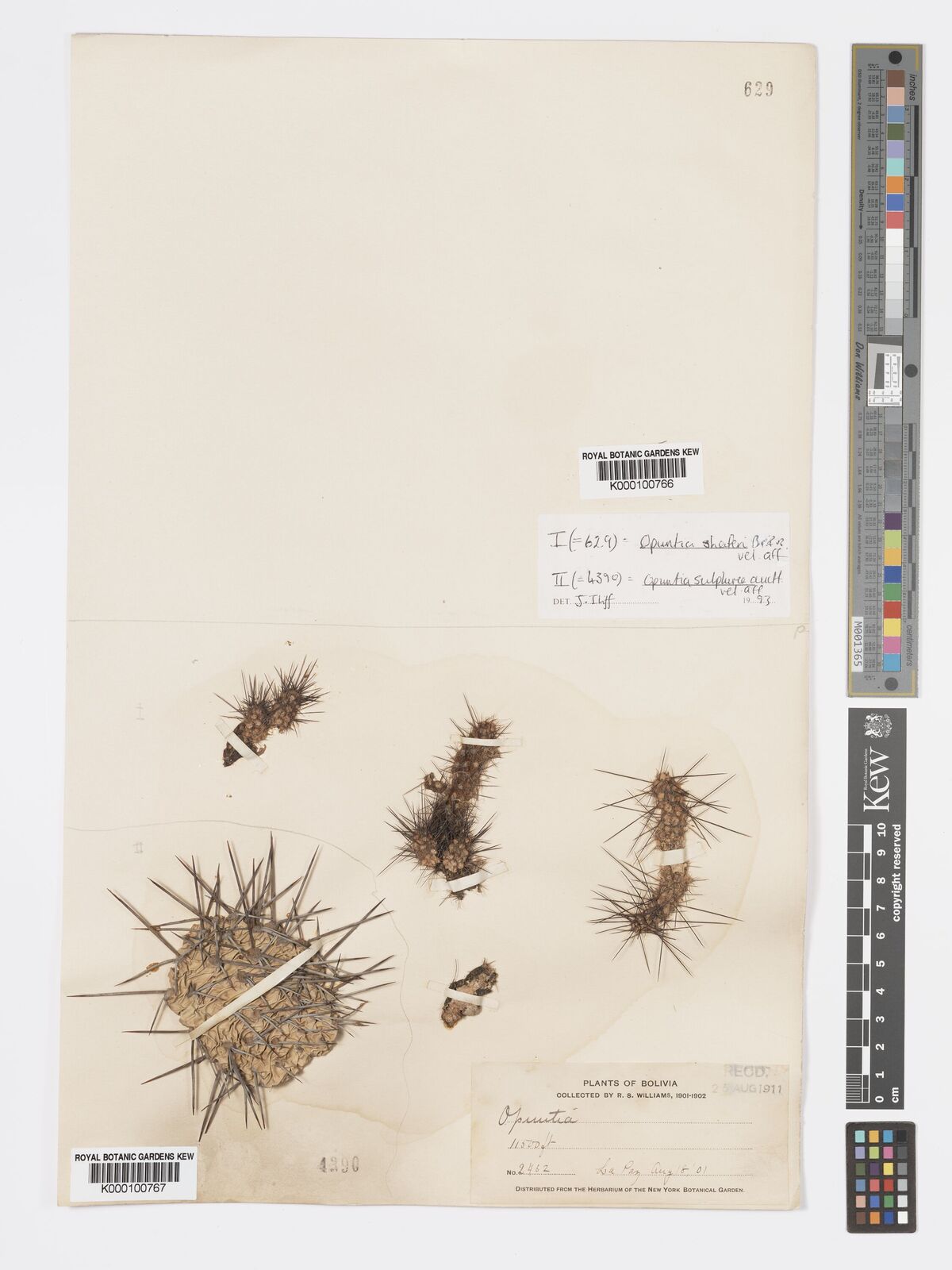
Scientific taxonomy article
Taxonomic identity of Austrocylindropuntia
Austrocylindropuntia Backeb. is a genus in the subfamily Opuntioideae of Cactaceae. The name was published in 1938 and is accepted by Plants of the World Online.1 In the current phylogenomic classification it is placed in the predominantly South American tribe Pterocacteae.2
Circumscription of the genus
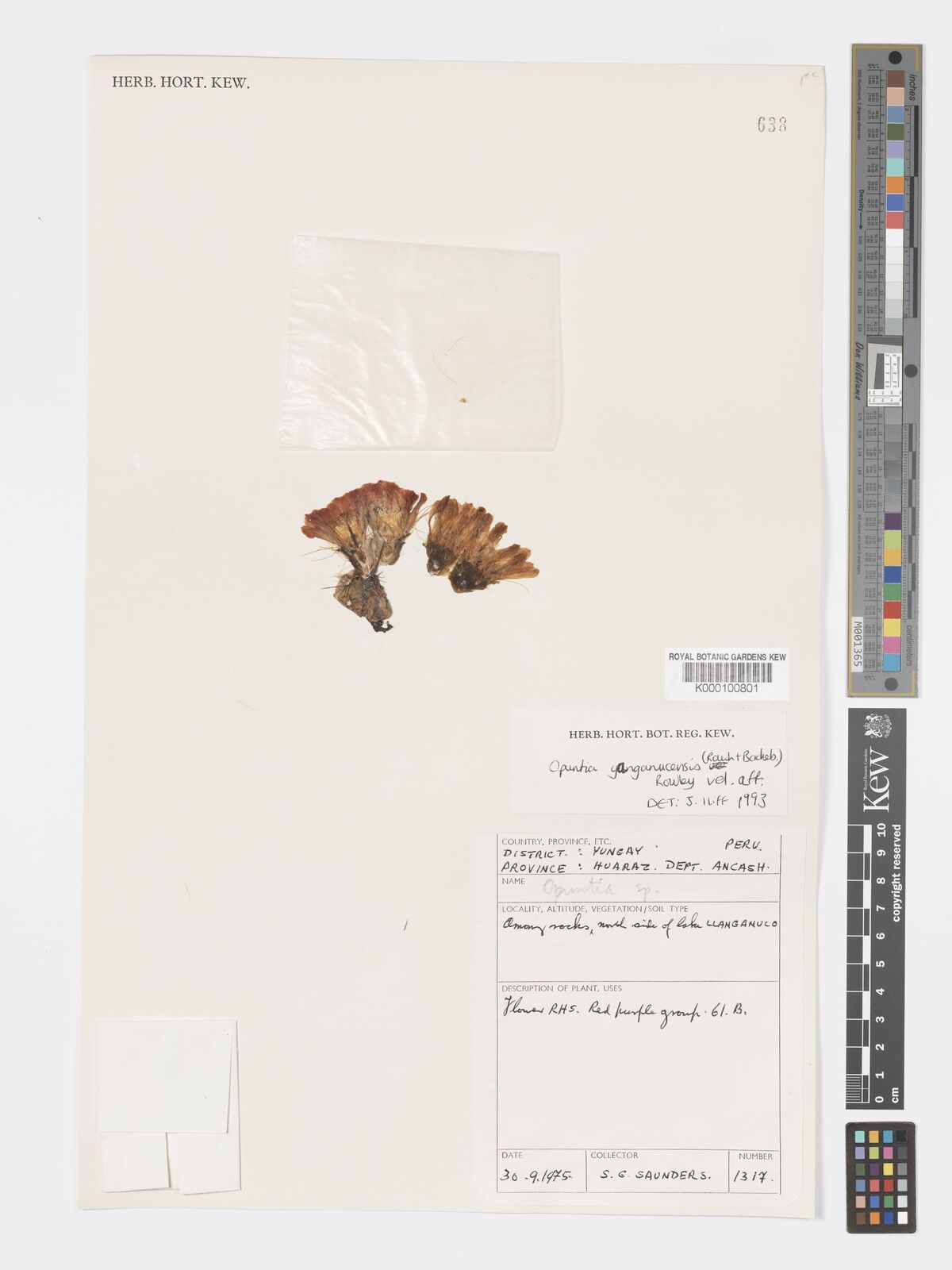
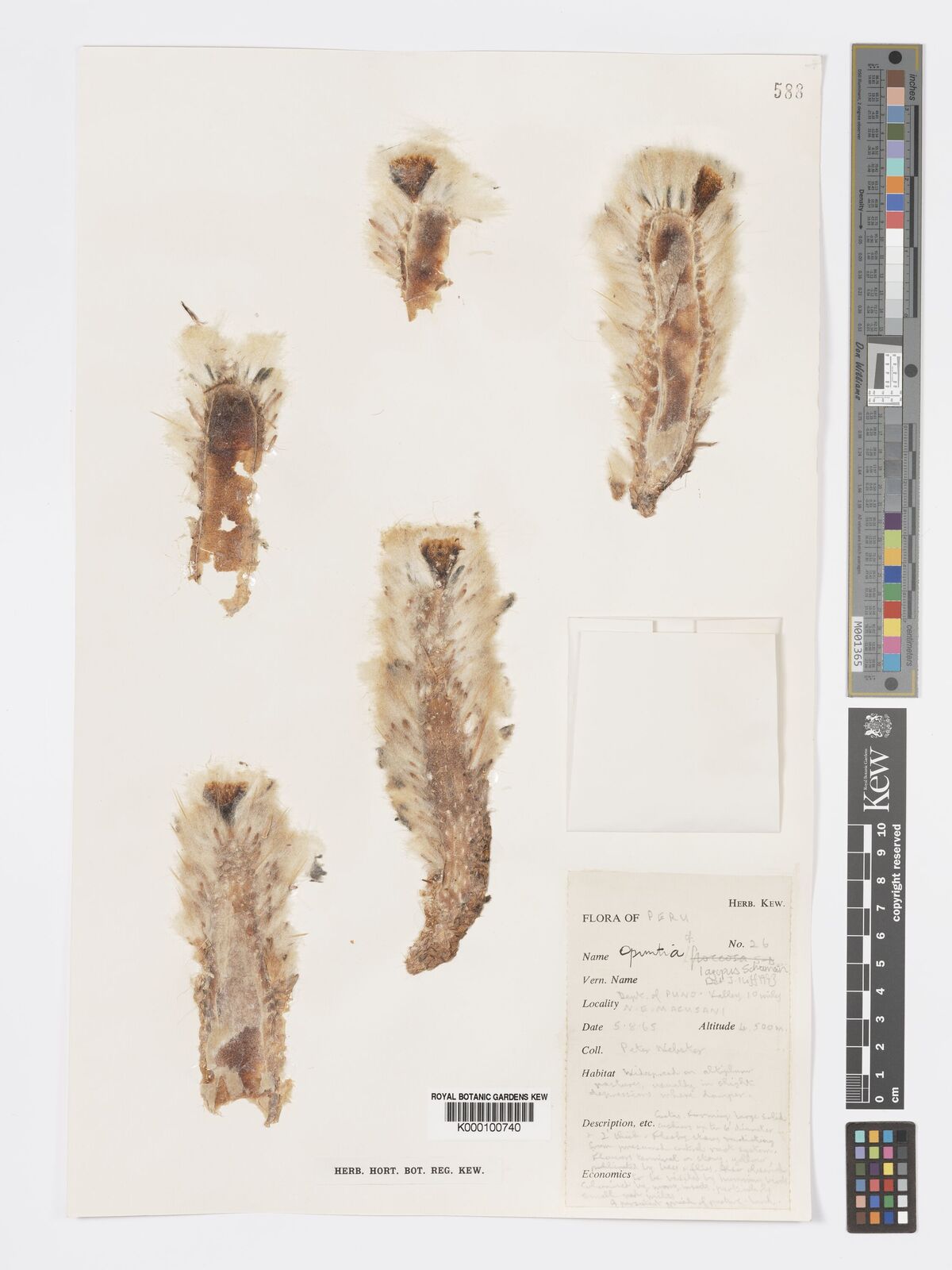
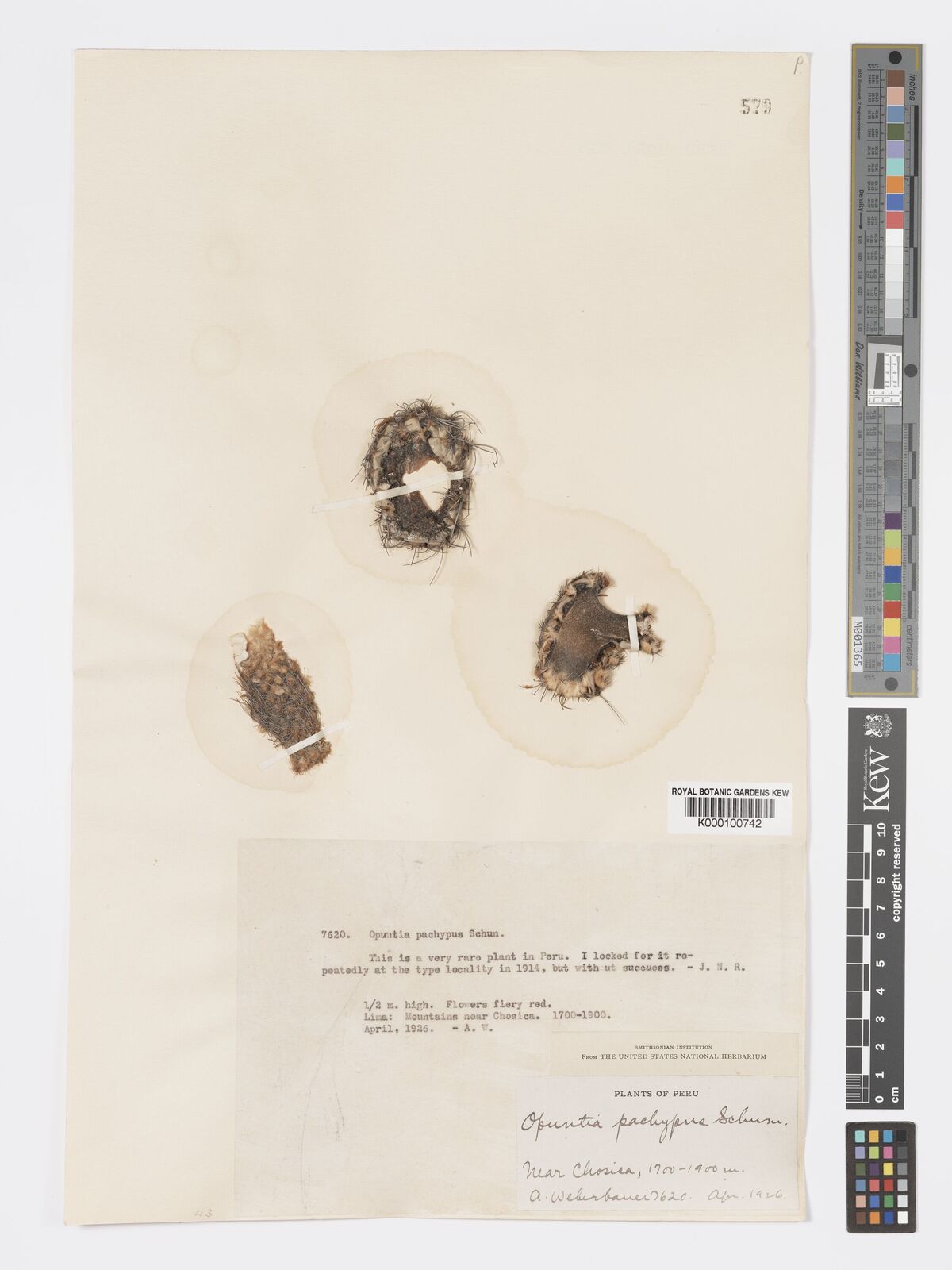
The 2026 Kew taxonomic backbone lists eight accepted species: A. cylindrica, A. floccosa, A. lagopus, A. lauliacoana, A. pachypus, A. shaferi, A. subulata, and A. vestita.1 This is not an immutable final species count; it records the current acceptance of a particular maintained backbone. New nomenclatural or phylogenetic evidence may alter how the genus is circumscribed.
The native range of the genus extends from central Colombia to north-western Argentina, broadly following Andean and adjacent regions.1 Its species have cylindrical segmented stems, conspicuous tubercles, and areoles, but their habits vary. Some are high-elevation cushion plants, whereas others, including A. subulata, can become taller shrubs or small tree-like plants.
Leaves, spines, and areoles
The “cylindro” element in the name refers to cylindrical stem segments. In members such as A. subulata, fleshy leaves arising from the stem are not the same organs as the spines produced by the areoles. Leaf size and persistence can be taxonomically informative. This distinction is important because horticultural names often describe the plant loosely as having “needle leaves.”
Relationships and synonymy
In the 2025 phylogenomic analysis, Cumulopuntia is supported as a close sister lineage to Austrocylindropuntia. The segregate Punotia was also recovered as a strongly supported close relative and is included within Austrocylindropuntia in the current treatment.2 The Kew backbone lists Andinopuntia, Peruviopuntia, Pseudotephrocactus, Punotia, and Trichopuntia as heterotypic generic synonyms.1
Phylogenetic evidence supports the placement of the genus in Pterocacteae, although the earliest branching order within that tribe and the rank of some small segregates are not entirely free from debate. This page follows the current acceptance while retaining alternative names in their historical and nomenclatural context.
References
- Plants of the World Online. “Austrocylindropuntia Backeb.” Royal Botanic Gardens, Kew. Accessed: 2026-08-03. https://powo.science.kew.org/taxon/urn:lsid:ipni.org:names:295177-2 ↩
- de Vos, J.M. et al. “Phylogenomics and classification of Cactaceae based on hundreds of nuclear genes.” Plant Systematics and Evolution 311, 28. Accessed: 2026-08-03. https://doi.org/10.1007/s00606-025-01948-z ↩