
Light
Full Sun
Requires full, direct sun. South-facing windows or sunny greenhouses are best.
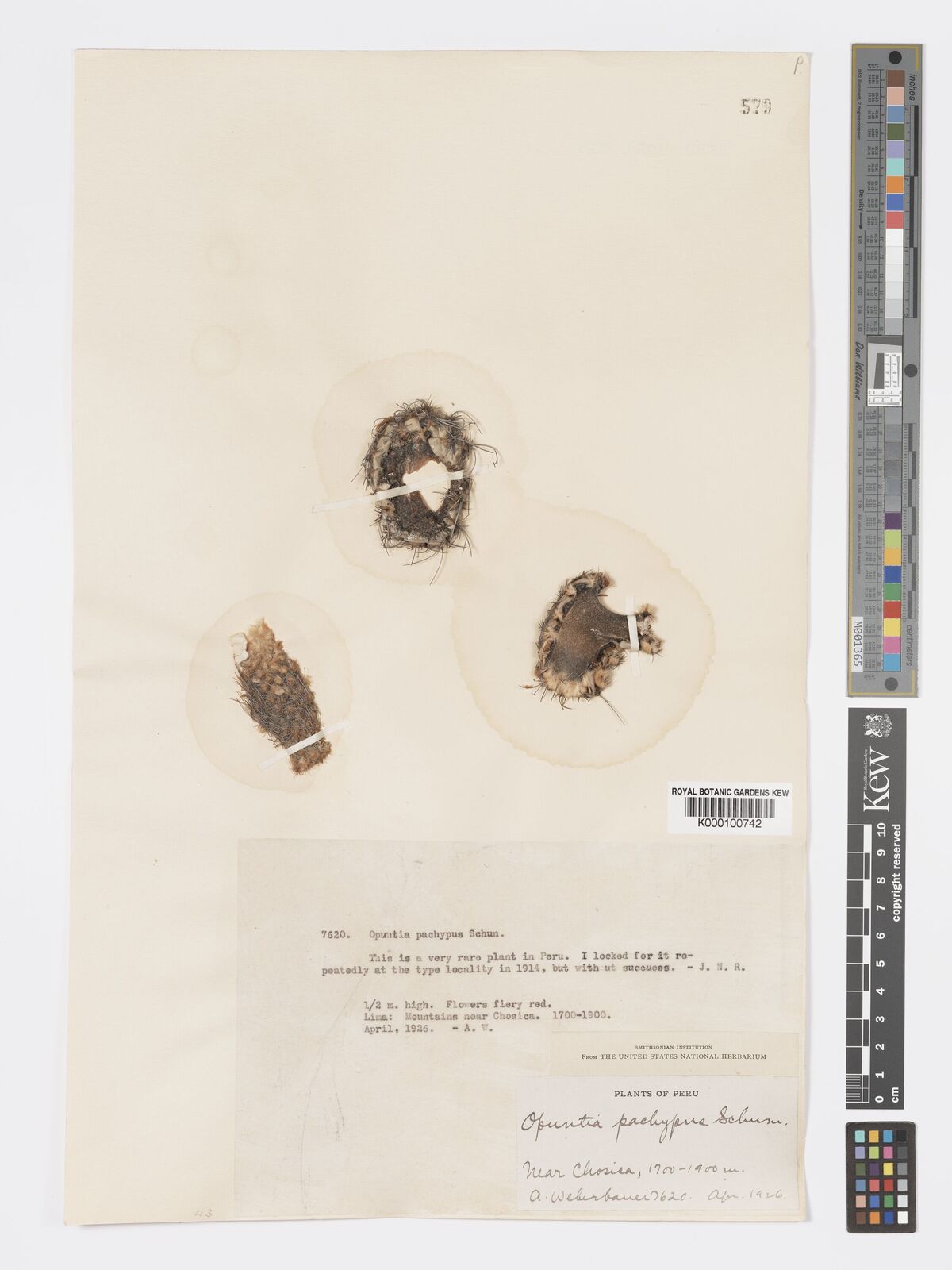 Reference image
Thick-Footed Cylinder Opuntia
Austrocylindropuntia pachypus is a distinctive and highly sought-after columnar cactus species within the Cactaceae family. Developing a shrubby or subshrubby habit in its natural environment, this succulent is greatly valued by collectors for its unique spiraling tubercles and dense spine coverage 1.
The species was first described in 1904 by Karl Moritz Schumann as Opuntia pachypus. It was later transferred to the genus Austrocylindropuntia by Curt Backeberg to separate the cylindrical-stemmed opuntioid cacti of the Andes. The genus name translates to 'southern cylindrical opuntia,' while the specific epithet pachypus is derived from Greek, meaning 'thick-footed' 2.
This species is endemic to the western slopes of the Peruvian Andes, specifically found in the arid valleys of the Lima and Ancash regions at elevations ranging from 1,500 to 2,500 meters. It thrives on extremely dry, rocky, steep slopes within desert or dry shrubland biomes 1.
The cylindrical stems can reach heights exceeding 1 meter. The surface of the stem is tightly packed with prominent spiraling tubercles. Each areole bears upwards of 20 yellowish to brownish, sharp needle-like spines, giving the plant a shimmering golden-silver appearance. Bright red or deep orange flowers occasionally bloom from the top of mature stems during summer.
Being a slow-growing cactus, it requires full sun exposure and an exceptionally well-draining, mineral-rich soil mix. Watering should be applied only when the substrate is completely dry during spring and summer, and withheld entirely in winter to prevent root rot.
The most prevalent issue is overwatering combined with poor ventilation. In humid, stagnant conditions, fungal pathogens and root rot can devastate the plant. Keeping the plant below 5°C in damp conditions will trigger permanent tissue scarring.
Requires full, direct sun. South-facing windows or sunny greenhouses are best.
Water only when the substrate is bone dry. Keep completely dry in winter.
Requires highly porous mineral substrate rich in pumice, gravel, and coarse sand.
Features numerous sharp, persistent spines. Keep away from pets and children.
Moderate. Demands strict watering discipline and intense light levels.
Endemic to the extremely arid and rocky slopes of the western Andes in Peru, growing at high-elevation desert canyons.
