
Light
Direct Sun
Very bright light with morning or late-day sun is suitable; acclimate a lower-light plant to harsh midday sun gradually over several weeks.
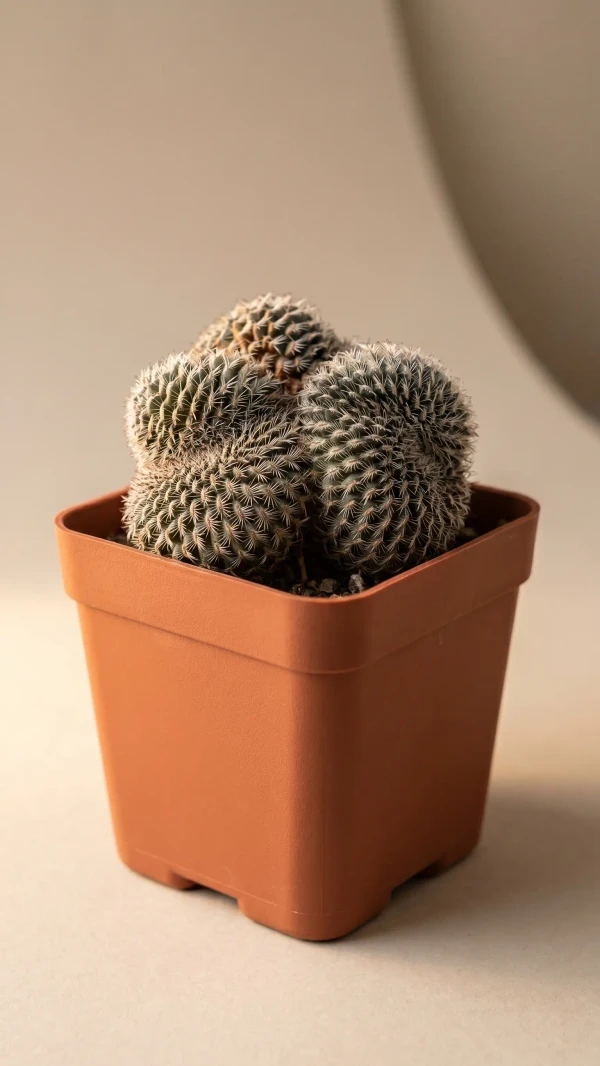
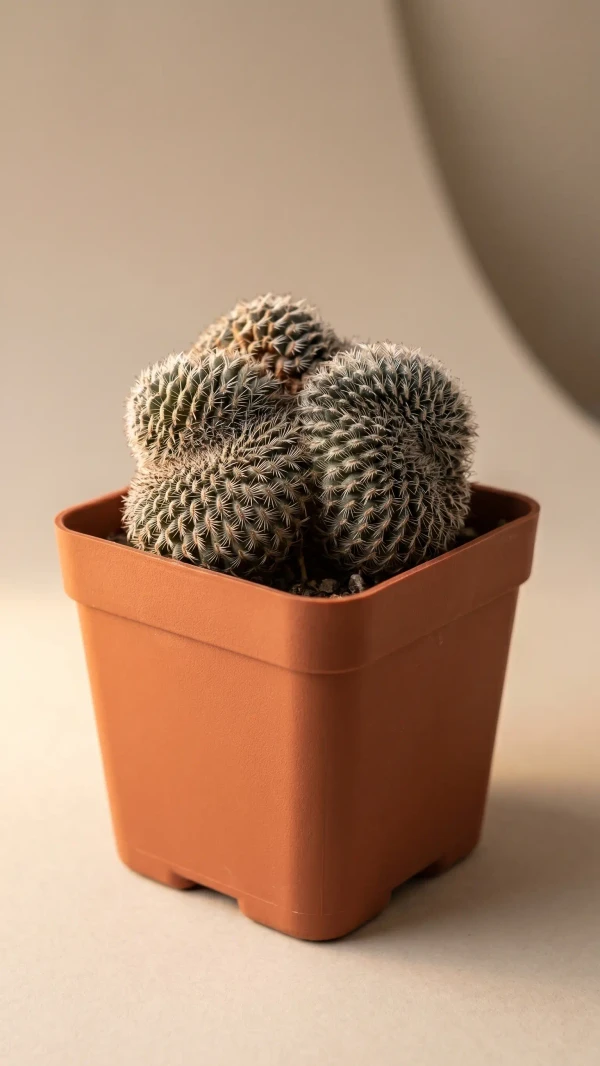
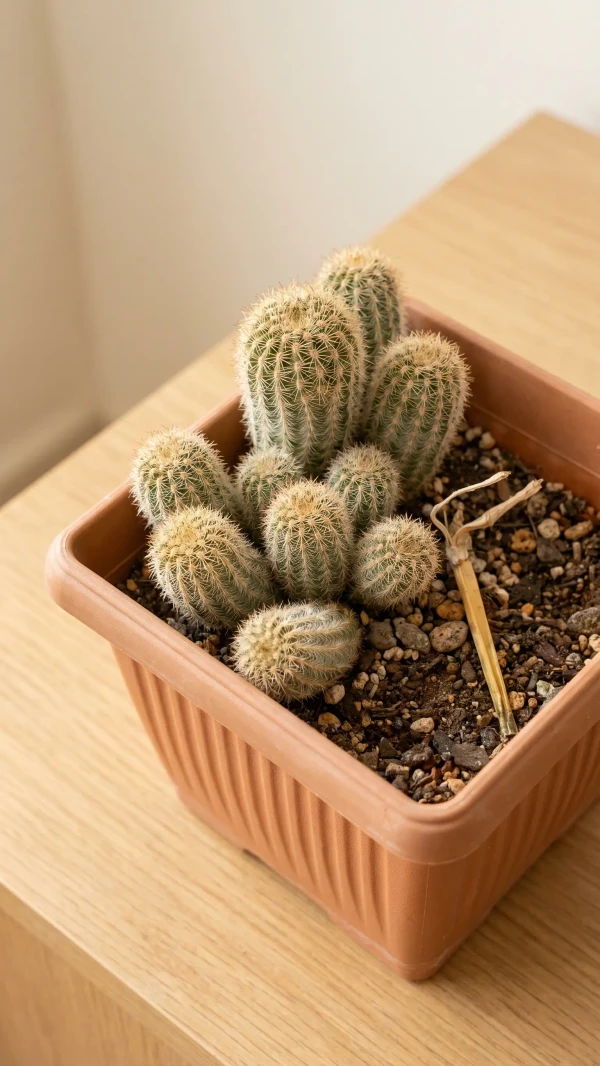
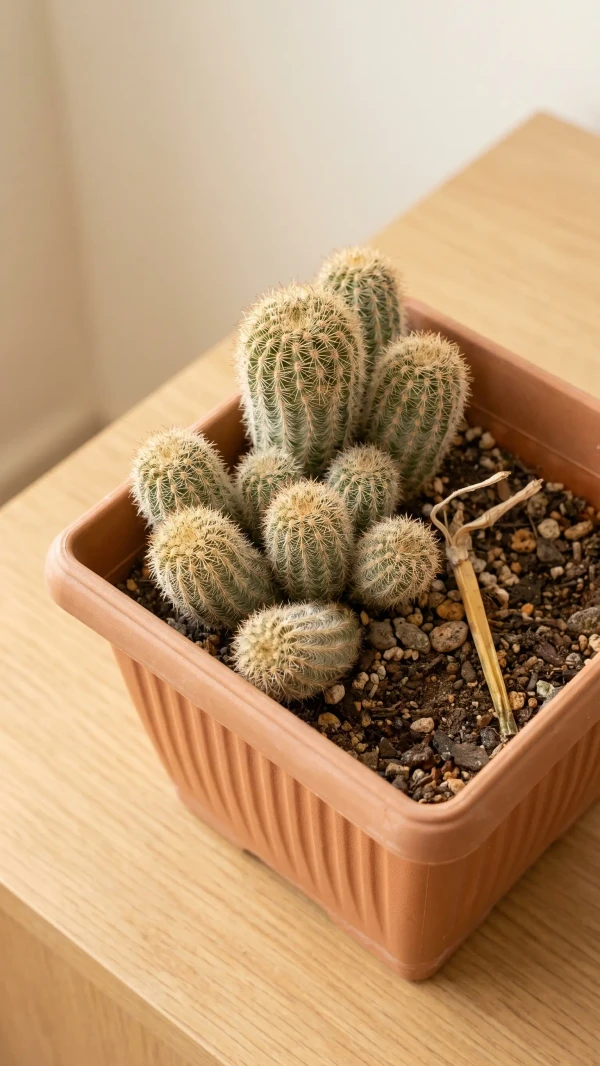
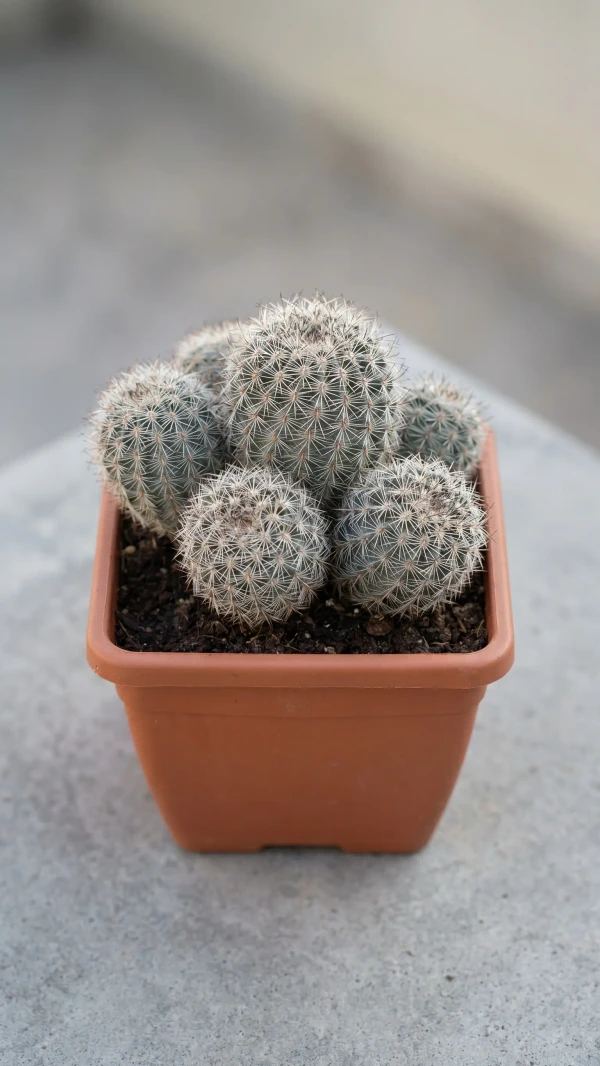
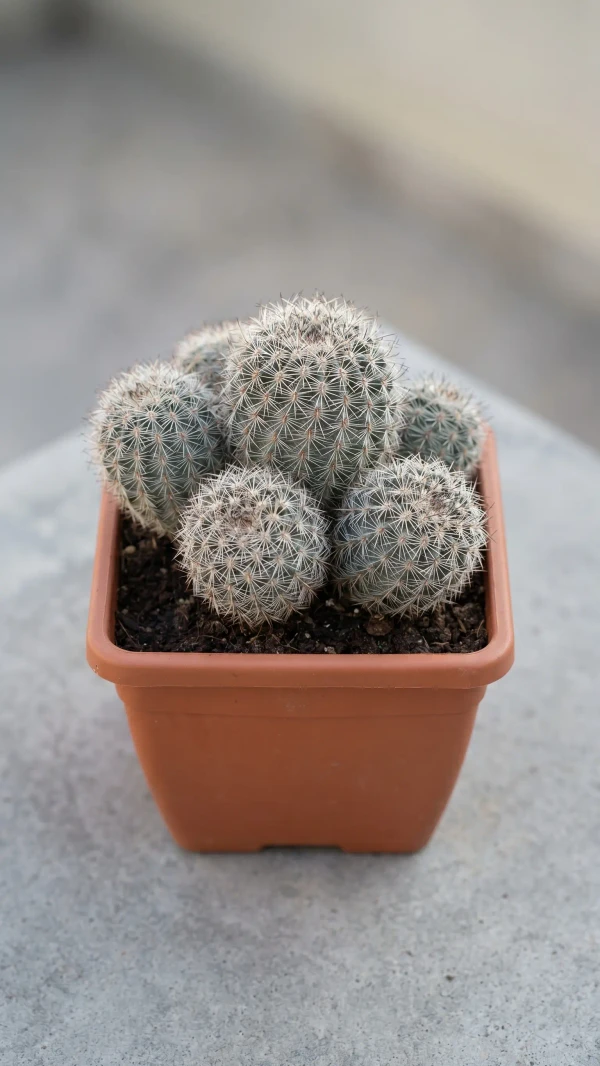
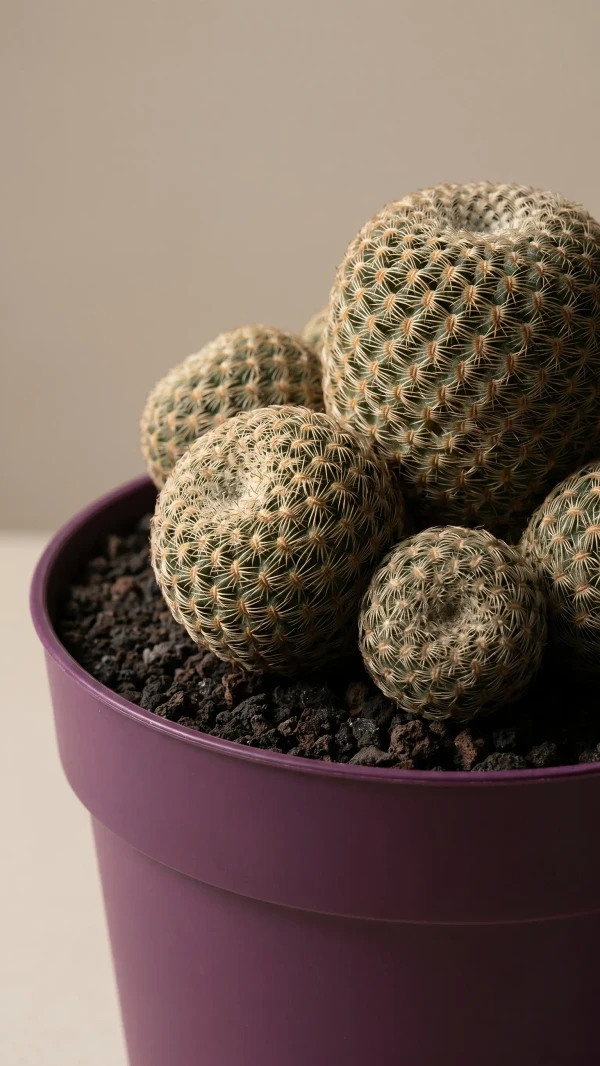
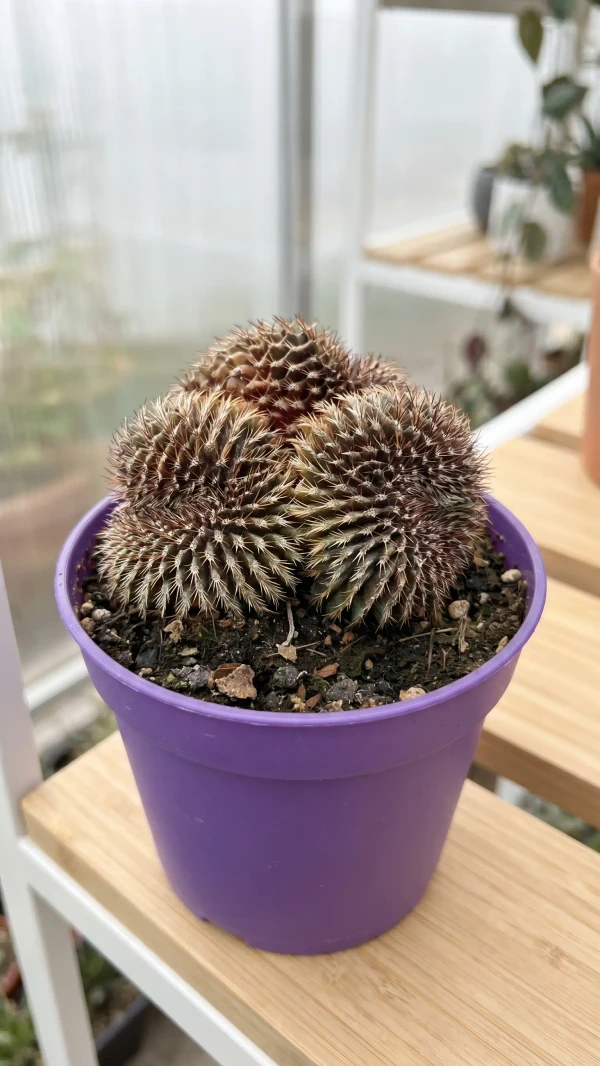
Sunrise Cactus
Aylostera heliosa is a small-bodied Aylostera native to Bolivia.1 Small clustering bodies, fine appressed pectinate spines forming an orderly mesh over the surface, closely spaced areoles on the tubercles, and relatively large orange-red flowers are evaluated together. Spine pattern alone does not prove provenance or an infraspecific name. Unlike the taxonomy article, the botanical-dictionary layer explains the living plant’s morphology, habitat context, and cultivation requirements rather than turning naming history into care instructions.
Kew records the species as a succulent subshrub of desert or dry-shrubland biomes. Wild-population context remains separate from flowering performance in a small pot. A small body does not imply a constantly damp, shaded habitat. Light, airflow, day-night temperature shifts, and rapid surface drying act together in Andean environments. Cultivation should provide oxygen at the roots, a controlled wet-dry cycle, and seasonal rest rather than copying scenery.
Offsetting and clump formation vary among specimens. Grafting, heavy feeding, prolonged low light, and warm winters can alter body shape. These cultivation responses do not automatically change the scientific identity.
Very bright light with morning or late-day sun is suitable; acclimate a lower-light plant to harsh midday sun gradually over several weeks. A bright but stagnant window is not necessarily safer than a cooler site with active airflow. Stem temperature can rise rapidly behind hot glass, so sun acclimation should be managed together with watering and ventilation.
A cool, dry rest supports seasonal rhythm without forcing continuous soft growth. Frost tolerance is not a fixed label; it varies with dehydration, root health, duration, and wind. Do not test cold conditions with a wet root ball.
Do not use a fixed-day calendar. During active growth, soak the root ball only after the mix has dried throughout, then remove every excess. Pot weight, drainage, internal moisture, and current weather should be evaluated together. Drying slows during cool or low-light periods, so watering naturally becomes less frequent.
Use a coarse mineral-forward medium that does not retain water around the roots. A small body and fine root system do not increase tolerance of airless, peat-heavy mixes. In a very small pot, a dry surface does not prove that the centre is dry; inspect the root zone. Conversely, actively growing fine roots can be lost if kept bone-dry for excessive periods. The goal is not continuous moisture but a balanced cycle between complete wetting and oxygen-rich drying.
Kew accepts the species node with nine synonyms. The 2016 molecular study supports a monophyletic Aylostera distant from the clade containing the type of Rebutia, whereas broader alternative backbones may unite Heliosa names around Aylostera deminuta. Flower colour can assist identification but is not sufficient alone. Within one species, light, age, clone, and cultivation can alter body colour, spine density, flower tone, and offsetting.
Kew’s nine synonyms form a species retrieval surface; commercial “Sunrise”, colour selections, or collection labels are not scientific synonyms. An older Rebutia name in a product title does not change the canonical taxonomy; the former name can remain in nomenclatural and search surfaces. Likewise, a commercial label does not create a source-backed species or infraspecific record.
The best-supported household concern is mechanical injury from the spines rather than a claim of chemical toxicity. Restrict access for children and pets and place the pot where it cannot be knocked over. The verified global category is stored as LC.2 The IUCN assessment is Least Concern under the synonym Rebutia heliosa, so the live LC value is retained. LC does not make restricted habitats or illegal wild collection irrelevant.
Very bright light with morning or late-day sun is suitable; acclimate a lower-light plant to harsh midday sun gradually over several weeks.
Do not use a fixed calendar. Water deeply after complete drying and reduce frequency during cool or low-light periods.
A coarse, airy, low-organic cactus mix that dries quickly.
Spines present a mechanical injury risk. The IUCN assessment is Least Concern under the synonym Rebutia heliosa, so the live `LC` value is retained. LC does not make restricted habitats or illegal wild collection irrelevant.
Balancing rapid drying in a small pot against overwatering requires attention, but the plant is manageable with strong airflow and a cool, dry rest.
Bolivia.[^1] [^1]: Plants of the World Online. “Aylostera heliosa.” Accessed: 2026-08-04. https://powo.science.kew.org/taxon/urn:lsid:ipni.org:names:77116967-1
