
Light
Bright Indirect Light
Requires bright indirect sunlight, protect from harsh afternoon sun.
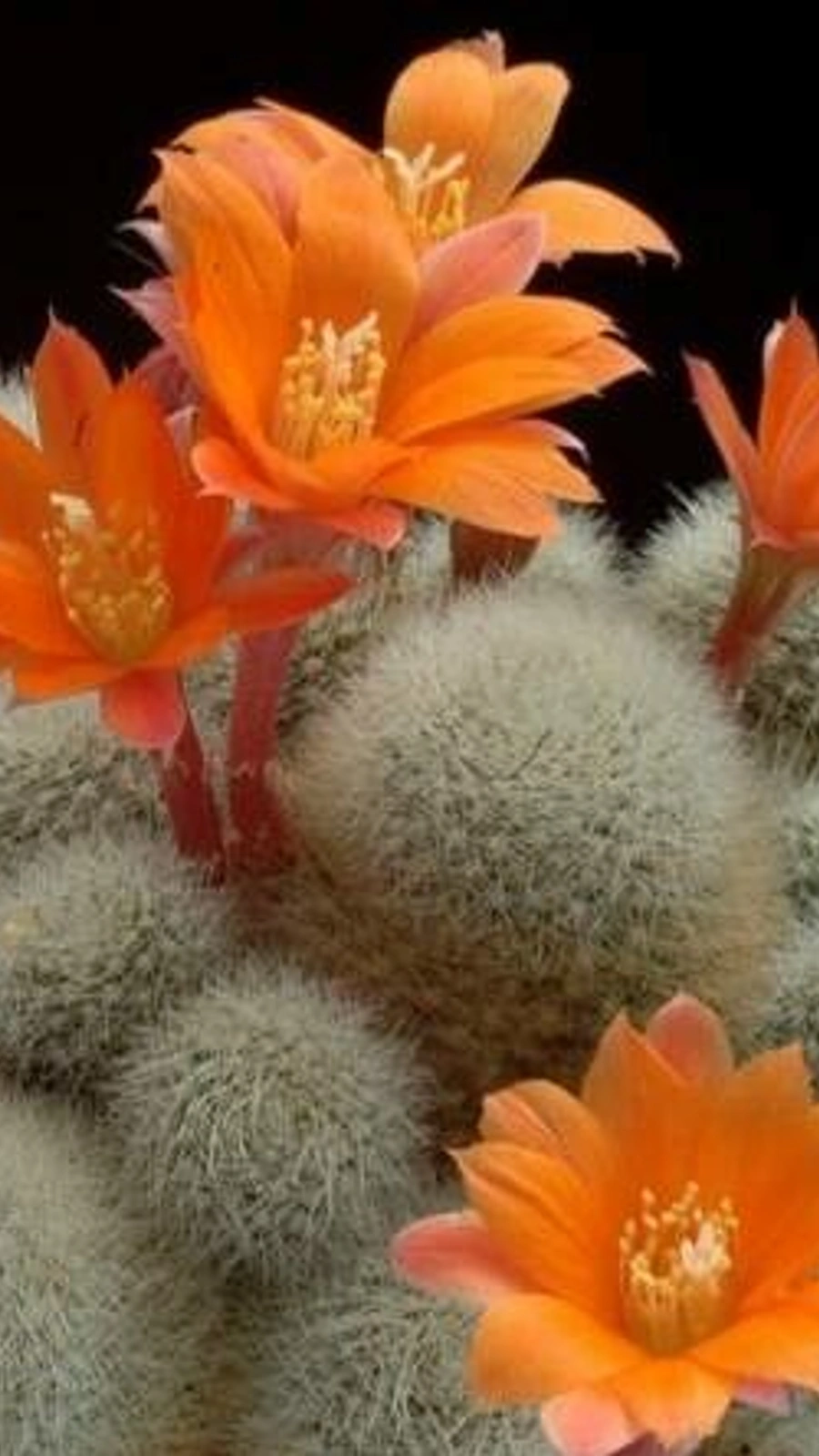 Reference image
Hoffmann's Aylostera
Aylostera hoffmannii (synonym: Rebutia hoffmannii) is a small, highly decorative perennial succulent subshrub belonging to the family Cactaceae. Known for its compact clustering growth habit and brilliant orange-red blooms, it is a prized species among cactus enthusiasts 1. It is well-suited for indoor container cultivation due to its drought tolerance.
This species is often classified under the genus Rebutia, but modern taxonomic works frequently place it under the distinct genus Aylostera based on floral morphology and seed structure 2. The specific epithet "hoffmannii" honors the botanist or collector Hoffmann.
Native to western South America, Aylostera hoffmannii is found in Bolivia and northern Argentina. It thrives in high-altitude dry shrublands and rocky desert slopes where it grows in crevices and under the light shade of larger shrubs 1.
The stems are globose to shortly cylindrical, clustering from the base over time to form attractive cushions. The ribs are resolved into small tubercles covered with fine, soft, whitish to brownish spines. During spring and early summer, numerous funnel-shaped, vibrant orange to scarlet flowers emerge from the lower parts of the stem.
It prefers bright, filtered sunlight and excellent air circulation. The potting medium must be highly porous. Water thoroughly only when the soil has dried out completely during the active growing season, and keep almost dry in winter 2.
Overwatering and using heavy, clay-rich soil are the most common causes of plant loss due to root rot. Keeping the plant too warm and wet during winter prevents the essential dormancy needed for spring flowering.
Requires bright indirect sunlight, protect from harsh afternoon sun.
Allow soil to dry out completely between waterings; keep dry in winter.
Highly porous, mineral-based cactus mix with high pumice content.
Non-toxic, but fine spines can irritate sensitive skin upon contact.
Very easy to care for if overwatering is strictly avoided.
Inhabits high-altitude rocky slopes and dry mountain shrublands of the Andes, thriving in rocky crevices.
