
Light
Filtered Sun
Requires bright, filtered sunlight; protect from intense direct afternoon sun during peak summer.
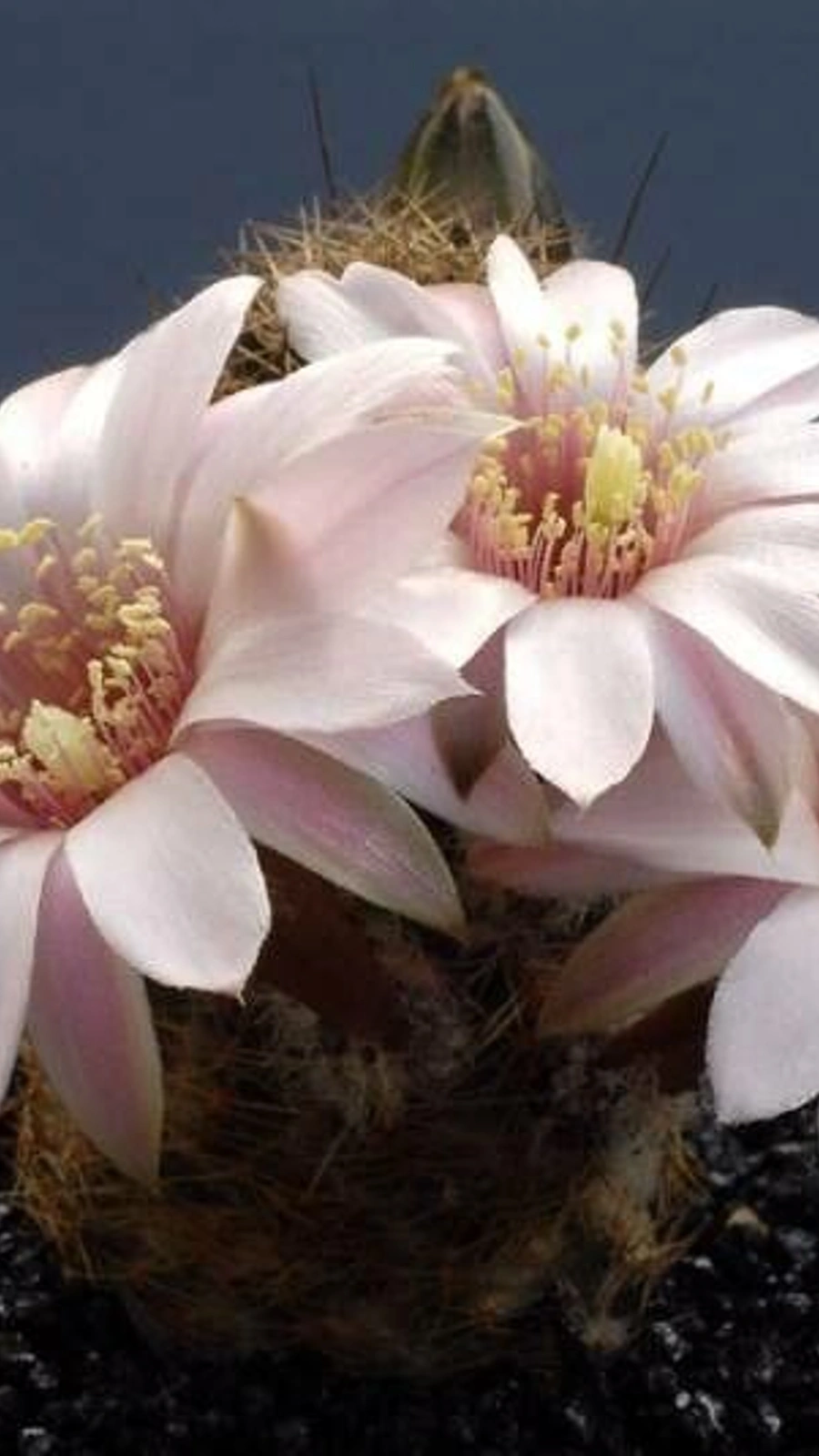 Reference image
White-flowered Aylostera
Aylostera leucanthema is a small-bodied, clustering perennial succulent cactus belonging to the Cactaceae family 1. Highly valued by collectors, it is well-known for its compact growth habit and beautiful summer blooms.
Often classified under the synonym Rebutia leucanthema in historical databases, this species belongs to the genus Aylostera [1]. The epithet 'leucanthema' translates to 'white-flowered', pointing to its distinct floral characteristics, although color variations exist 2.
This cactus is native to Bolivia, thriving in high-altitude rocky terrains and dry shrublands of Western South America 1. It is adapted to growing in mineral-rich soil crevices on steep slopes exposed to high light.
The stems are globose to short-cylindrical, dark green to purplish, covered with fine, pectinate, silver-grey spines. In late spring, funnel-shaped, vibrant flowers emerge from the lower parts of the stem.
It thrives in bright, filtered sunlight with excellent air circulation. The potting medium must be highly porous. Water thoroughly only when the soil has dried out completely. During winter dormancy, keep the plant completely dry in a cool environment.
Overwatering during the winter rest is the primary cause of root rot and plant loss 2. Inadequate light exposure leads to etiolation, stretching the natural compact form.
Requires bright, filtered sunlight; protect from intense direct afternoon sun during peak summer.
Water thoroughly in summer only when soil is completely dry. Keep dry in winter.
Requires extremely gritty, fast-draining soil mix containing at least 50% inorganic matter.
Non-toxic, but fine spines can cause minor skin irritation; handle with care or use gloves.
An easy-care choice for beginners as long as the watering is kept minimal and drainage is perfect.
Discovered in the high-elevation rocky ledges of Bolivia, where it survives in dry, windswept mountain slopes.
