
Light
Bright Indirect Light
Bright indirect light or morning sun ensures compact growth.
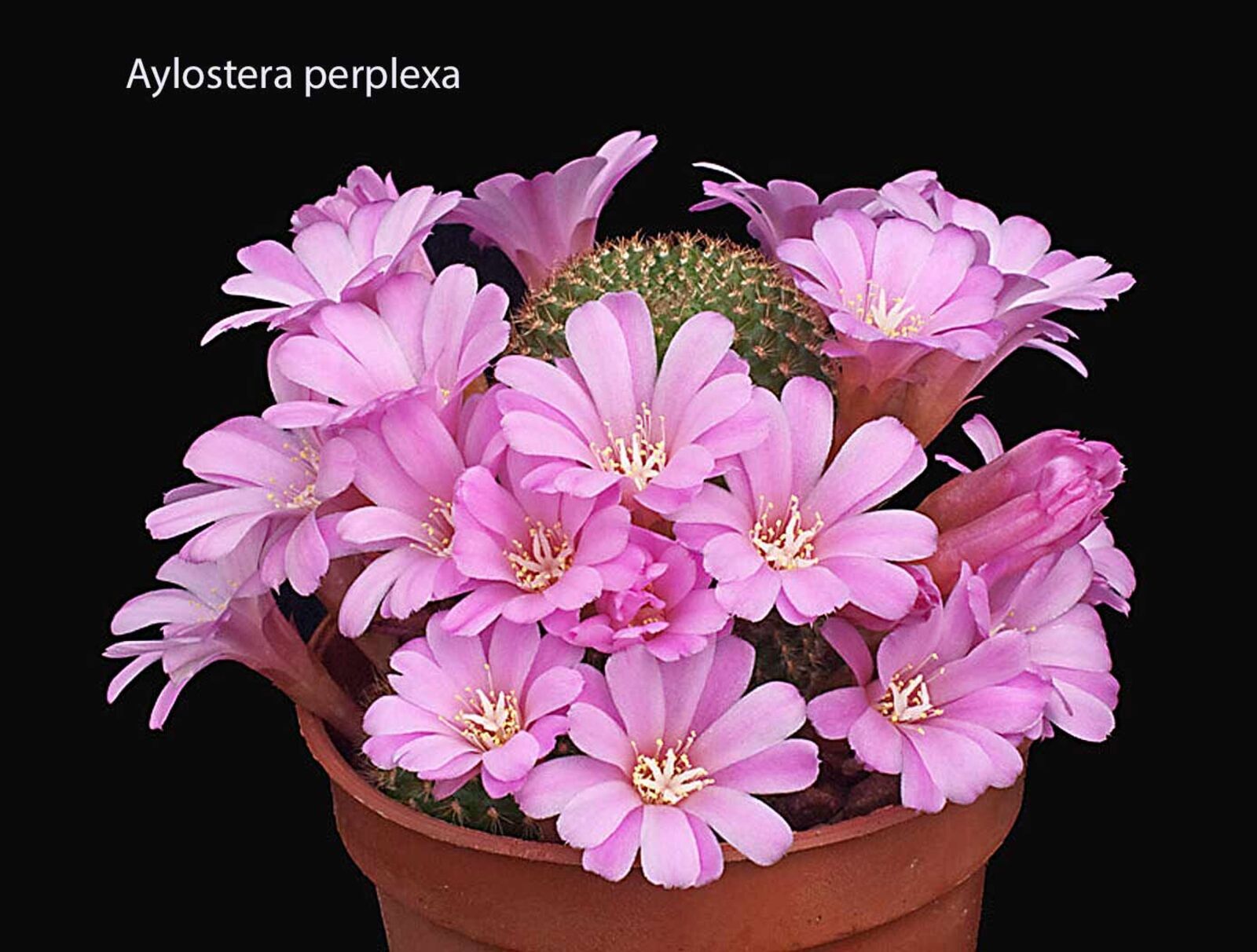 Reference image
Aylostera Perplexa
Aylostera perplexa is a highly popular, clump-forming succulent subshrub belonging to the Cactaceae family. It is widely treasured among collectors for its miniature growth habit and prolific display of vibrant pink-purple flowers.
Historically classified under the genus Rebutia as Rebutia perplexa, recent phylogenetic and morphological analyses have reinstated its position within the genus Aylostera 1. The specific epithet 'perplexa' refers to the taxonomic confusion and puzzling origin surrounding the plant when it was first discovered and described.
This species is endemic to Bolivia, where it grows in high-altitude dry shrublands and rocky desert environments 2. It is adapted to survival in rock crevices and steep cliffs, where water drains away immediately.
The stems are globose to shortly cylindrical, bright green in color, and quickly offset from the base to form dense, rounded mounds. The areoles bear short, relatively soft, yellowish-white spines. In late spring and early summer, it produces numerous funnel-shaped, magenta-pink flowers that emerge from the lower parts of the stem.
It thrives in bright, well-ventilated locations with filtered sunlight. It prefers a mineral-rich, highly porous potting medium. Water thoroughly only when the soil is completely dry, and keep dry during the winter dormancy period to promote health and flowering.
Overwatering and poor soil drainage are the most common causes of plant loss, leading to rapid root rot. Lack of a cool, dry winter rest period will also prevent the cactus from blooming in the spring and may cause weak, etiolated growth.
Bright indirect light or morning sun ensures compact growth.
Let the soil dry out completely before watering again.
Use a mineral-heavy cactus soil mix with high pumice content.
Non-toxic, but tiny glochids/spines can cause mild mechanical irritation.
Very easy to maintain if winter dormancy guidelines are followed.
Endemic to the mountainous highland regions of Bolivia, where it naturally adapts to steep rocky crevices and dry, windy alpine plateaus.
