
Light
Bright Indirect Light
Requires bright, indirect light; protect from intense midday summer sun.
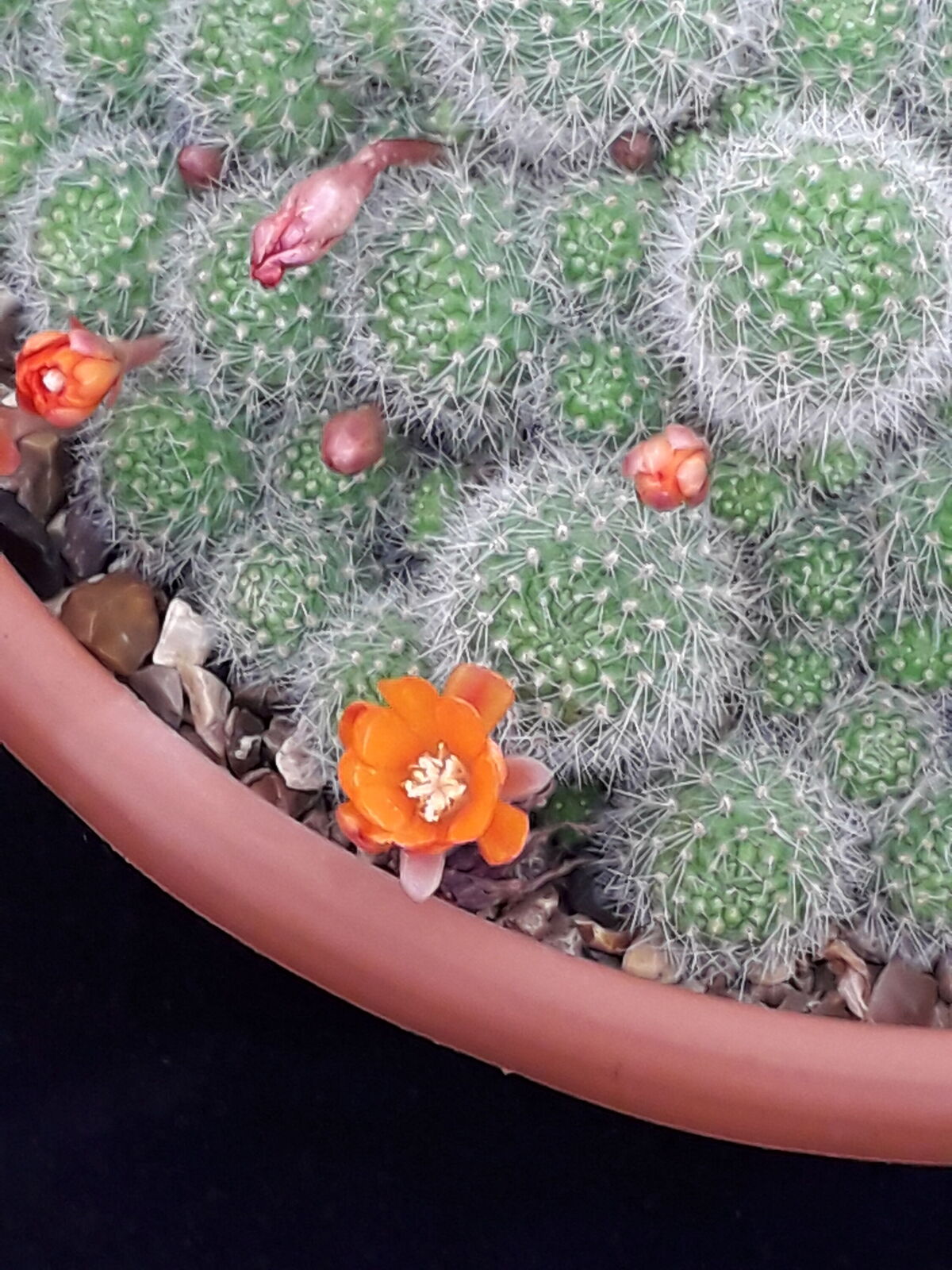 Reference image
Cushion Aylostera
Aylostera pulvinosa (formerly known as Rebutia pulvinosa) is a small, clustering succulent cactus in the family Cactaceae 1. Highly appreciated by collectors, it is well-known for its prolific clustering habit, forming dense, cushion-like mounds adorned with vibrant flowers.
Originally described by Ritter, this species was historically grouped under the genus Rebutia. However, modern phylogenetic classifications accepted by Kew (POWO) reinstate it under the genus Aylostera 2. The specific epithet 'pulvinosa' originates from Latin, meaning 'cushion-like' or 'pulvinate', describing its growth habit.
Native to Southern America, specifically the montane regions of Bolivia, Aylostera pulvinosa thrives in desert or dry shrubland biomes 1. It is typically found growing in rock crevices and gravelly soils on steep slopes where drainage is exceptional.
The stems are globose to slightly cylindrical, light green, and grow up to a few centimeters in diameter, offsetting freely from the base. Areoles are closely spaced, bearing fine, soft, white to pale yellowish spines. During late spring and summer, it produces bright orange to reddish-orange funnel-shaped flowers from the base of the stems 2.
In cultivation, Cushion Aylostera prefers plenty of bright, indirect sunlight. Direct mid-day summer sun can cause scorching. Watering should follow a 'soak and dry' cycle during the active growing season and be withheld almost entirely in winter to respect its dormancy 3. A highly porous, mineral-rich gritty soil mix is essential.
The most prevalent issue is root rot caused by overwatering or poor drainage. Inadequate light levels lead to etiolation, where the plant stretches unnaturally towards the light source, weakening its structural integrity and reducing flowering.
Requires bright, indirect light; protect from intense midday summer sun.
Allow soil to dry out completely between waterings; keep almost bone dry in winter.
Highly porous, gritty substrate containing pumice, gravel, and low organic matter.
Non-toxic to pets, but has fine spines that can cause minor mechanical irritation.
Very easy to care for, making it ideal for beginners who can resist overwatering.
Found natively in the high-altitude, rocky slopes and dry shrublands of Bolivia, growing in well-drained, gritty mountain soil.
