
Light
Filtered Sun
Requires at least 4-6 hours of bright, filtered sunlight daily.
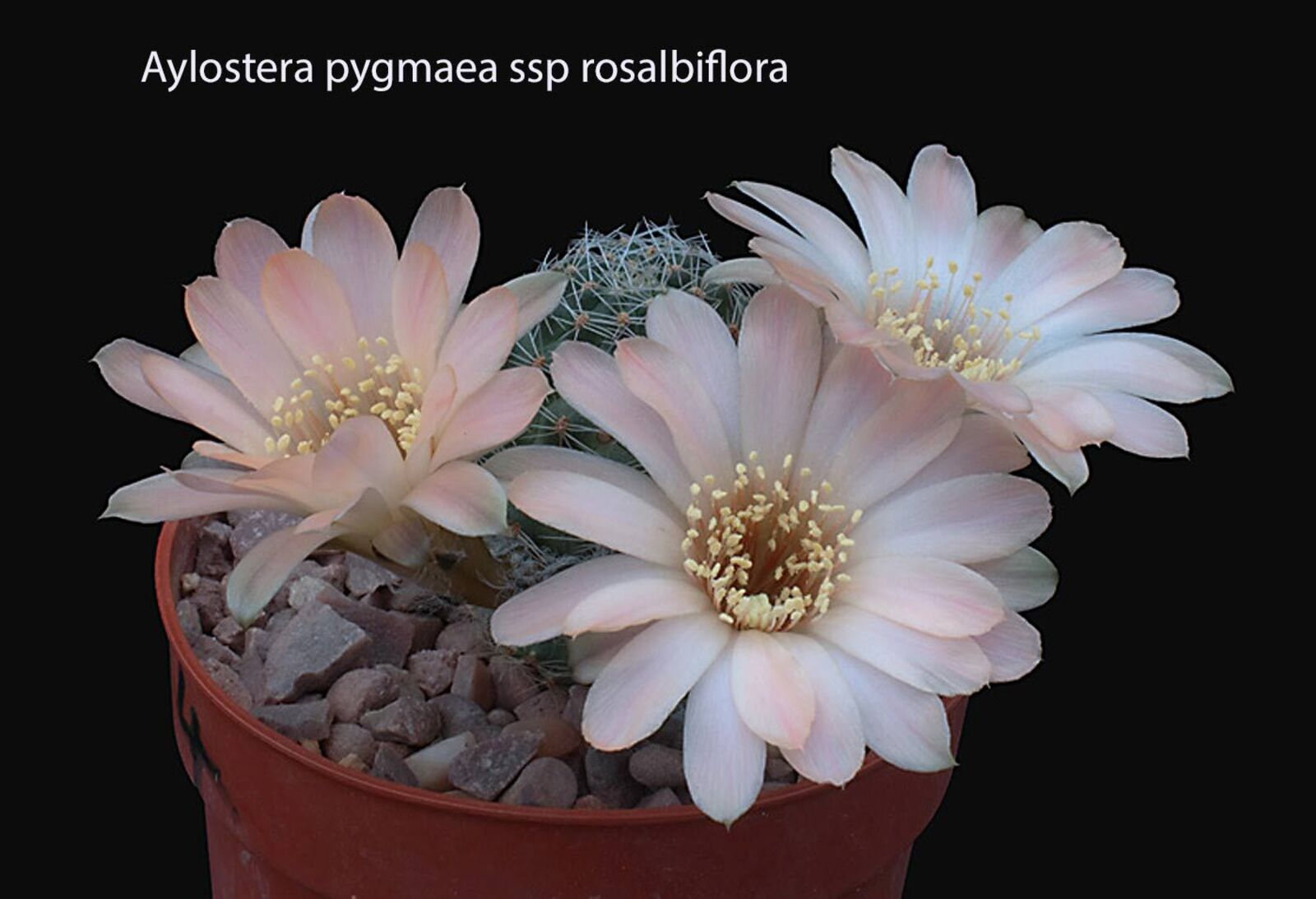 Reference image
Pygmy Aylostera
Aylostera pygmaea is a miniature, perennial succulent subshrub belonging to the family Cactaceae. Highly favored by succulent enthusiasts, this species is renowned for its remarkable drought tolerance and its ability to produce abundant, vibrant flowers even at a very young age 1.
Historically classified under the genus Rebutia as Rebutia pygmaea, recent phylogenetic analyses and morphological studies have reinstated it into the genus Aylostera 2. The specific epithet 'pygmaea' directly references its diminutive, dwarf growth habit.
This species is native to the high-altitude Andean regions of Western South America, specifically Bolivia and northwestern Argentina 1. It thrives in montane tropical biomes at elevations between 2500 and 4000 meters above sea level, growing in rocky crevices and poor soils.
The stems are cylindrical to globose, often clustering over time to form small mounds. The epidermis color ranges from dull green to purplish-bronze. It features spiraled ribs and small, pectinately arranged radial spines. In spring and summer, large, funnel-shaped flowers in shades of orange, pink, red, or yellow erupt from the base of the stems 2.
In cultivation, it requires bright, filtered sunlight to maintain its compact form. The potting medium must be highly porous, consisting mainly of mineral components like pumice and coarse sand. Water thoroughly only when the soil is completely dry, and suspend watering entirely in winter. A cold (0-10°C), dry winter dormancy is essential to trigger spring blooming 1.
Overwatering is the primary cause of failure, rapidly leading to root rot. Keeping the plant in warm, dark indoor environments during winter prevents it from entering dormancy, resulting in weak, etiolated growth and a lack of flowers.
Requires at least 4-6 hours of bright, filtered sunlight daily.
Never water until the soil is bone dry; keep completely dry in winter.
Use a well-draining, mineral-heavy cactus soil mix with plenty of pumice.
Non-toxic, but handle with care due to tiny, sharp radial spines.
Quite easy to care for, provided the dry winter rest period is respected.
Occurs naturally in the rocky, windy, and intensely sunny high-altitude montane tropical zones of the Andes, ranging from 2500 to 4000 meters. This alpine environment accounts for its resilience to cold temperatures when dry.
