
Light
Full Sun
Requires full, direct sun for at least 6-8 hours daily to maintain its structural form and spinage.
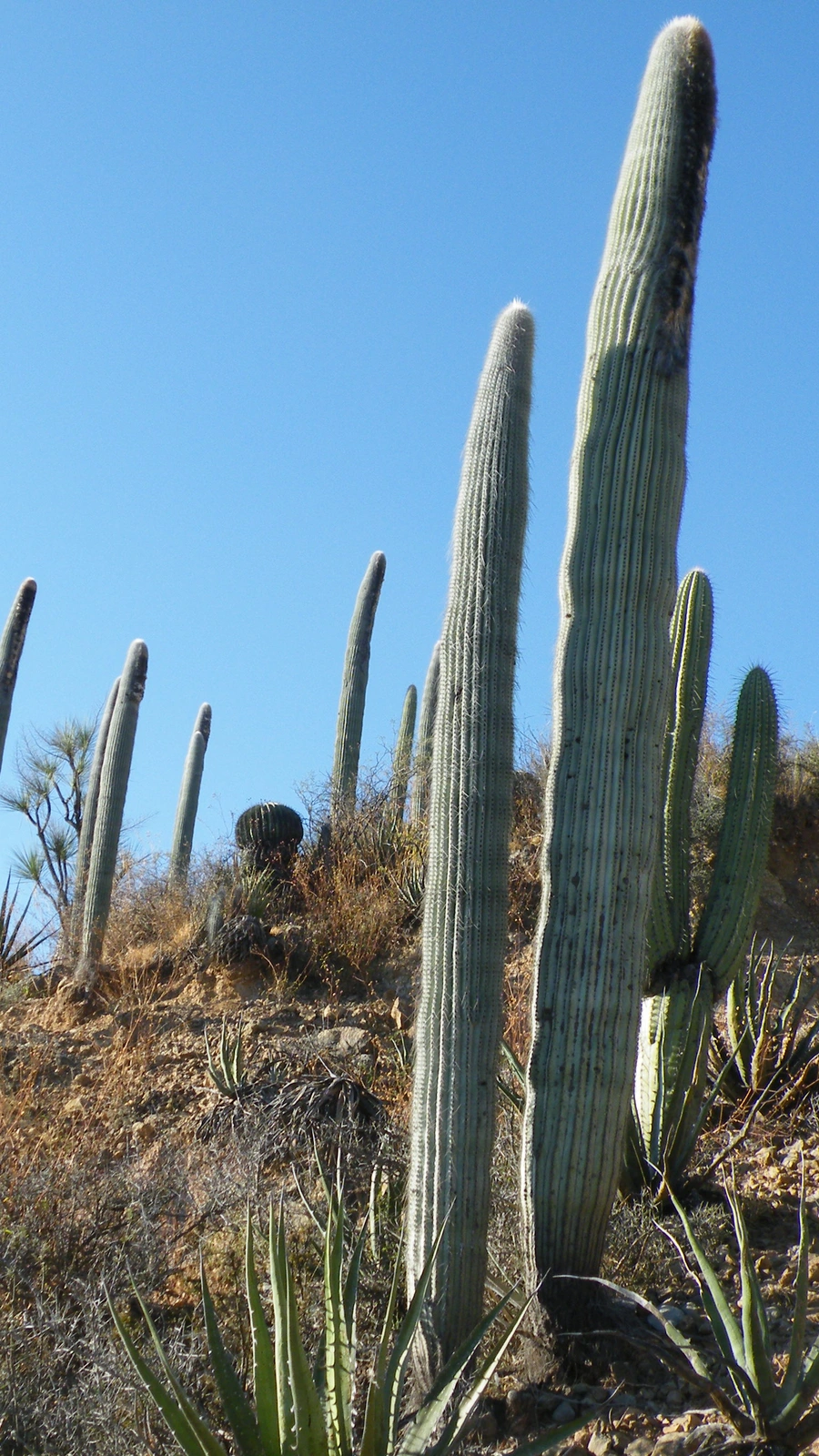 Reference image
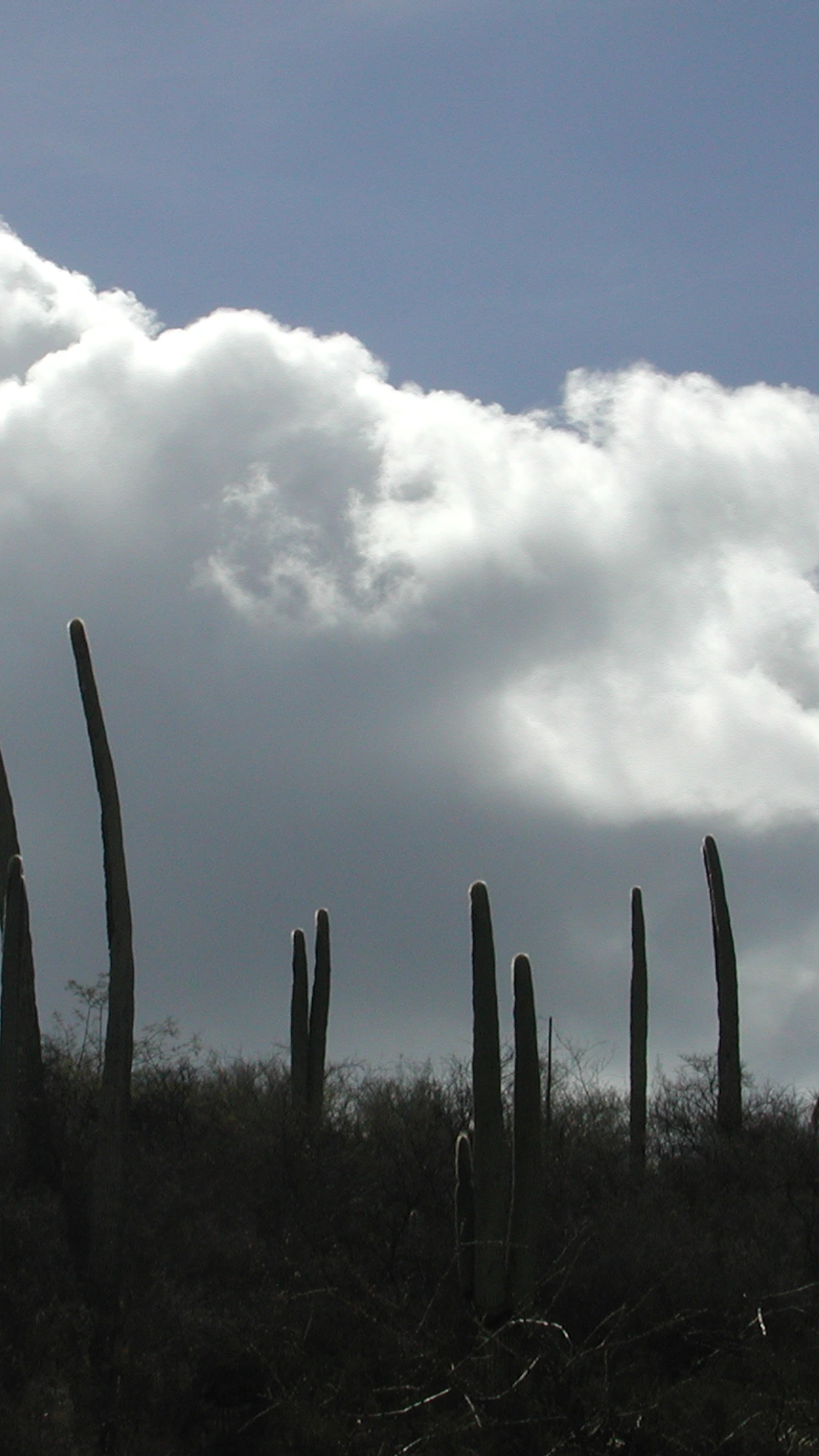 Reference image
Trajan's Column Cactus
Cephalocereus columna-trajani is a magnificent, giant columnar cactus belonging to the Cactaceae family. Known for its striking single-column silhouette and lateral pseudocephalium, this slow-growing species is a iconic representative of North American desert flora 1.
Belonging to the genus Cephalocereus, the species name honors Trajan's Column in Rome, reflecting its straight, grand, and pillar-like growth habit. It was formally described by Karl Moritz Schumann, integrating earlier historical notes by Karwinski and Pfeiffer 12.
This species is endemic to Mexico, specifically localized within the semi-arid matorral of the Tehuacán-Cuicatlán Valley in Puebla and Oaxaca. It thrives on steep limestone hills and rocky slopes under intense solar radiation 2.
In its natural habitat, Cephalocereus columna-trajani can grow up to 10–15 meters high. It features a greyish-green unbranched stem with 15 to 23 ribs. As it matures, it develops a distinct, hairy woolly structure called a lateral pseudocephalium, which systematically faces the southwest. Pale yellow to pinkish flowers emerge from this woolly zone at night 1.
In cultivation, this cactus demands full sun and exceptional drainage. A mineral-heavy soil mix with high amounts of pumice and coarse sand is required to prevent root rot. Watering should be highly restricted during the active growing season and entirely withheld in winter.
The most prevalent issue is overwatering in poorly ventilated areas, leading to rapid rot. Lack of sufficient direct sunlight causes etiolation, where the stem becomes pale, thin, and loses its structural integrity.
Requires full, direct sun for at least 6-8 hours daily to maintain its structural form and spinage.
Water thoroughly only when the soil is dry. Keep completely dry in winter.
Requires extremely porous, mineral-rich soil mix with pumice, lava rock, and coarse sand.
Non-toxic, but the sharp and rigid spines pose a physical injury hazard to pets and children.
Moderate. It requires strict watering discipline and intense light levels to thrive.
Naturally occurs on arid limestone cliffs and canyons of the Tehuacán-Cuicatlán region in south-central Mexico.
