
Light
Full Sun
Requires full direct sun; crucial for maintaining tight spination.
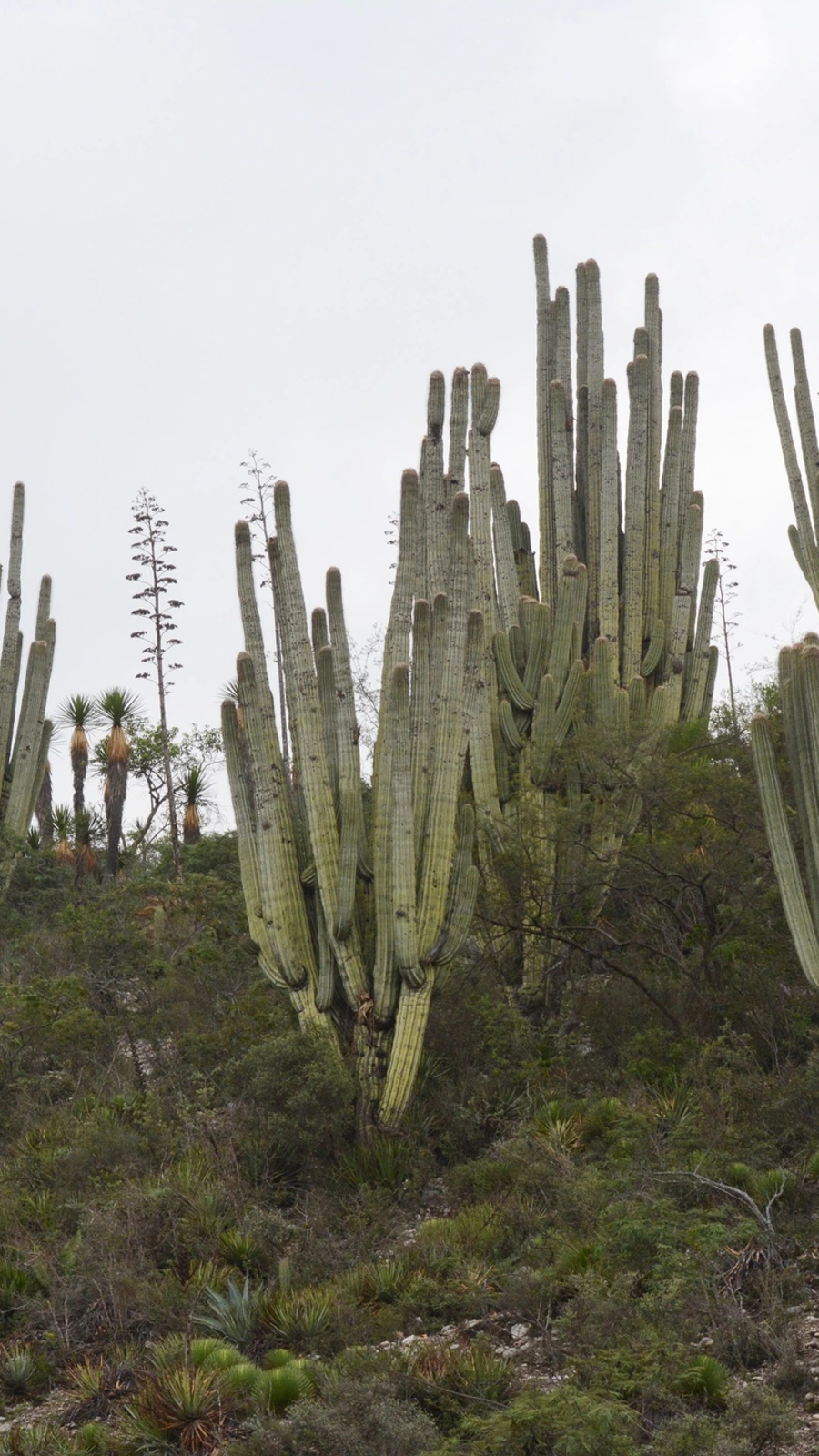 Reference image
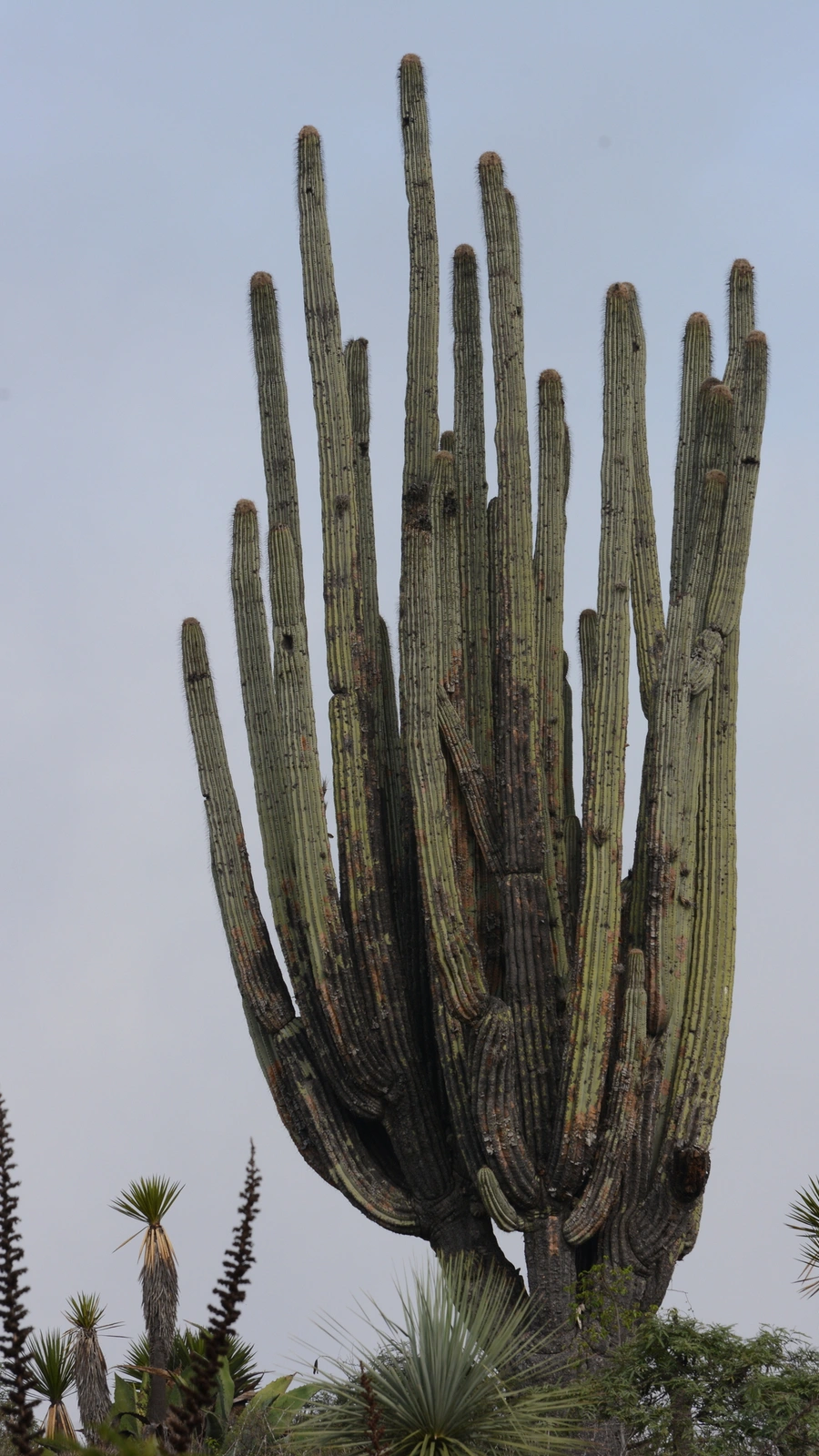 Reference image
Golden-Headed Columnar Cactus
Cephalocereus fulviceps is a monumental, tree-like columnar cactus belonging to the Cactaceae family. Highly prized by collectors, it is renowned for producing a dense, golden-brown woolly cap called a pseudocephalium at the top of its mature stems, from which flowers emerge 1.
Originally described as Pilocereus fulviceps, this species was later combined into the genus Cephalocereus. The specific epithet fulviceps translates from Latin to 'reddish-brown headed', a direct reference to the distinctive woolly crown 2. Common synonyms include Mitrocereus fulviceps and Pseudomitrocereus fulviceps.
This species is endemic to southern Mexico, specifically clustered within the dry valleys of Puebla and Oaxaca, notably the Tehuacán-Cuicatlán Biosphere Reserve 3. It thrives on rocky, calcareous hillsides and steep slopes within dry deciduous scrublands and xerophytic forests.
In its natural habitat, Cephalocereus fulviceps develops into a massive, heavily branched tree reaching heights of up to 12-15 meters. The stems are a glaucous, dull green and feature 11 to 14 sharp-edged ribs. Areoles carry stout, yellowish-brown spines that fade to gray with age. Mature specimens develop a yellowish-brown woolly pseudocephalium at the shoot tips, yielding nocturnal, funnel-shaped, creamy-white flowers.
Under cultivation, this cactus requires maximum sunlight and exceptionally porous, mineral-based soil. Water deeply during the active summer growth period only after the substrate has dried out completely. In winter, maintain absolute dry conditions and cool temperatures to mimic its natural dormant cycle.
Excessive watering and heavy, organic-rich soils are the main culprits behind root rot 2. Insufficient sunlight leads to etiolation, causing the stout stems to become weak, thin, and susceptible to pests.
Requires full direct sun; crucial for maintaining tight spination.
Allow soil to dry fully between waterings; keep dry in winter.
Gritty, mineral-rich mix with low organic matter and high pumice.
Has sharp, sturdy spines; keep away from active pets and children.
Moderate; highly dependent on bright light conditions and dry winters.
Native to the dry, stony canyons and scrublands of southern Mexico, primarily concentrated in the semi-arid zones of Puebla and Oaxaca.
