
Light
Full Sun
Requires full sun or very bright direct light to maintain its robust form and prevent etiolation.
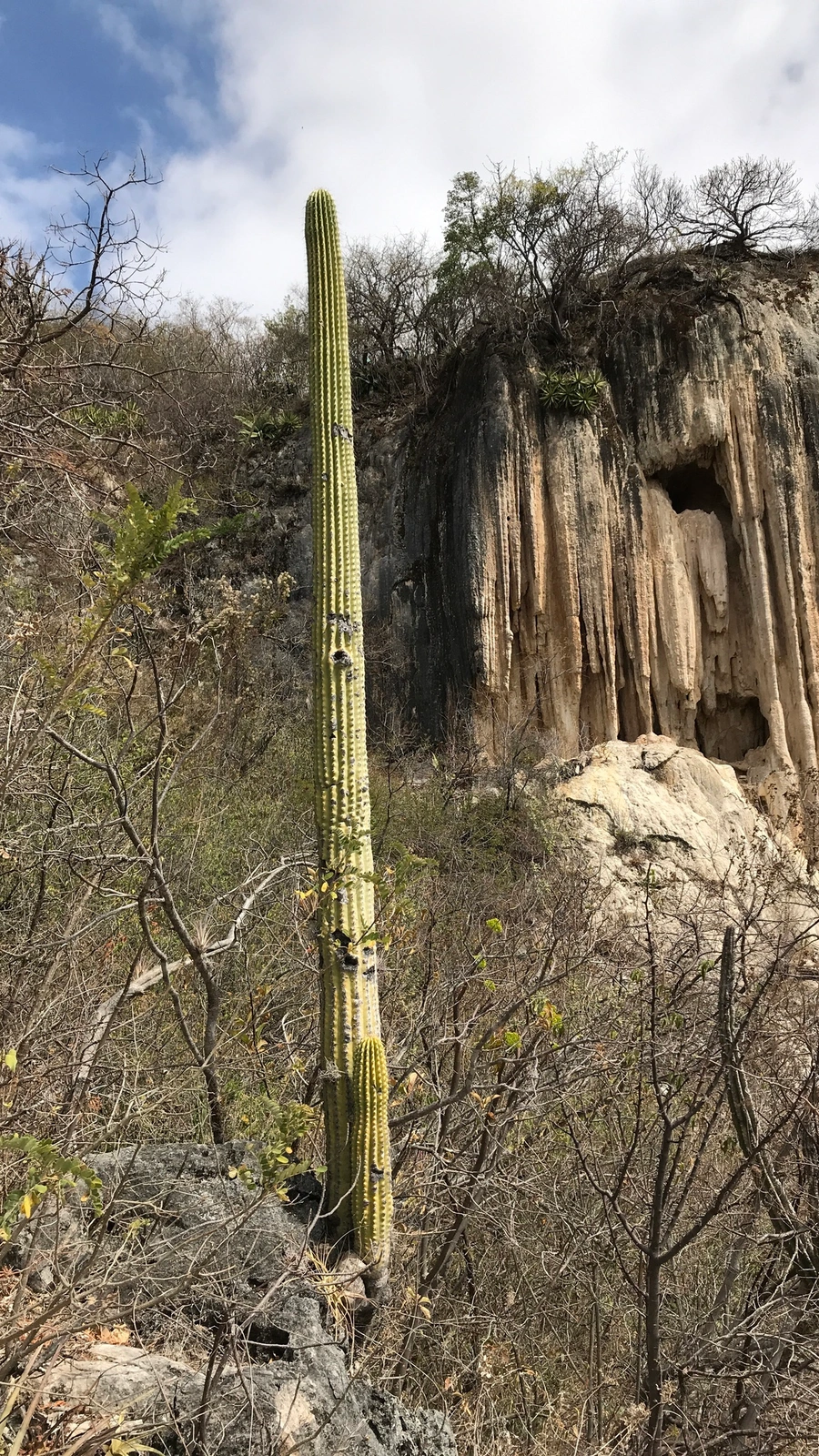 Reference image
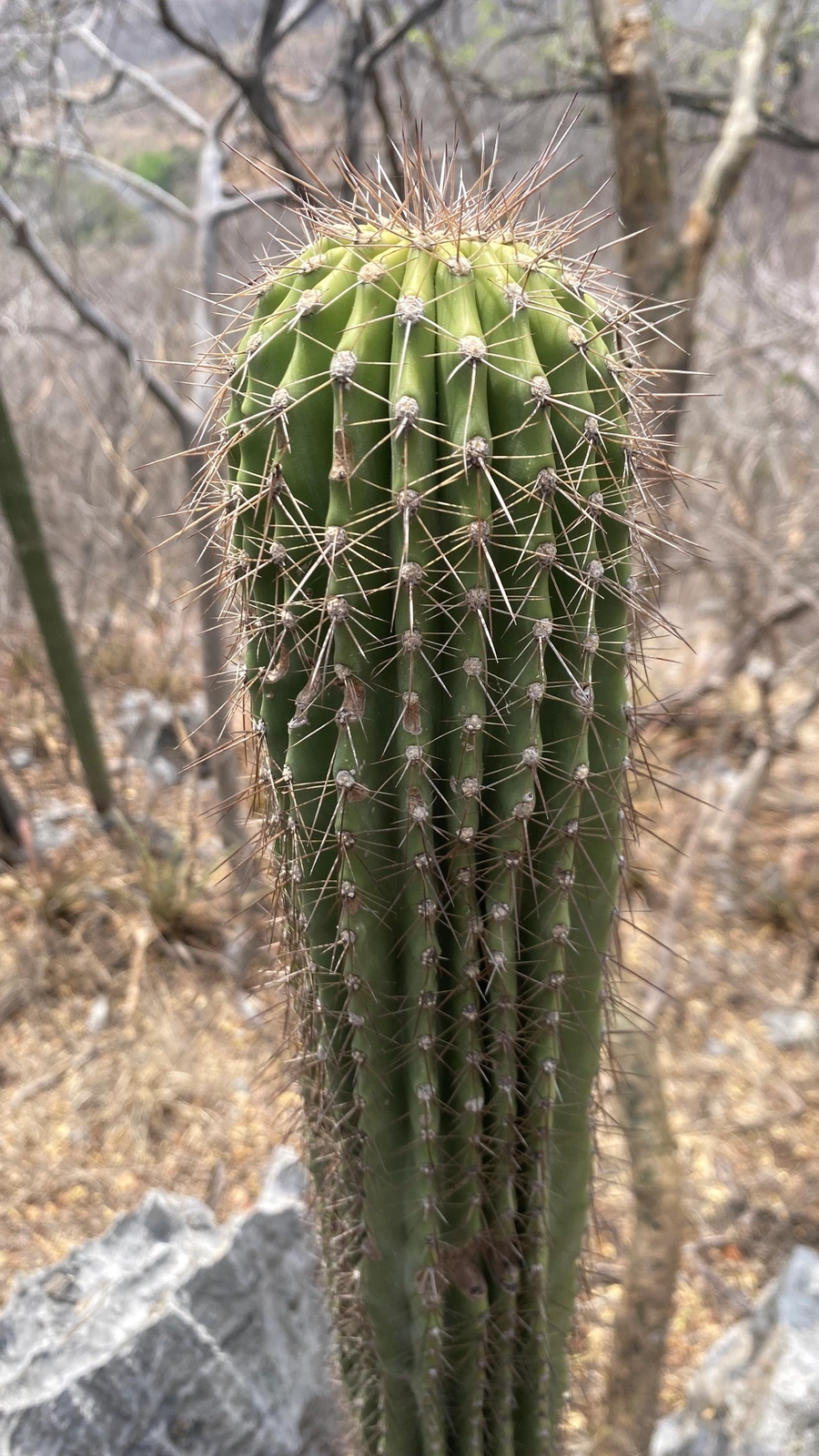 Reference image
Naked Columnar Cactus
Cephalocereus nudus is a majestic, columnar, perennial cactus species native to the arid valleys of Mexico. Known for its treelike succulent growth habit, it plays a vital role in its native desert ecosystem 1. It is highly prized in cultivation for its architectural, minimalist silhouette.
Belonging to the Cactaceae family under the genus Cephalocereus, this species has been historically classified under synonyms such as Neobuxbaumia nuda and Mitrocereus nudus 2. The specific epithet 'nudus' refers to its relatively bare appearance, having less prominent spine density compared to other woolly Cephalocereus species.
This cactus is endemic to southern and central Mexico, including regions like Oaxaca, Guerrero, Michoacán, and Jalisco 1. It thrives in deciduous dry forests, dry shrublands, and rocky slopes with limestone-rich, well-draining soils.
It forms tall, erect, columnar stems that can branch with age, reaching up to 10 meters in nature. The stems feature sharp, well-defined ribs. Small areoles bear spines that are more pronounced on younger growth but may become sparse on older wood. It produces nocturnal, tubular, pinkish-white flowers near the upper stem.
It requires maximum sunlight and exceptionally well-drained soil. Water only when the potting medium has dried out completely. During winter dormancy, watering must be halted almost entirely to prevent root decline 2.
Overwatering is the primary cause of failure, leading to root rot. Insufficient light causes the plant to stretch abnormally (etiolation), permanently weakening the structure.
Requires full sun or very bright direct light to maintain its robust form and prevent etiolation.
Allow soil to dry out 100% between waterings. Strictly avoid waterlogging at all costs.
Use a specialized mineral-heavy cactus mix with plenty of pumice, perlite, and coarse sand.
Features sharp spines; keep out of reach of curious pets and small children.
Moderate difficulty; very forgiving if underwatered, but highly sensitive to excess moisture.
Native to the dry deciduous forests and arid slopes of southern and central Mexico, flourishing in warm, limestone-rich habitats under intense sunlight.
