
Light
Bright Indirect Light
Prefers bright, indirect sunlight or filtered sun; harsh direct midday summer sun can scorch young stems.
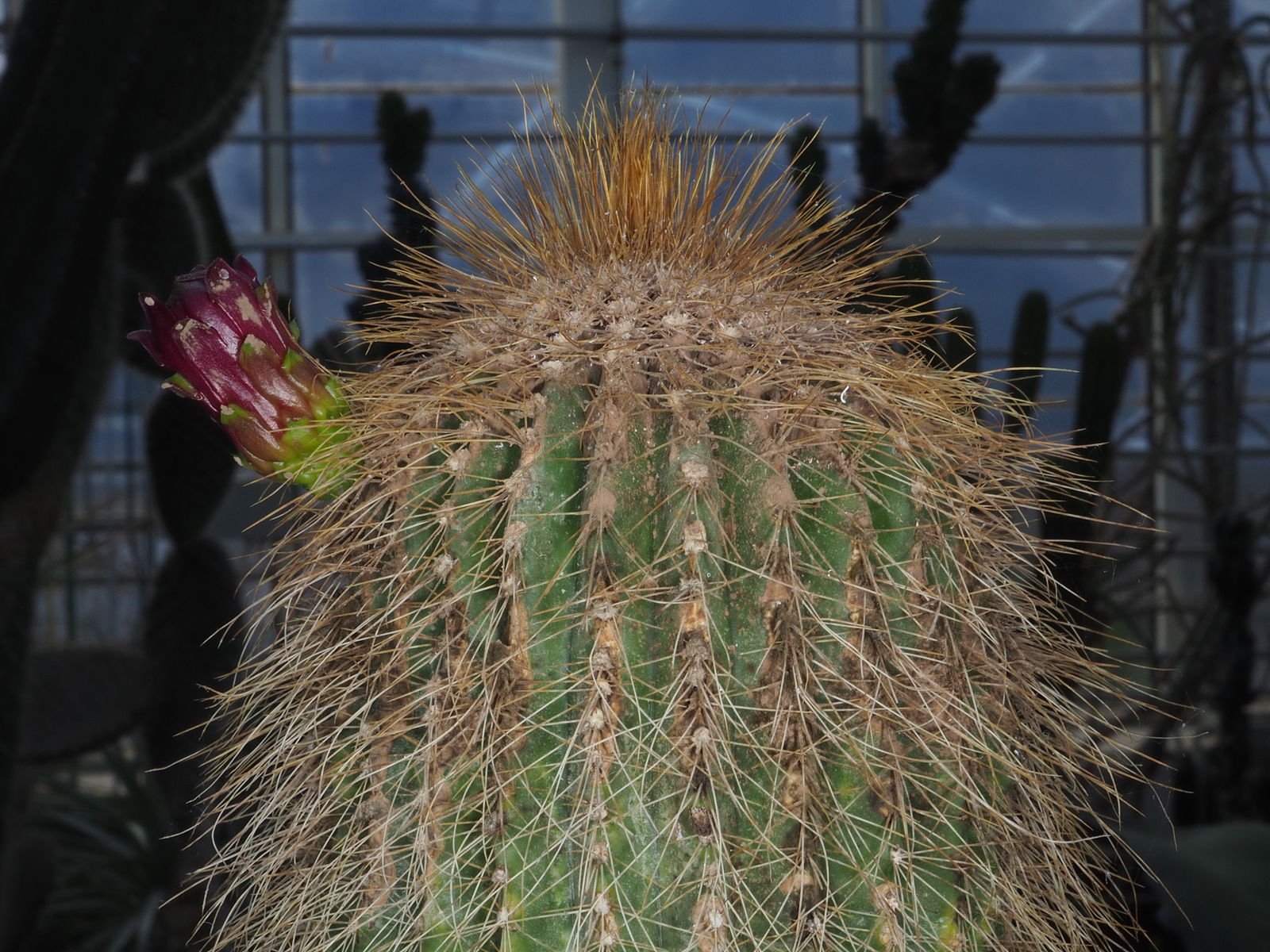 Reference image
Cone Cactus (Golden Saguaro)
Cephalocereus polylophus (often known by its synonym Neobuxbaumia polylopha) is a majestic, single-stemmed columnar cactus native to Mexico 1. Renowned for its impressive stature and neat ribs, it serves as a dominant architectural feature in desert landscapes and specialized succulent collections worldwide.
Originally described in the 19th century, this species was historically placed within the genus Neobuxbaumia. Recent phylogenetic revisions recognized by Kew's Plants of the World Online have repositioned it under Cephalocereus 1. It is colloquially referred to as the 'Cone Cactus' or 'Golden Saguaro' due to its yellowish spines and tall, column-like growth habit.
This species is endemic to central-eastern Mexico, spanning the states of Hidalgo, Querétaro, Guanajuato, and San Luis Potosí 2. It primarily colonizes steep limestone canyons, deciduous dry shrublands, and rocky slopes, thriving at elevations between 1,000 and 1,500 meters.
In the wild, this giant cactus can reach heights of up to 15 meters. The stem is bright green, featuring 10 to 30 closely spaced, narrow ribs. The areoles bear fine, golden-yellow to brownish spines that give the plant a shimmering appearance. Mature specimens produce small, deeply red or purplish flowers near the crown 2.
In cultivation, it requires bright, indirect sunlight or partially filtered sun to avoid scorching. A highly mineral, porous soil substrate containing pumice, gravel, and perlite is mandatory to prevent root rot. Watering should be deep but infrequent, adhering strictly to the wet-to-dry cycle.
The most prevalent issue is waterlogging from poorly draining soil or heavy pots without drainage holes. Keeping the soil damp during winter dormancy inevitably triggers fungal infections and soft stem rot.
Prefers bright, indirect sunlight or filtered sun; harsh direct midday summer sun can scorch young stems.
Allow the potting mix to dry completely before watering. Keep almost dry in winter.
Requires an extremely gritty, mineral-based cactus soil mix with high pumice content.
Equipped with numerous fine, sharp spines. Keep out of reach of curious pets and children.
Moderately easy if watering is strictly controlled and bright conditions are provided.
Native to the limestone cliffs and arid canyon regions of central-eastern Mexico, where it grows alongside dry deciduous scrub.
