
Light
Full Sun
Needs at least 6 hours of direct sun daily. Best placed on south-facing windows or sunny patios.
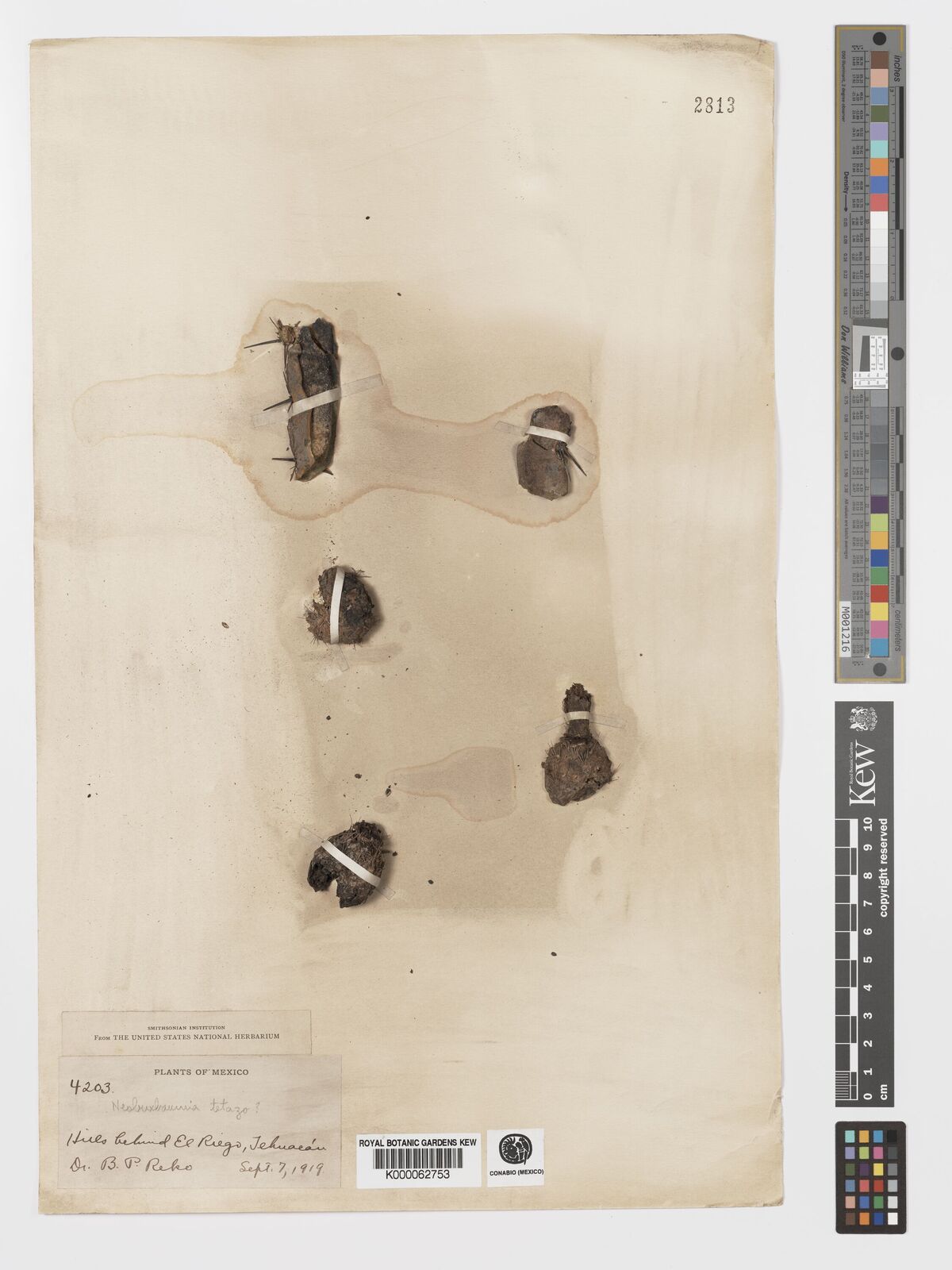 Reference image
Giant Tehuacan Cactus
Cephalocereus tetetzo is a majestic, arborescent columnar cactus species endemic to the arid valleys of Mexico 1. It is one of the most ecologically dominant and iconic plants of the Tehuacán-Cuicatlán Valley, known for its extremely slow growth and massive candelabra-like branching over many decades.
Belonging to the family Cactaceae and the genus Cephalocereus, this species is also widely classified under the synonym Neobuxbaumia tetetzo 2. It is commonly referred to by locals simply as "tetetzo". Its taxonomic placement has historically been central to the classification of Mexican columnar cacti.
This species is native to south-central Mexico, particularly in the states of Puebla, Oaxaca, Guerrero, and Morelos 1. It thrives on limestone slopes, dry shrublands, and desert valleys at elevations between 1,000 and 1,800 meters, often forming dense single-species forests known as 'cardonales'.
Cephalocereus tetetzo can grow up to 15 meters tall, featuring thick, cylindrical grayish-green stems with 15 to 30 prominent ribs. The areoles bear stiff, grayish-black spines. Nocturnal, bell-shaped flowers are greenish-white to pinkish, emerging near the top of the stems and attracting bat pollinators.
It requires maximum sunlight and excellent soil drainage. Water deeply during the hot summer months only after the soil has completely dried out, and keep it entirely dry in winter. It prefers mineral-rich, porous soils with very low organic content.
Overwatering and poor light are the primary causes of failure. Insufficient light causes etiated, weak growth, while excessive moisture during cold winter periods leads to root rot.
Needs at least 6 hours of direct sun daily. Best placed on south-facing windows or sunny patios.
Water only when the soil is completely bone-dry. Keep dry throughout winter.
Use a mineral-rich soil mix containing pumice, volcanic rock, and coarse sand.
Armed with sharp, rigid spines. Keep away from pets and children. Handle with thick protective gloves.
Easy to care for if kept dry and sunny, but requires patience due to its slow growth rate.
Inhabits the arid and semi-arid regions of south-central Mexico, where it dominates limestone slopes and dry valleys as a key structural species of the local ecosystem.
