
Light
Full Sun
Requires full sun to maintain structural integrity and promote healthy spination.
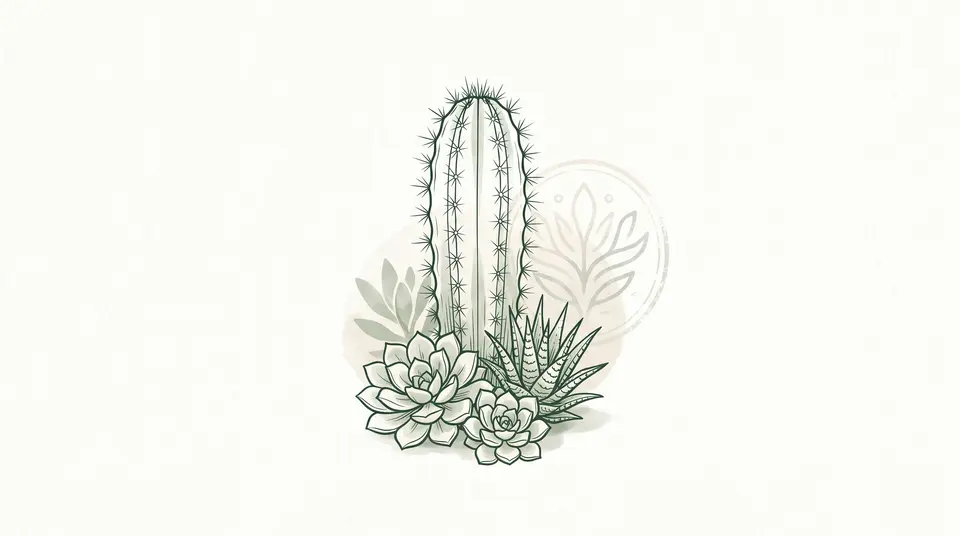 Reference image
Cereus bavosus is a lesser-known, columnar cactus species belonging to the Cactaceae family. Resilient in its natural habitat, it develops an upright, tree-like structure that makes a striking focal point in dry gardens and specialized succulent collections.
Within the genus Cereus, this species stands out due to its specific epithet "bavosus," which historically relates to the slimy or viscous nature of its internal sap when cut 1. It shares major morphological traits with other classic columnar Cereus species but remains distinct in regional classifications.
Native to the arid and semi-arid valleys of Central and South America, this cactus thrives on rocky, well-draining slopes. It is highly adapted to nutrient-poor soils, intense solar radiation, and long periods of seasonal drought 2.
The plant grows as an erect column with deep longitudinal ribs. The epidermis color ranges from dull green to a glaucous blue-grey. Spines are borne on distinct woolly areoles and vary from brown to grey. Large, nocturnal white flowers bloom along the ribs, adapted for pollination by moths and bats 1.
In cultivation, Cereus bavosus requires a warm, sunny position with excellent air circulation. Irrigation should follow the 'soak and dry' method, allowing the medium to dry out completely before watering again. Standard mineral-rich cactus substrates with high porosity are highly recommended.
The most frequent failures in cultivation include overwatering, planting in compact clay soils, and insufficient sunlight exposure, which leads to weak growth (etiolation) and root rot.
Requires full sun to maintain structural integrity and promote healthy spination.
Soak thoroughly when dry in spring and summer. Keep completely dry in winter.
Requires highly porous gritty mix consisting of pumice, coarse sand, and minimal organic matter.
Non-toxic, but sharp spines can cause physical injury. Handle with thick protective gloves.
Very easy to care for, provided it is not overwatered or kept in stagnant air.
Native to dry valleys and rocky, limestone-rich slopes across semi-arid regions of Central and South America under intense direct sunlight.
