Cereus
Cereus
Auto-generated taxonomy record for Cereus.

Child Taxa
Plants In This Group
Cereus acanthosphaera
Cereus acanthosphaera is a striking columnar member of the Cactaceae family, highly appreciated by collectors for its architectural form and symmetric spine clusters. It exhibits robust growth in domestic glasshouses and dry indoor gardens alike, representing the resilience typical of South American columnar cacti .
Cereus aethiops
Cereus aethiops
Cereus aethiops: The Distinctive Columnar Cactus of South America
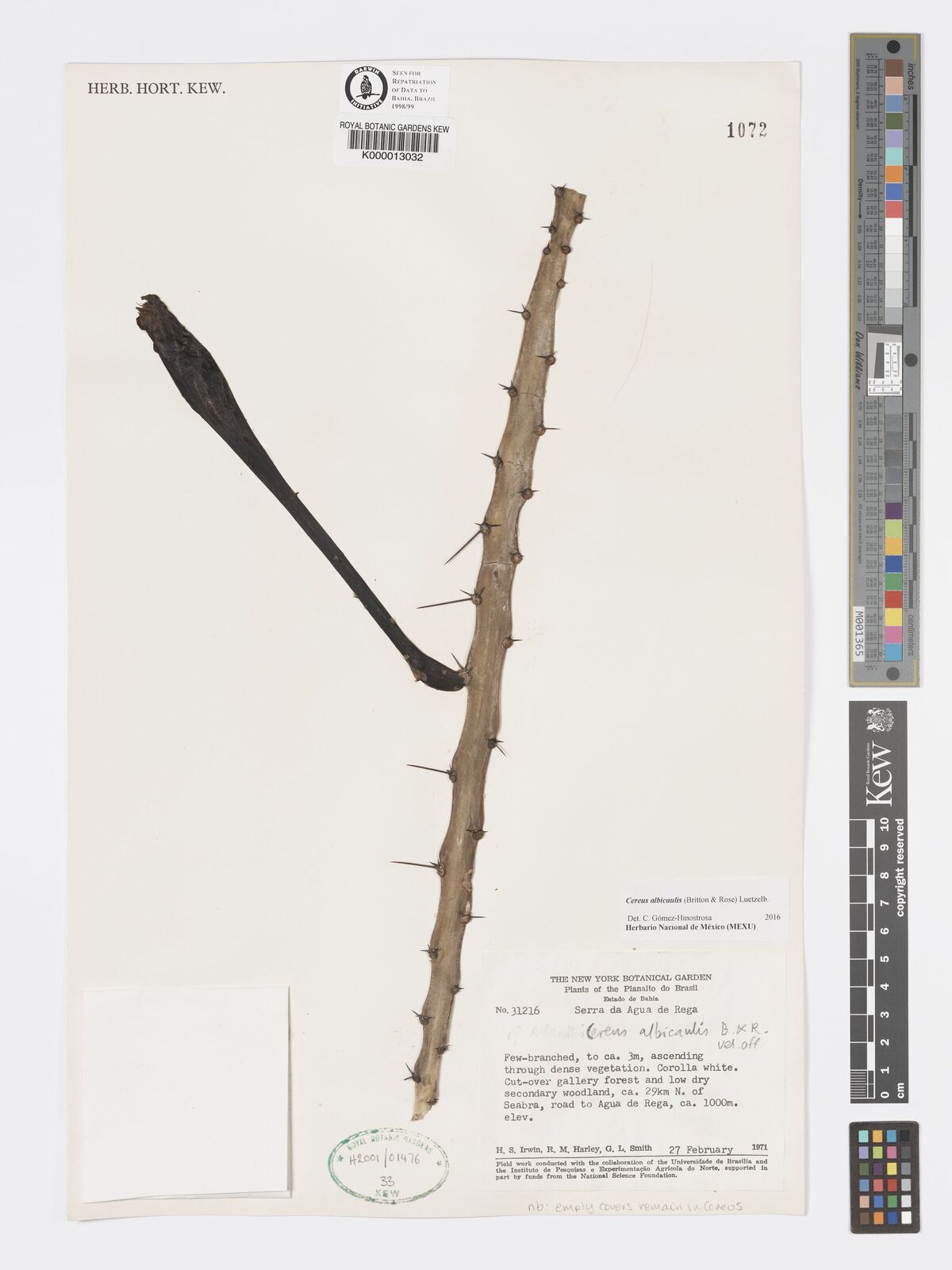
Cereus albicaulis
Cereus albicaulis
Cereus albicaulis is an intriguing succulent tree belonging to the cactus family (Cactaceae). Characterized by its semi-scandent or climbing growth habit, it is highly sought after by collectors for its striking white-to-bluish pruinose stems .
Cereus albisetosus
Cereus albisetosus
Cereus albisetosus is a rare and highly ornamental columnar cactus in the Cactaceae family. Distinguished by its bright green stems adorned with soft, white bristly spines, this species adds a unique, tactile element to succulent collections and arid-themed conservatories.
Cereus albispinus
Cereus albispinus
Cereus albispinus is a striking columnar cactus belonging to the Cactaceae family, highly recognized for its prominent white spines and erect growth habit. Popular among collectors, this species is widely utilized in modern interior designs and xeriscapes due to its resilience and architectural form .
Cereus alex-bragae
Cereus alex-bragae
Cereus alex-bragae is a rare and striking succulent tree belonging to the Cactaceae family. Characterized by its upright, columnar growth habit, this species eventually develops a tree-like structure in its natural habitat, highly adapted to seasonal drought .
Cereus amblygonus
Cereus amblygonus
Cereus amblygonus is a columnar cactus belonging to the family Cactaceae. Known for its distinctively ribbed stem and vertical growth habit, it is highly prized by collectors for its architectural form and exceptional resilience in both indoor and outdoor desert gardens.
Cereus anisacanthus
Cereus anisacanthus
Cereus anisacanthus is a columnar cactus species belonging to the genus Cereus within the family Cactaceae. Known for its distinct, uneven spine arrangement and robust growth, this species is highly appreciated by succulent enthusiasts and botanical collectors alike.
Cereus arachnoides
Cereus arachnoides
Cereus arachnoides is an intriguing columnar cactus belonging to the family Cactaceae. Known for its slender stems and distinctive, web-like spine formations, this species is highly sought after by cactus enthusiasts and collectors worldwide.
Cereus arcuatus
Cereus arcuatus
Cereus arcuatus is an upright, columnar cactus species belonging to the Cactaceae family. Adapted to arid conditions, it features a distinctive ribbed structure that stores water efficiently, making it highly drought-tolerant and a valued addition to succulent collections.
Cereus aurantiacus
Cereus aurantiacus
Cereus aurantiacus is a columnar cactus belonging to the family Cactaceae . It is highly appreciated by collectors for its robust vertical growth and striking nocturnal blooms.
Cereus auratus
Cereus auratus
Cereus auratus is a striking, yet relatively rare member of the Cactaceae family. Characterized by its dense cover of brilliant, golden-yellow spines, its specific epithet 'auratus' translates directly to 'golden' or 'gilded' in Latin.
Cereus aureus
Cereus aureus
Cereus aureus (currently widely accepted as Haageocereus aureus) is an outstanding columnar cactus species belonging to the family Cactaceae. Famed for its dense cover of brilliant golden-yellow spines, this plant is a highly prized specimen among succulent and cactus enthusiasts for its structural form and vibrant color .
Cereus bavosus
Cereus bavosus
Cereus bavosus is a lesser-known, columnar cactus species belonging to the Cactaceae family. Resilient in its natural habitat, it develops an upright, tree-like structure that makes a striking focal point in dry gardens and specialized succulent collections.
Cereus beysiegelii
Cereus beysiegelii
Cereus beysiegelii is a columnar cactus belonging to the family Cactaceae. Known as a rare taxon within the genus Cereus, this species exhibits the typical drought-tolerant characteristics, ribbed stem structure, and upright growth habit that define many columnar cacti . It is highly valued by succulent collectors for its sculptural form.
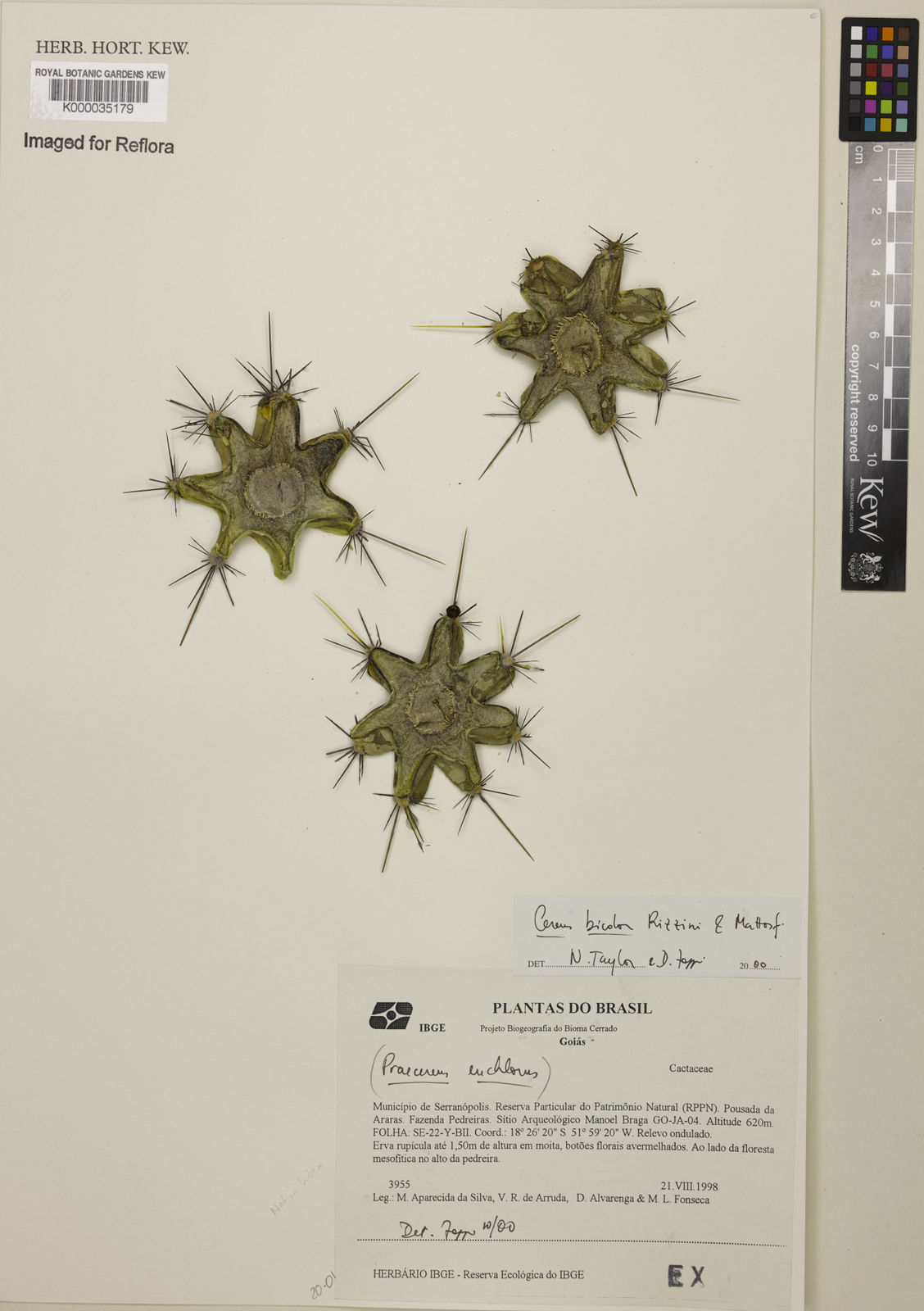
Cereus bicolor
Cereus bicolor
Cereus bicolor is a striking columnar cactus belonging to the family Cactaceae, native to the seasonally dry tropical environments of Brazil . Known for its shrubby or tree-like growth habit, it is appreciated in cultivation for its impressive stature and distinct bicolored spines.
Cereus bonariensis
Cereus bonariensis
Cereus bonariensis is a robust, columnar cactus species belonging to the family Cactaceae. Known for its stately upright growth, it forms impressive branched columns in its natural habitat and cultivated gardens.
Cereus brachiatus
Cereus brachiatus
Cereus brachiatus is a rare and striking columnar cactus belonging to the Cactaceae family. Known for its upright stem and unique branching habit, this species is a prized specimen among succulent and cactus enthusiasts globally.
Cereus chalybaeus
Cereus chalybaeus
Cereus chalybaeus is a striking columnar cactus member of the Cactaceae family, highly recognized for its beautiful steel-blue stem coloration. It develops a tree-like or shrubby branching habit, making it a dramatic architectural plant for landscapes and container gardens [].
Cereus chiloensoides
Cereus chiloensoides is a lesser-known but highly ornamental columnar cactus species within the Cactaceae family, appreciated for its rugged form and excellent drought tolerance .
Cereus claviformis
Cereus claviformis
Cereus claviformis is a rare and intriguing cactus species within the family Cactaceae, highly sought after by collectors for its distinctive club-shaped stem morphology. Known for its low maintenance requirements and exceptional drought tolerance, it makes a resilient houseplant .
Cereus conformis
Cereus conformis
Cereus conformis is a columnar, upright-growing cactus species belonging to the family Cactaceae . Known for its robust structure and low-maintenance requirements, it represents a unique addition to succulent and cactus collections.
Cereus conicus
Cereus conicus
Cereus conicus is an erect, columnar cactus species belonging to the genus Cereus within the Cactaceae family. Known for its vertical growth habit and robust rib structure, this species is a striking addition to xerophytic collections and succulent gardens worldwide .
Cereus cossyrensis
Cereus cossyrensis
Cereus cossyrensis is an intriguing, columnar cactus species belonging to the family Cactaceae. It is highly valued for its striking architectural form and extreme drought tolerance.
Cereus costatus
Cereus costatus
Cereus costatus is a striking columnar cactus species belonging to the Cactaceae family. Known for its deeply ribbed stems and architectural silhouette, this plant is highly prized among succulent collectors for its resilience and bold presence .
Cereus crenoides
Cereus crenoides
Cereus crenoides is a lesser-known but botanically significant species belonging to the family Cactaceae. This columnar cactus exhibits the classic erect, ribbed growth habit typical of the genus, adapted perfectly to survive in harsh, arid conditions.
Cereus crenulatus
Cereus crenulatus
Cereus crenulatus is a columnar cactus species belonging to the family Cactaceae. It is characterized by its upright, ribbed growth form and adaptation to arid environments . Though less common in mainstream cultivation, it represents a unique specimen for cactus enthusiasts.
Cereus cumengei
Cereus cumengei
Cereus cumengei is an upright, columnar cactus species belonging to the family Cactaceae. Adapted to harsh desert environments, it is recognized for its architectural form and high drought tolerance .
Cereus cumengii
Cereus cumengii
Cereus cumengii is a columnar cactus species belonging to the genus Cereus within the family Cactaceae. Known primarily among succulent collectors, this species is appreciated for its architectural stature, vertical ribbing, and tolerance to drought conditions . It is highly adaptable to pot culture.
Cereus decandollei
Cereus decandollei
Cereus decandollei is a striking columnar cactus belonging to the family Cactaceae . It is highly valued in cultivation for its architectural form and relative ease of maintenance.
Cereus del-moralii
Cereus del-moralii
Cereus del-moralii is a rare columnar cactus species belonging to the Cactaceae family. Characterized by its erect, ribbed stems, it is highly valued among collectors for its striking vertical architecture and night-blooming capabilities.
Cereus dichroacanthus
Cereus dichroacanthus is an intriguing, columnar member of the Cactaceae family, primarily sought after by specialized succulent collectors . Known for its upright habit, prominent ribbing, and distinctively hued spines, it represents the classic stature of South American columnar cacti.
Cereus donatii
Cereus donatii
Cereus donatii is a columnar cactus species belonging to the iconic genus Cereus within the family Cactaceae. Known for its upright, structural growth and prominent ribs, this species makes a striking statement both in natural landscapes and container collections .
Cereus duledevantii
Cereus duledevantii
Cereus duledevantii is a rare and lesser-known columnar cactus species in the family Cactaceae. Known mainly among specialized collectors, it features a classic upright growth form with excellent drought tolerance.
Cereus dyckii
Cereus dyckii
Cereus dyckii is a columnar cactus species belonging to the family Cactaceae, carrying significant historical value in botanical literature. First described in 1837 by Ludwig Karl Georg Pfeiffer , modern taxonomic revisions widely treat this taxon as a synonym of Pilosocereus royenii, commonly known as the Royen's tree cactus .
Cereus edulis
Cereus edulis
Cereus edulis is a remarkable columnar cactus belonging to the Cactaceae family, primarily appreciated for its architectural stature and its delicious, edible fruits.
Cereus elegans
Cereus elegans
Cereus elegans is a columnar cactus species belonging to the Cactaceae family, native to the arid regions of Peru and western South America. In its natural habitat, it thrives along rocky slopes and dry valleys.
Cereus erectus
Cereus erectus
Cereus erectus is a distinctive columnar member of the Cactaceae family, highly appreciated for its architectural vertical growth and robust nature. It represents a classic desert aesthetic suitable for low-maintenance collections .
Cereus ericomus
Cereus ericomus
General overview
Cereus ericomus is a rare, columnar cactus species belonging to the family Cactaceae. Known for its distinct woolly and spiny appearance, this plant holds a special appeal for succulent collectors and botanical enthusiasts worldwide due to its limited distribution in the wild .
Cereus fernambucensis
Cereus fernambucensis is a columnar, shrubby cactus species belonging to the Cactaceae family, native to the coastal sand dunes and restinga habitats of Brazil. It is highly adapted to intense solar radiation, wind, and saline environments, making it incredibly resilient .
Cereus ferox
Cereus ferox
Cereus ferox is an impressive, columnar cactus belonging to the Cactaceae family. Capable of reaching massive proportions in its native habitat, this robust and popular cactus is also highly valued for indoor and greenhouse cultivation due to its architectural structure and resilience.
Taxonomy and Naming
In botanical literature, the name Cereus ferox has historically been associated with various taxa, often treated as a synonym or subspecies within the Cereus jamacaru complex 1. The specific epithet \"ferox\" translates from Latin as \"fierce\" or \"strongly armed,\" directly referencing the formidable, sharp spine clusters protecting its ribs 2.
Distribution and Habitat
This cactus species is native to South America, particularly common in the semi-arid 'Caatinga' shrublands of northeastern Brazil. It is perfectly adapted to survive in harsh, rocky terrains, nutrient-poor soils, and areas characterized by prolonged dry seasons and high solar radiation 1.
Appearance
Featuring a striking blue-green to grayish-green epidermis, Cereus ferox grows upright with deep, well-defined ribs. The areoles bear clusters of sharp, rigid spines that range in color from yellow-brown to gray. Mature specimens produce nocturnal, funnel-shaped white flowers that attract nocturnal pollinators 2.
Care in Cultivation
Cereus ferox is remarkably easy to grow. It thrives in full, direct sunlight and requires a well-draining, mineral-rich potting medium. Water thoroughly during the active spring and summer growth phases, allowing the soil to dry completely between waterings. In winter, keep the plant almost entirely dry 1.
Common Care Mistakes
Overwatering during the winter dormancy and utilizing heavy, clay-rich soil without proper drainage are the most frequent mistakes, leading to lethal root rot. Insufficient light exposure causes the stems to stretch abnormally (etiolation) and weaken.
References
Cereus flexuosus
Cereus flexuosus
Cereus flexuosus is a unique, semi-scandent or sprawling columnar cactus belonging to the family Cactaceae. Known for its characteristically curving or flexing stems, this species is highly valued by succulent enthusiasts for its architectural form and resilience.
Cereus forbesii
Cereus forbesii
Cereus forbesii: The Majestic Columnar Cactus of South America
Cereus formosus
Cereus formosus
Cereus formosus is an upright, columnar cactus species belonging to the Cactaceae family. Known for its stately structural form and spectacular nocturnal blooms, it is a highly valued ornamental plant suited for xeric gardens and sunny indoor spaces.
Cereus fricii
Cereus fricii
Cereus fricii is a distinctive and relatively rare climbing succulent within the Cactaceae family. Unlike many of its upright, columnar relatives in the Cereus genus, this species displays a sprawling or climbing habit . This unique growth form makes it highly sought after by cactus enthusiasts and collectors worldwide.
Cereus geminisetus
Cereus geminisetus
Cereus geminisetus is a striking columnar cactus belonging to the Cactaceae family. Known for its upright growth habit and distinct spination, this species is highly adapted to arid conditions and makes an excellent low-maintenance specimen for collectors .
Cereus gerardi
Cereus gerardi
Cereus gerardi is a striking, columnar, succulent tree cactus belonging to the family Cactaceae. Highly appreciated in cultivation for its sculptural and majestic habit, this species is relatively easy to care for and represents an outstanding specimen for sunny patios, xeriscapes, and bright indoor spaces.
Cereus gladilger
Cereus gladilger
Cereus gladilger is a columnar, rare cactus species belonging to the Cactaceae family. Characterized by its upright growth and sharp, sword-like spine structures, this plant is highly prized by succulent collectors for its sculptural and dramatic appearance.
Cereus glaucescens
Cereus glaucescens
Cereus glaucescens is a striking columnar cactus belonging to the family Cactaceae, highly appreciated for its dramatic blue-grey stem color and architectural stature .
Cereus glaucus
Cereus glaucus
Cereus glaucus is a stunning, blue-green columnar cactus native to South America. It is highly valued among collectors for its striking glaucous stems and majestic nocturnal blooms . This species is well-adapted to seasonally dry tropical biomes, displaying excellent drought tolerance.
Cereus gonzalezii
Cereus gonzalezii
Cereus gonzalezii is a columnar cactus species belonging to the family Cactaceae, characterized by its upright growth form. This species stands out as a characteristic element of dry tropical forests and arid regions, known for its resilience and adaptability to cultivation.
Cereus grandis
Cereus grandis
Cereus grandis is a stately, columnar member of the cactus family (Cactaceae). Known for its impressive upright growth habit and architectural presence, it is a favored specimen in arid landscapes and succulent collections.
Taxonomy and Naming
In botanical history, the name Cereus grandis has often been associated with or synonymized under other large columnar species such as Cereus jamacaru or Cereus hexagonus 1. While sometimes classified as an unresolved or horticultural name in modern databases, it remains recognized among collectors for its distinct robust form.
Distribution and Habitat
This cactus is native to the arid and semi-arid regions of South America 2. It thrives on rocky slopes, dry scrublands, and open plains where sunlight is abundant and soil moisture is scarce.
Appearance
The plant features thick, blue-green to grayish stems with 4 to 6 deep ribs. Areoles along the margins bear sharp, brownish spines. Mature specimens produce large, nocturnal white flowers that attract nocturnal pollinators.
Cultivation and Care
It requires full, direct sunlight to maintain its structural integrity. Water thoroughly only when the substrate is completely dry, and maintain dry conditions during the winter dormancy period.
Common Care Mistakes
Overwatering is the primary cause of root and stem rot 1. Placing the cactus in low-light environments causes etiolation, characterized by weak, pale, and narrow growth.
Bibliography
References
Cereus greggii
Cereus greggii
Cereus greggii (widely classified today as Peniocereus greggii ) is an extraordinary desert cactus celebrated for its cryptic appearance and spectacular, heavily scented nocturnal flowers. Known commonly as the "Arizona Queen of the Night", this species survives harsh desert droughts through a massive underground tuberous root system.
Cereus hermannianus
Cereus hermannianus
Cereus hermannianus is an upright, columnar cactus species belonging to the family Cactaceae . It is highly prized by succulent collectors for its architectural and striking rib structure.
Cereus hertrichianus
Cereus hertrichianus is a striking, columnar succulent tree belonging to the Cactaceae family . Known for its impressive upright stature and extreme drought tolerance, it is a prized specimen for arid landscapes and succulent collectors.
Cereus heteracanthus
Cereus heteracanthus is a columnar cactus species belonging to the family Cactaceae. Known for its striking upright stature and unique spine arrangement, this plant is highly prized among succulent and cactus collectors.
Cereus heterocanthus
Cereus heterocanthus is a columnar cactus belonging to the Cactaceae family. This species is characterized by its upright growth habit, prominent ribs, and highly variable spination .
Cereus hexagonus
Cereus hexagonus
Cereus hexagonus is a massive, tree-like columnar cactus belonging to the Cactaceae family. Known for its impressive height and nocturnal blooms, it is a distinctive species adapted to wet tropical environments.
Cereus hildmannianus
Cereus hildmannianus, commonly known as the Queen of the Night or Hedge Cactus, is a majestic, tree-like columnar cactus belonging to the family Cactaceae. It is highly valued for its dramatic stature and stunning nocturnal flowers .
Cereus horizontalis
Cereus horizontalis
Cereus horizontalis is a distinctive and rare cactus species belonging to the Cactaceae family, primarily native to the arid and semi-arid regions of South America. Known for its tendency to grow horizontally or decumbently, it is highly prized among succulent collectors .
Cereus horrens
Cereus horrens
Cereus horrens is a striking, columnar cactus species within the Cactaceae family, known for its heavily armed spine clusters and upright growth habit. This resilient succulent is highly valued by collectors for its dramatic structural appearance and low-maintenance requirements .
Cereus horrispinus
Cereus horrispinus
Cereus horrispinus is a striking columnar cactus belonging to the family Cactaceae, characterized by its formidable spination and robust, shrubby growth habit. Perfectly adapted to arid and seasonally dry environments, it is a highly prized species among succulent enthusiasts for its architectural form .
Cereus humboldtianus
Cereus humboldtianus is a columnar cactus belonging to the family Cactaceae. Known for its stately upright growth and resilience, this species is highly valued by succulent collectors for its dramatic architectural shape and classic desert aesthetic .
Cereus humilis
Cereus humilis
Cereus humilis is a relatively small, shrubby or semi-erect cactus species belonging to the Cactaceae family. Unlike its towering columnar relatives, it maintains a more modest and spreading growth habit.
Cereus huntingtonianus
Cereus huntingtonianus is an upright, columnar cactus species belonging to the Cactaceae family. Highly valued among succulent enthusiasts, it is recognized for its architectural growth form, prominent ribs, and beautiful nocturnal blooms. It has a high tolerance for drought and heat.
Cereus hystrix
Cereus hystrix
Cereus hystrix is a robust, columnar cactus native to the Caribbean islands. Characterized by its branching, tree-like form and sharp, defensive spines, it is a prominent species in dry coastal ecosystems and xeric landscaping.
Cereus ingens
Cereus ingens
Cereus ingens is a massive, tree-like succulent cactus belonging to the family Cactaceae . Renowned for its towering columnar form and resilience, it is a magnificent architectural specimen in dry gardens and large landscapes.
Cereus insularis
Cereus insularis
Cereus insularis is a shrubby, clumping columnar cactus species belonging to the family Cactaceae. Known for its coastal resilience, this succulent shrub is native to rocky shorelines and seasonally dry tropical habitats . It is highly adapted to wind and salt spray.
Cereus jamacaru
Cereus jamacaru
Cereus jamacaru (Mandacaru)
Cereus jugatiflorus
Cereus jugatiflorus
Cereus jugatiflorus is a lesser-known, columnar cactus species belonging to the Cactaceae family. Adapted to arid conditions, it features succulent stems capable of storing significant water .
Cereus kreggii
Cereus kreggii
Cereus kreggii (commonly accepted as Peniocereus greggii), is one of the most remarkable and enigmatic species of the Cactaceae family. For most of the year, it resembles a dry, lifeless stick, but during midsummer nights, it produces magnificent, intensely fragrant flowers .
Cereus lamprospermus
Cereus lamprospermus is an impressive, arborescent columnar cactus belonging to the Cactaceae family . It is highly appreciated for its dramatic architectural shape and nocturnal blooming habit.
Cereus lanceanus
Cereus lanceanus
Cereus lanceanus is a rare, column-forming cactus species belonging to the family Cactaceae. Due to limited literature and taxonomic records, it is often treated as a mysterious and highly sought-after plant among specialized succulent collectors . It exhibits a typical robust arborescent character with ribbed stems and prominent areoles.
Cereus lanosus
Cereus lanosus
Cereus lanosus is a distinct, columnar cactus species belonging to the family Cactaceae. Appreciated by succulent collectors, this plant stands out due to its beautifully woolly areoles and architectural growth habit .
Cereus lasianthus
Cereus lasianthus
Cereus lasianthus is a distinctive yet lesser-known columnar cactus species belonging to the family Cactaceae. Known for its vertical, ribbed growth habit, it is particularly admired by collectors for the woolly or hairy characteristics found on its flower tubes and areoles.
Cereus lepidotus
Cereus lepidotus
Cereus lepidotus is a striking columnar cactus species native to northern and western South America. Characterized by its tree-like or shrubby growth habit, this succulent plant is highly valued for its imposing stature, bluish-green stems, and robust rib structure. In cultivation, it serves as a dramatic architectural element in xeriscapes and bright indoor spaces.
Cereus linnaei
Cereus linnaei
Cereus linnaei is a columnar cactus belonging to the Cactaceae family, known for its erect growth pattern and low maintenance requirements. This less common species attracts succulent collectors due to its distinctive green ribbed stem and nocturnal blooms .
Cereus macracanthus
Cereus macracanthus
Cereus macracanthus is a striking, columnar cactus species belonging to the family Cactaceae . Known for its upright growth habit and impressively large spines, this species is highly valued in succulent collections.
Cereus magnus
Cereus magnus
Cereus magnus is an impressive columnar cactus belonging to the genus Cereus within the Cactaceae family. Known for its majestic height and sculptural form, this species serves as a dramatic architectural element in both arid landscapes and spacious indoor collections .
Cereus malletianus
Cereus malletianus
Cereus malletianus is a striking, columnar cactus belonging to the family Cactaceae . Historically classified in early European botanical records, this species is highly valued by succulent collectors for its glaucous, bluish-green stems and structural silhouette.
Cereus micracanthus
Cereus micracanthus
Cereus micracanthus is a columnar cactus species belonging to the family Cactaceae. Known for its upright growth habit and distinctively small spines, this rare species thrives in arid and rocky natural environments . It is highly prized among succulent and cactus enthusiasts for its structural form.
Cereus mirabella
Cereus mirabella
Cereus mirabella is a distinct, slender-stemmed, semi-scandent cactus species native to the arid regions of Brazil 1. Unlike typical massive columnar cacti, it exhibits a more delicate, sprawling, and branching growth habit.
Taxonomy and Naming
Classified under the genus Cereus in the family Cactaceae, this species is also known under the synonym Mirabella minensis 2. The specific epithet 'mirabella' derives from the Latin word for 'wonderful' or 'beautiful'.
Distribution and Habitat
Native to Minas Gerais and Bahia in Brazil, it thrives in the seasonally dry tropical forests of the Caatinga biome 1. It typically grows on rocky outcrops and sandy flats alongside deciduous scrub vegetation.
Appearance
It features slender, blue-green stems with 3 to 6 prominent ribs. The small areoles bear short, needle-like spines and light gray wool. It produces nocturnal, funnel-shaped white flowers that open for just one night.
Cultivation and Care
Highly tolerant of direct sun and high temperatures, it grows rapidly in porous, mineral-rich soils during summer. In winter, temperatures should not drop below 8°C, and the substrate must remain dry 2.
Common Cultivation Mistakes
Overwatering during the winter dormancy period is the most common cause of root rot. Insufficient sunlight leads to etiolation, causing the slender stems to weaken and lose their attractive coloration.
References
Cereus mortensenii
Cereus mortensenii
Cereus mortensenii is an intriguing, climbing succulent species belonging to the Cactaceae family. Unlike standard upright columnar cacti, this species displays a scandent or semi-clambering growth habit that adapts beautifully to supportive structures.
Cereus myriacanthus
Cereus myriacanthus
Cereus myriacanthus is a lesser-known columnar cactus belonging to the family Cactaceae. Characterized by its extraordinarily dense and fine spination, this species is a prized find for cactus enthusiasts and specialized collectors.
Cereus myriacaulon
Cereus myriacaulon
Cereus myriacaulon is a unique and highly branched columnar cactus belonging to the family Cactaceae . Known for its densely clustering growth habit, its specific epithet refers to its characteristic "myriad stems."
Cereus myriophyllus
Cereus myriophyllus
Cereus myriophyllus is a columnar, slow-growing cactus belonging to the Cactaceae family, highly prized for its unique, multi-ribbed appearance and majestic growth form 1.
Taxonomy and Naming
Within the genus Cereus, the specific epithet \"myriophyllus\" translates from Greek as 'many-leaved' or 'countless structures', referring to its exceptionally dense areoles and ribs 2. It remains a fascinating subject for succulent taxonomists and collectors alike.
Distribution and Habitat
Native to the arid and semi-arid regions of South America, this cactus thrives on rocky slopes, dry shrublands, and plains that experience prolonged dry seasons. It has adapted to survive in low-nutrient, high-exposure conditions.
Appearance
The species forms erect blue-green to dark green columns with numerous vertical ribs. The areoles are closely set, bearing clusters of fine, golden to brownish spines. Large, nocturnal flowers of white or pale cream shades bloom near the stem tips during late spring or summer.
Cultivation and Care
In cultivation, it requires maximum sunlight and exceptionally well-draining soil. It is relatively cold-tolerant if kept completely dry during the winter dormancy period 1.
Common Care Mistakes
Overwatering during cold months is the primary cause of root rot and plant loss. Placing the plant in low-light indoor environments leads to etiolation, where the stem becomes weak, thin, and pale.
References
Cereus nickelsii
Cereus nickelsii
Cereus nickelsii is a striking columnar cactus belonging to the Cactaceae family . Valued for its structural blue-green stems and contrasting dark spines, it serves as a prominent ornamental piece in both xeriscapes and interior plant collections.
Cereus nigrospinus
Cereus nigrospinus
Cereus nigrospinus is a striking columnar cactus prized for its dramatic aesthetic. Known for its dark, often jet-black spines contrasting against blue-green cylindrical stems, this species is highly valued by succulent collectors .
Cereus ochroleucus
Cereus ochroleucus
Cereus ochroleucus is a rare, columnar cactus belonging to the Cactaceae family. Known for its stately upright growth and striking yellowish-white spines, this species can reach tree-like proportions in its natural habitat, while remaining manageable in domestic cultivation .
Cereus olivaceus
Cereus olivaceus
Cereus olivaceus is an upright, columnar cactus species belonging to the Cactaceae family. Displaying a classic desert cactus silhouette, it is highly valued by collectors and xeriscape designers for its structural beauty and low-maintenance nature .
Cereus pachyrrhizus
Cereus pachyrrhizus
Cereus pachyrrhizus is a distinctive columnar member of the Cactaceae family . Renowned for its thickened, tuber-like root system and erect growth habit, this cactus species exhibits remarkable resilience to extremely arid conditions.
Cereus palmeri
Cereus palmeri
Cereus palmeri is a remarkable columnar, drought-resistant cactus species belonging to the family Cactaceae. In its native arid landscapes, it can grow into a magnificent tree-like form, while in indoor cultivation and modern landscaping, it is highly valued for its striking, architectural, vertical growth habit.
Cereus paraguayensis
Cereus paraguayensis is a striking, columnar cactus species belonging to the family Cactaceae. Known for its upright, tree-like growth and deeply ribbed stems, it is a resilient and low-maintenance ornamental plant .
Cereus parvisetus
Cereus parvisetus
Cereus parvisetus is a rare, semi-columnar cactus species belonging to the Cactaceae family, endemic to the eastern regions of Brazil . Known for its relatively slender stems and short, delicate spines, this species holds a special place in collectors' circles.
Cereus pentapterus
Cereus pentapterus
Cereus pentapterus is a distinctive columnar cactus belonging to the Cactaceae family. Known for its unique five-ribbed morphology, this species is highly sought after by collectors for its architectural form and nocturnal blooms, flourishing in semi-shaded tropical dry forests .
Cereus phatnospermus
Cereus phatnospermus is a perennial succulent shrub belonging to the Cactaceae family. Characterized by its semi-erect, clumping columnar branches and large nocturnal white flowers, it is a resilient and ornamental species suited for dry environments.
Cereus pierre-braunianus
Cereus pierre-braunianus is a magnificent, upright, columnar cactus belonging to the Cactaceae family. Capable of reaching large, tree-like proportions in its native habitat, this special plant is one of the rare and prized cacti endemic to Brazil .
Cereus polyachaetus
Cereus polyachaetus
Cereus polyachaetus is a columnar, rare, and highly collectible cactus species belonging to the family Cactaceae. Known for its erect growth habit and dense, hair-like spine clusters, it thrives on rocky outcrops and arid shrublands in its native range.
Cereus prismaticus
Cereus prismaticus
Cereus prismaticus is a striking columnar cactus species belonging to the Cactaceae family, highly appreciated for its sharply angled, geometric stems and nocturnal blooms. It remains a prized specimen among succulent collectors due to its architectural symmetry .
Cereus procumbens
Cereus procumbens
Cereus procumbens is a fascinating, low-growing, clustering cactus species belonging to the Cactaceae family . In modern botanical classification, it is widely recognized as a synonym of Echinocereus pentalophus, commonly known as the Ladyfinger Cactus.
Cereus punctatus
Cereus punctatus
Cereus punctatus is a columnar cactus belonging to the family Cactaceae. Known for its historical botanical record and distinct structural aesthetics, this species represents a fascinating subject for succulent collectors and taxonomists alike.
Cereus purpureopilosus
Cereus purpureopilosus is a rare and highly sought-after columnar cactus within the Cactaceae family. Distinguished by the purple-pinkish felt-like wool on its areoles, this species forms striking columns that add architectural structure to any succulent collection.
Cereus quadrangulispinus
Cereus quadrangulispinus is a rare and striking columnar cactus belonging to the Cactaceae family. Known for its upright growth habit and distinct spine morphology, it is highly sought after by succulent collectors.
Cereus repandus
Cereus repandus
Cereus repandus, commonly known as the Peruvian Apple Cactus, is a large, columnar, tree-like succulent species belonging to the Cactaceae family. Celebrated for its giant nocturnal white flowers and edible, thornless red fruits, it is widely used in xeriscaping and interior design .
Cereus resupinatus
Cereus resupinatus
Cereus resupinatus is a columnar cactus belonging to the genus Cereus within the Cactaceae family. It remains a somewhat enigmatic taxon with ongoing debates regarding its distinct species status or synonymy . It is characterized by its erect growth, ribbed stems, and prominent spines.
Cereus rigidispinus
Cereus rigidispinus
Cereus rigidispinus is a unique and sought-after member of the Cactaceae family, highly appreciated by collectors for its robust columnar form and exceptionally rigid spine structure .
Cereus robustus
Cereus robustus
Cereus robustus is one of the most majestic and massive columnar cacti of the Cactaceae family. Known for its thick stems and heavily branched growth habit, this species is highly valued in arid landscaping for its dramatic, sculptural appearance .
Cereus rostratus
Cereus rostratus
Cereus rostratus is a relatively rare, climbing or semi-shrubby columnar cactus belonging to the family Cactaceae. Native to the dry, coastal shrublands of the Caribbean islands, this species is appreciated by collectors for its slender ribbed stems and spectacular, nocturnal white flowers .
Cereus ruber
Cereus ruber
Cereus ruber is an upright, columnar cactus species belonging to the family Cactaceae. Known for its imposing stature in its native range, it makes a striking architectural statement in indoor plant collections and xeriscape gardens .
Cereus saddianus
Cereus saddianus
Cereus saddianus is an upright, tree-like cactus species belonging to the Cactaceae family. Known for its columnar growth form in its native habitats, it is highly valued by succulent enthusiasts for its resilience to drought and structured architectural appeal.
Cereus sartorianus
Cereus sartorianus
Cereus sartorianus is a striking, columnar cactus species within the Cactaceae family, prized for its architectural form and dramatic presence in desert landscapes and indoor collections alike .
Cereus schomburgkii
Cereus schomburgkii
Cereus schomburgkii is a rare and distinctive columnar cactus belonging to the family Cactaceae. It is highly valued among collectors for its elegant upright growth habit and geometric stem structure.
Cereus serruliflorus
Cereus serruliflorus is a rare, tree-like or shrubby columnar cactus belonging to the family Cactaceae. Known for its imposing stature in the wild, it features deeply ribbed succulent stems with prominent spination.
Cereus setiger
Cereus setiger
Cereus setiger is a columnar cactus belonging to the family Cactaceae, characterized by its upright growth and distinctive bristly spines. This resilient species is highly sought after by succulent collectors for its unique hair-like spine clusters and hardy nature .
Cereus setosus
Cereus setosus
Cereus setosus is a unique columnar cactus belonging to the family Cactaceae. Recognized by its distinct bristly spines and segmented green ribs, this species is highly valued among collectors for its sculptural appearance. It is well-adapted to survive prolonged dry spells by storing substantial water in its fleshy stems .
Cereus siedelii
Cereus siedelii
Cereus siedelii is a columnar, upright-growing cactus belonging to the Cactaceae family. Highly appreciated by collectors, it is distinguished by its structural growth pattern and robust nature 1.
Taxonomy and Nomenclature
Part of the genus Cereus within the Cactaceae family, this species is sometimes referenced in historical taxonomic databases as 'Cereus seidelii'. The genus name Cereus translates to 'torch' or 'wax candle' in Latin, describing its growth form 1.
Distribution and Habitat
This cactus is native to South America, primarily occupying the arid and semi-arid regions of Brazil. It thrives on rocky outcrops and sandy plains where soils are highly permeable and direct sunlight is abundant 2.
Morphological Characteristics
Cereus siedelii features a blue-green cylindrical stem with prominent longitudinal ribs. Its areoles bear strong, grayish-brown spines. During the warm summer months, it produces large, nocturnal white blossoms that open for a single night 2.
Cultivation and Care
It requires well-draining, mineral-rich soil mixes. Watering should be conducted using the 'soak and dry' method during the active spring and summer growth phases. In winter, watering should be stopped almost entirely to allow dormancy 1.
Common Care Mistakes
Overwatering and placing the cactus in heavy clay soils lacking drainage are the most common causes of root rot. Insufficient light exposure will lead to etiolation, making the stems thin, weak, and pale.
References
Cereus similis
Cereus similis
Cereus similis is a columnar cactus belonging to the family Cactaceae. Known for its upright, architectural growth, this species exhibits the typical resilience and geometric beauty characteristic of the genus Cereus.
Cereus sirul
Cereus sirul
Cereus sirul is a column-shaped, upright-growing rare cactus species belonging to the Cactaceae family . Prized in indoor collections for its architectural, majestic stature, this cactus stands out for its high resilience and minimal maintenance needs.
Cereus spegazzinii
Cereus spegazzinii
Cereus Spegazzinii: The Mystery of Twisted Stems
Cereus spegazzinii, a striking member of the Cactaceae family, is a captivating succulent shrub native to the arid and semi-arid regions of South America. Often known as "Twisted Cereus" or "Snake Cactus," this plant is remarkable for its distinctive spiral and angular stems. This twisted growth habit is one of its most defining features, captivating the interest of many cactus enthusiasts .
Cereus spinosissimus
Cereus spinosissimus is a columnar cactus species belonging to the family Cactaceae. Known for its extremely dense, needle-like spine coverage, this plant is highly favored by succulent enthusiasts and xeriscape designers for its imposing, architectural growth form.
Cereus spinosus
Cereus spinosus
Cereus spinosus is a striking columnar cactus species belonging to the Cactaceae family, known for its dense, protective spine coverage and upright growth habit. It is highly valued both in native arid landscapes and global botanical collections for its structural form and extreme drought tolerance .
Cereus stenogonus
Cereus stenogonus
Cereus stenogonus is a large, arborescent columnar cactus belonging to the family Cactaceae. Known for its imposing stature in the wild, this species is a popular ornamental choice for expansive outdoor xeriscapes and bright indoor botanical collections.
Cereus subintortus
Cereus subintortus
Cereus subintortus is an erect, columnar cactus species belonging to the Cactaceae family . Known for its architectural silhouette and night-blooming flowers, it is a highly sought-after specimen for succulent collectors.
Cereus subulifer
Cereus subulifer
Cereus subulifer is a rare and highly specialized columnar cactus species belonging to the Cactaceae family . It remains an intriguing species among collectors due to its distinct, stiff spine structure and classical columnar growth form.
Cereus tapacalaensis
Cereus tapacalaensis is a rare columnar cactus species belonging to the Cactaceae family. Exhibiting a limited distribution in its natural habitat, this plant holds significant value for both academic collections and succulent enthusiasts .
Cereus tehuacanus
Cereus tehuacanus
Cereus tehuacanus is a striking columnar cactus belonging to the Cactaceae family. Endemic to the arid valleys of Mexico, this species stands out with its tall, majestic growth and night-blooming flowers, making it a prized specimen for xeriscaping and succulent collectors .
Cereus tenellus
Cereus tenellus
Cereus tenellus is a slender, columnar, and semi-shrubby cactus species belonging to the Cactaceae family. Although frequently synonymized under Acanthocereus tetragonus in modern botanical databases, it remains highly appreciated among collectors for its elegant, thin stem structure .
Cereus tenuatus
Cereus tenuatus
Cereus tenuatus is a rare, upright columnar cactus species belonging to the genus Cereus within the Cactaceae family. Named for its relatively slender stem structure, this species is highly valued by succulent collectors .
Cereus tenuissimus
Cereus tenuissimus
Cereus tenuissimus is a rare and intriguing cactus species belonging to the Cactaceae family, highly appreciated for its remarkably slender and delicate stem structure compared to typical columnar cacti.
Cereus tineoi
Cereus tineoi
Cereus tineoi is an elegant, columnar, and erect member of the Cactaceae family. Highly appreciated by succulent collectors, this species is known for its structural silhouette and architectural appeal in modern interiors .
Cereus tonelianus
Cereus tonelianus
Cereus tonelianus is a columnar, perennial cactus species belonging to the Cactaceae family. Celebrated for its architectural form and robust nature, it is a classic representative of the columnar cacti group, highly favored by collectors and xeriscape designers alike .
Cereus torulosus
Cereus torulosus
Cereus torulosus is a mysterious columnar cactus species belonging to the Cactaceae family . Exhibiting a preference for arid desert or dry shrubland biomes, this species remains relatively obscure in commercial cultivation and holds high interest for specialized collectors due to its limited morphological records.
Cereus trigonodendron
Cereus trigonodendron is a majestic, tree-like columnar cactus native to the seasonally dry tropical forests of South America. Known for its distinct angular stems, it creates a dramatic, structural architectural statement both in landscape designs and specialized collections.
Cereus tripteris
Cereus tripteris
Cereus tripteris is a lesser-known cactus species belonging to the Cactaceae family. Characterized by its ribbed, climbing or erect growth habit, this resilient succulent is adapted to arid environments, making it a highly drought-tolerant plant ideal for low-maintenance collections .
Cereus triqueter
Cereus triqueter
Cereus triqueter is an intriguing, climbing or scrambling succulent member of the Cactaceae family, recognizable by its distinct three-angled stems . Displaying a semi-epiphytic habit, it is highly valued by collectors for its large, nocturnal white blossoms.
Cereus undiflorus
Cereus undiflorus
Cereus undiflorus is a rare and lesser-known columnar cactus species belonging to the family Cactaceae . Native to the Caribbean islands, this species is characterized by its upright green stems and nocturnal white flowers with distinctive wavy-edged petals.
Cereus ureacanthus
Cereus ureacanthus
Cereus ureacanthus is a rare, upright columnar cactus belonging to the family Cactaceae. Native to the arid valleys of South America, this species is highly valued by succulent collectors for its striking architectural shape and formidable spination . With proper light and seasonal watering, it makes an excellent long-lived specimen.
Cereus validus
Cereus validus
Cereus validus is an imposing, column-forming cactus species from the Cactaceae family, widely recognized for its beautiful blue-green stem coloration and architectural silhouette. Highly resilient, it is a favored choice for both xeriscaping and indoor collection displays.
Cereus vargasianus
Cereus vargasianus
Cereus vargasianus is a majestic, columnar succulent shrub or tree belonging to the family Cactaceae, endemic to the dry valleys of Peru. Reaching impressive heights in its native habitat, it is distinguished by its upright growth and prominent ribbed structure.
Cereus violaceus
Cereus violaceus
Cereus violaceus is an intriguing and relatively rare columnar cactus species belonging to the Cactaceae family. Renowned for its stunning violet-tinted epidermis and nocturnal blooms, it is a highly prized specimen among succulent and cactus enthusiasts worldwide .
Cereus xanthochaetus
Cereus xanthochaetus is a striking columnar cactus belonging to the Cactaceae family. Known for its erect growth habit, dense golden spines, and large nocturnal white flowers, this species is highly valued by succulent collectors and desert landscaping enthusiasts alike .
Cereus yungasensis
Cereus yungasensis
Cereus yungasensis is a rare and intriguing columnar cactus belonging to the family Cactaceae. Exhibiting a shrubby to tree-like growth habit in its natural environment, it has captured the interest of succulent enthusiasts for its unique ecological adaptations.
Cereus × beckmannii
Cereus × beckmannii
Cereus × beckmannii is a rare, column-forming cactus taxon within the family Cactaceae. Known for its hybrid origins, this upright and structurally striking plant is highly prized by succulent collectors and xeriscape enthusiasts alike for its architectural form.
Cereus × colvillii
Cereus × colvillii
Cereus × colvillii is a rare and historic hybrid cactus belonging to the family Cactaceae . Known for its columnar growth habit and prominent ribs, this plant is highly prized among succulent collectors for its robust nature and classic architectural form.
Cereus × funkii
Cereus × funkii
Cereus × funkii is a striking columnar hybrid cactus belonging to the family Cactaceae. Recognized for its erect growth habit and defined ribs, this plant is a favored choice among botanical gardens and succulent enthusiasts worldwide . It functions beautifully both as an accent landscape plant and as a structural houseplant.
Cereus × ruferi
Cereus × ruferi
Cereus % ruferi is a fast-growing, columnar hybrid cactus belonging to the Cactaceae family. Highly appreciated in the horticultural world for its distinctive blue-green skin and symmetrical form, it serves as a stunning structural accent in succulent collections .
Cereus × smithianus
Cereus × smithianus
Cereus × smithianus is a rare natural hybrid cactus within the Cactaceae family, known for its erect, columnar growth habit and distinctive ribbed stems.