
Light
Full Sun
Requires at least 6 hours of direct sunlight, preferably near south- or west-facing windows.
 Reference image
 Reference image
Blue Columnar Cactus
Cereus chalybaeus is a striking columnar cactus member of the Cactaceae family, highly recognized for its beautiful steel-blue stem coloration. It develops a tree-like or shrubby branching habit, making it a dramatic architectural plant for landscapes and container gardens [1].
Classified within the genus Cereus, the specific epithet 'chalybaeus' is derived from Greek and Latin roots meaning steel-blue, highlighting the characteristic glaucous, waxy coating found on its young stems [2].
This species is native to South America, primarily distributed across the arid and semi-arid regions of Argentina and Uruguay. It thrives in well-drained, sandy, or rocky soils within dry shrublands and open plains under full sun exposure [1].
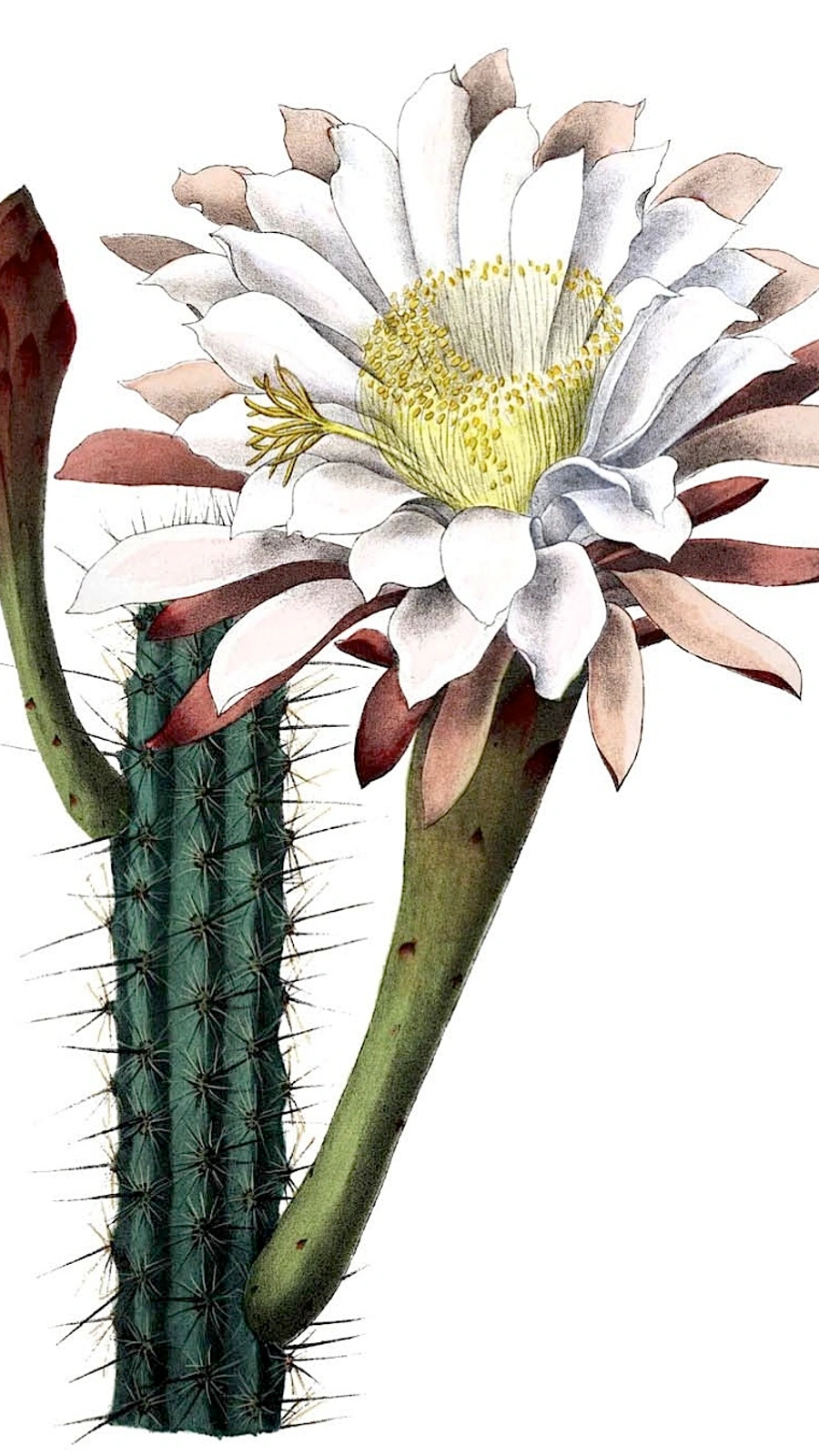
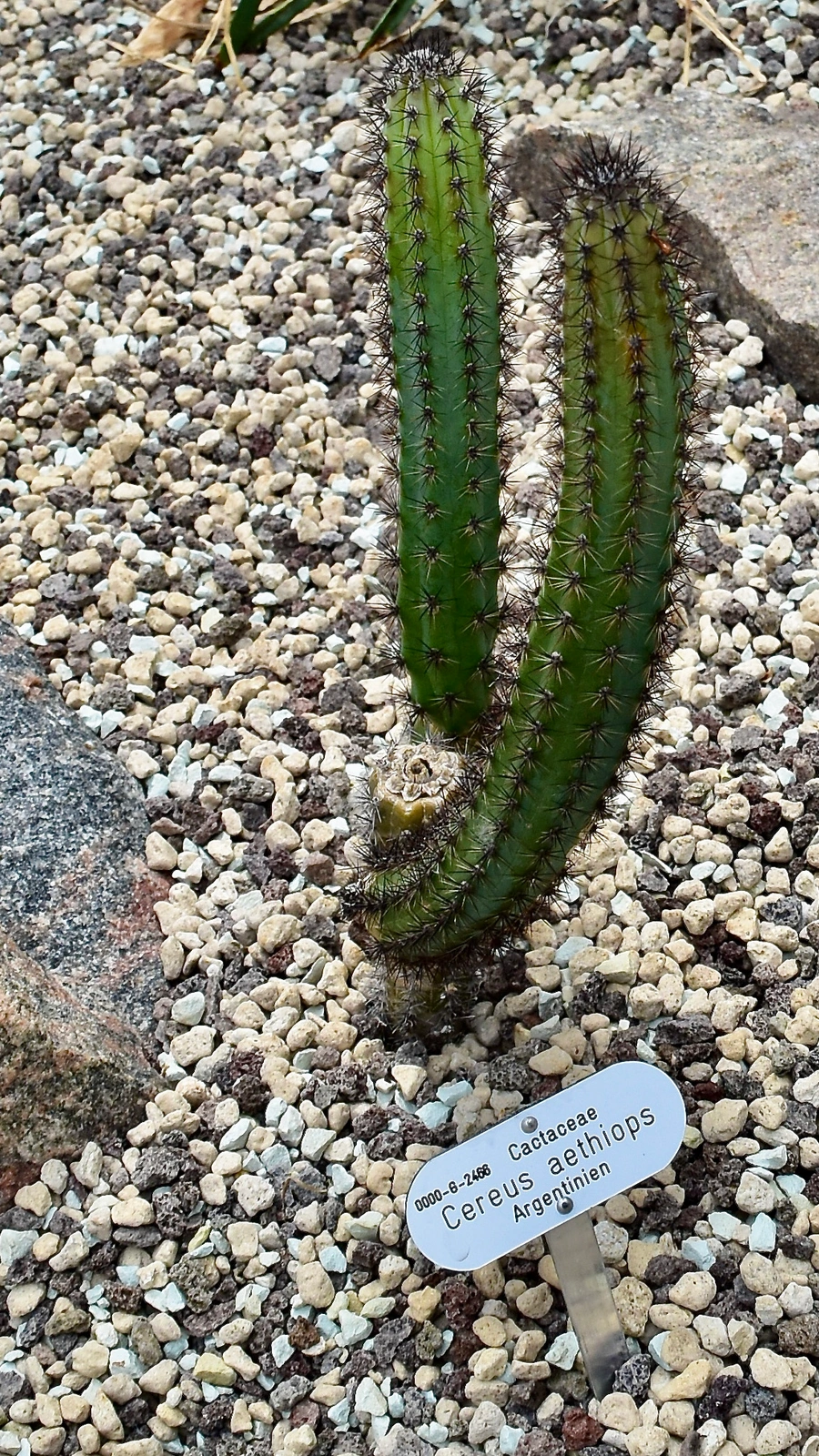
The stems are erect, cylindrical, and typically feature 5 to 6 prominent ribs. The intense powdery blue color is most prominent on new growth, slowly turning dark green as the stems mature. It bears strong, blackish to dark brown radial and central spines. During summer, it produces large, nocturnal white flowers with a pinkish tint, followed by decorative reddish fruits [1].
In cultivation, Cereus chalybaeus requires full sun to maintain its signature blue coloration and compact form. It demands a fast-draining, mineral-based potting substrate. Water thoroughly during the active growing season only when the soil has completely dried, and restrict water in winter [2].
Overwatering and utilizing heavy, water-retaining soils are the most common causes of root and stem rot. Insufficient sunlight will cause the plant to lose its blue sheen and stretch abnormally (etiolation) towards the light source.
Requires at least 6 hours of direct sunlight, preferably near south- or west-facing windows.
Allow soil dry out entirely between waterings. Water very sparingly or not at all in winter.
Use a porous cactus mix enriched with plenty of pumice, perlite, and coarse sand.
Non-toxic to pets, but the sharp spines pose a physical hazard; handle with thick gloves.
Extremely low-maintenance and beginner-friendly if kept dry and sunny.
Originates from the arid, sun-baked plains and dry shrublands of southern South America, growing in highly porous, rocky terrains.
