
Cereus decandollei

De Candolle's Cereus

Overview

Cereus decandollei is a striking columnar cactus belonging to the family Cactaceae 1. It is highly valued in cultivation for its architectural form and relative ease of maintenance.

Taxonomy and Naming

The genus name Cereus translates to 'candle' in Latin, referencing the upright, torch-like growth habit. The specific epithet decandollei honors the prominent Swiss botanist Augustin Pyramus de Candolle 2.

Distribution and Habitat

This species is native to the arid and semi-arid regions of South America, typically found clinging to rocky slopes and thriving in gravelly, nutrient-poor soils under intense sunlight.

Appearance

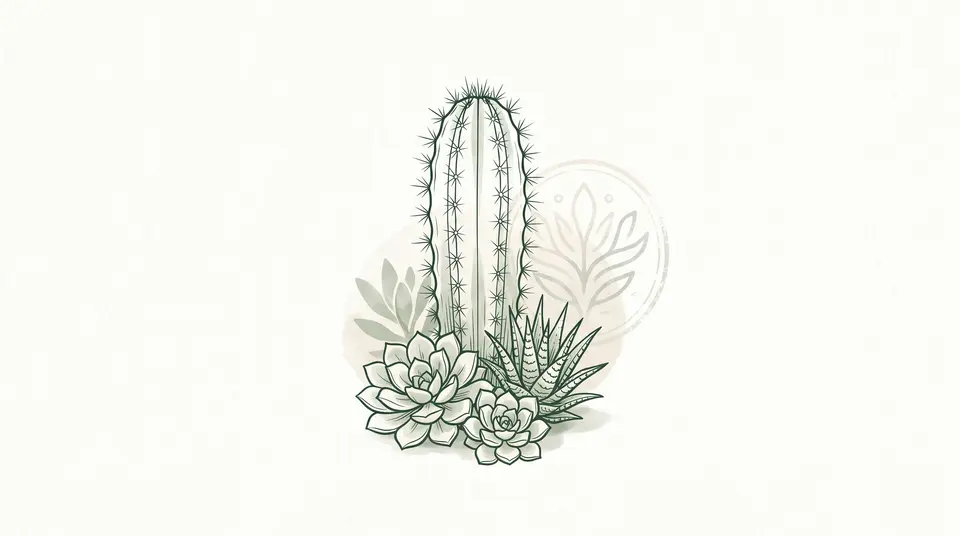
It features a segmented, grayish-green to glaucous-blue columnar stem with prominent ribs. Spines emerge from well-spaced areoles along the ridges. Nocturnal white flowers may bloom on mature specimens.

Cultivation and Care

This cactus requires full sun and exceptionally well-draining soil. Watering should follow a soak-and-dry method during spring and summer, reverting to an almost completely dry regime during winter dormancy.

Common Pitfalls

Overwatering is the primary cause of decline, quickly leading to root and stem rot. Low-light conditions cause etiolation, where the stem stretches and weakens.

References

  1. Plants of the World Online (POWO), Royal Botanic Gardens, Kew.
  2. International Plant Names Index (IPNI) records.
Light

Full Sun

Requires full, direct sunlight to maintain its structural integrity and skin color.
Watering

10-30 Days

Water deeply but infrequently; soil must dry completely between sessions.

Soil

Well-draining, sandy and gritty cactus mix

Needs a porous, gritty mineral substrate with excellent drainage capabilities.

Safety

Pet Friendly

Features sharp spines; keep out of reach of children and active pets.

Difficulty

Easy

An exceptionally hardy species ideal for beginners looking for low-maintenance plants.

Native Habitat

South America

Thrives naturally in the rocky terrains and sun-drenched shrublands of South America.

Frequently Asked Questions

How often should I water Cereus decandollei?
Water deeply only when the soil is completely dry, roughly every 10 days in summer and once a month during winter.
Is this cactus toxic to pets?
It is non-toxic chemically, but the sharp spines pose a physical injury hazard to curious pets.
What kind of soil does it prefer?
It prefers a well-aerated cactus mix with a high ratio of pumice, perlite, and coarse sand for rapid drainage.
Does Cereus decandollei bloom?
Yes, mature and healthy specimens produce large, fragrant white flowers that open during summer nights.
How much sunlight does it need?
It requires at least 6 hours of direct sunlight daily, thriving best near south- or west-facing windows.
What is its growth rate?
Like most columnar cacti, it has a slow-to-moderate growth rate, adding a few centimeters per year under optimal conditions.
Can I leave my cactus outside during winter?
It tolerates light cold but will suffer damage from freezing temperatures. Bring indoors if temps drop below 0°C.
My cactus is getting soft, what should I do?
Softening is a sign of root rot from overwatering. Stop watering immediately, and consider taking a healthy top cutting to propagate.
How is it propagated?
It is easily propagated by stem cuttings; let the cut end callus for a few days before planting in dry cactus soil.
When should I repot it?
Repot every 2-3 years in spring, moving up only one pot size when the roots have fully occupied the current container.