
Light
Full Sun
Needs at least 6 hours of direct sunlight daily to maintain its robust columnar shape.
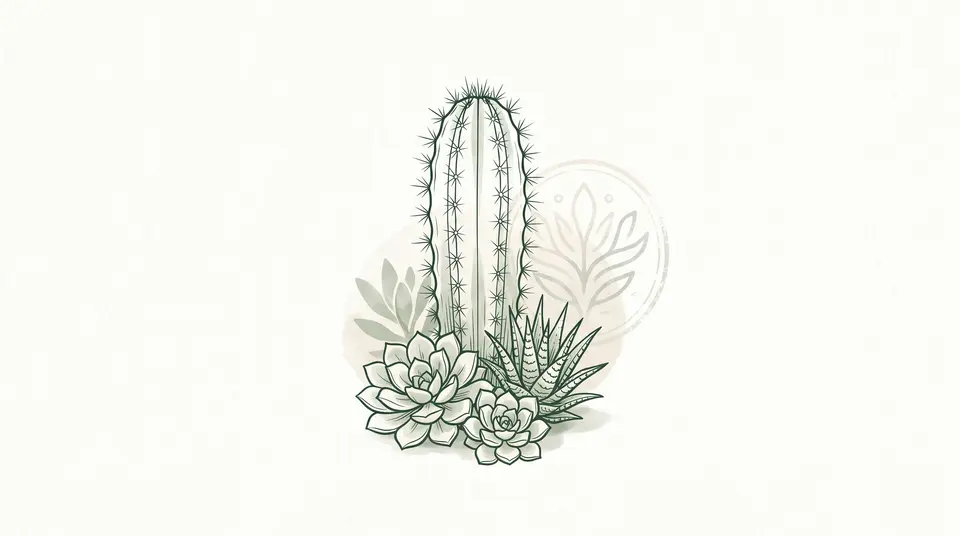 Reference image
Cereus del-moralii is a rare columnar cactus species belonging to the Cactaceae family. Characterized by its erect, ribbed stems, it is highly valued among collectors for its striking vertical architecture and night-blooming capabilities.
Classified under the genus Cereus, this species shares key morphological traits with other columnar cacti in the tribe Cereeae 1. The specific epithet honors Del Moral, recognizing contributions made to botanical exploration and taxonomy 2.
Native to the arid and semi-arid regions of Mexico, this species thrives in dry shrublands and rocky slopes 1. It has adapted to survive in poor, well-draining soils under intense sunlight and minimal rainfall.
The stem is grayish-green, with distinct vertical ribs lined with spine-bearing areoles. Spines are typically grayish-brown and rigid. During the summer, mature specimens produce large, white or cream-colored flowers that open at night and close by morning.
It requires full sun exposure and extremely well-draining soil. Watering should follow a soak-and-dry method during spring and summer. During the winter dormancy, watering must be suspended almost entirely to prevent root pathogens.
Overwatering is the primary cause of decline, quickly leading to root rot. Insufficient light exposure will result in etiolation, where the plant grows weak, thin, and pale as it stretches towards a light source.
Needs at least 6 hours of direct sunlight daily to maintain its robust columnar shape.
Apply the soak-and-dry method. Let the substrate dry out completely before watering again.
Requires a highly porous gritty mix with pumice, perlite, and coarse sand.
Features sharp spines; keep out of reach of children and domestic pets.
Very easy to care for, making it ideal for beginners who can resist overwatering.
Originating from the semi-arid zones of Mexico, it is naturally adapted to rugged, rocky terrains with intense sun exposure and prolonged dry seasons.
