
Light
Full Sun
Thrives in full sun, requiring at least 6 hours of direct sunlight daily.
 Reference image
Dyk's Columnar Cactus
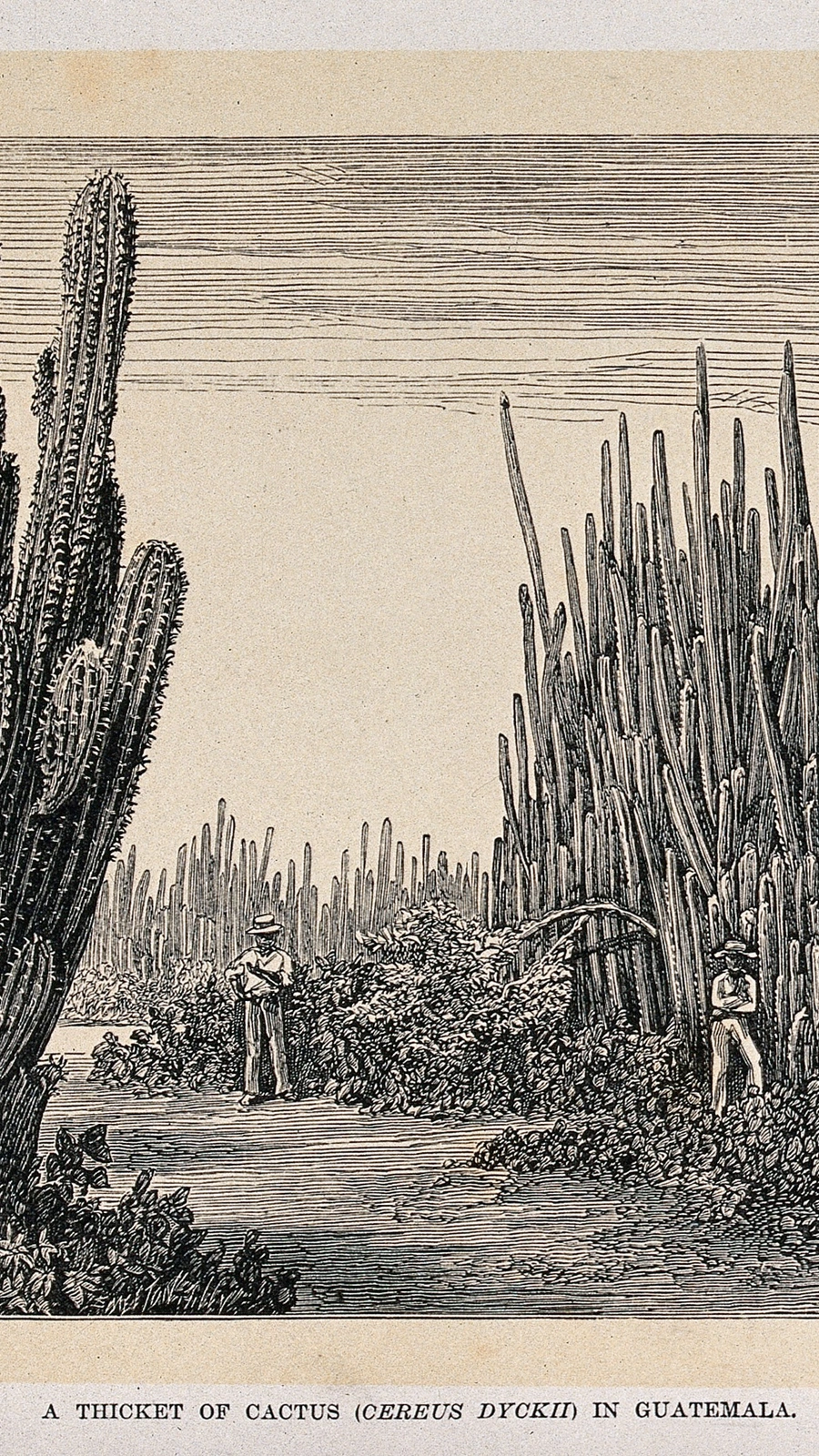
Cereus dyckii is a columnar cactus species belonging to the family Cactaceae, carrying significant historical value in botanical literature. First described in 1837 by Ludwig Karl Georg Pfeiffer 1, modern taxonomic revisions widely treat this taxon as a synonym of Pilosocereus royenii, commonly known as the Royen's tree cactus 2.
The specific epithet dyckii honors the prominent 19th-century German botanist and succulent collector, Prince Salm-Dyck. While historically classified under the broad genus Cereus, the distinct hairy areoles and glaucous stems place this plant firmly within the evolutionary lineage of Pilosocereus.
The native range of the species complex associated with Cereus dyckii spans the Caribbean region, including Puerto Rico, the Virgin Islands, and the Lesser Antilles. It thrives in arid coastal thickets, limestone cliffs, and dry, low-elevation rocky terrains 1.
This cactus features erect, branching, blue-green to grayish-green columnar stems with prominent ribs. The areoles bear sharp, yellowish to brownish spines and, in mature specimens, develop tufts of woolly hairs near the growing tips where nocturnal white or pale-pink tubular flowers emerge.
In cultivation, it is highly resilient, demanding full sun and very well-draining mineral-rich substrate. Watering should be deep but infrequent, allowing the growing medium to dry out completely between sessions. During winter dormancy, watering must be suspended.
The most frequent issue is root rot induced by overwatering or poor drainage. Insufficient sunlight leads to etiolation, characterized by weak, pale, and unnaturally thin stem growth.
Thrives in full sun, requiring at least 6 hours of direct sunlight daily.
Allow soil to dry out completely between waterings; dry winter conditions are vital.
Requires highly porous, sandy cactus soil mixed with pumice or perlite.
Sharp spines can cause injury; keep away from active children and pets.
Very easy to maintain, provided you avoid overwatering and heavy shade.
Naturally distributed across dry coastal habitats, rocky terrains, and limestone slopes throughout Puerto Rico, the Virgin Islands, and the Lesser Antilles.
