
Light
Full Sun
Requires at least 6 hours of direct sun daily. Ideal for south-facing windows or sunny balconies.
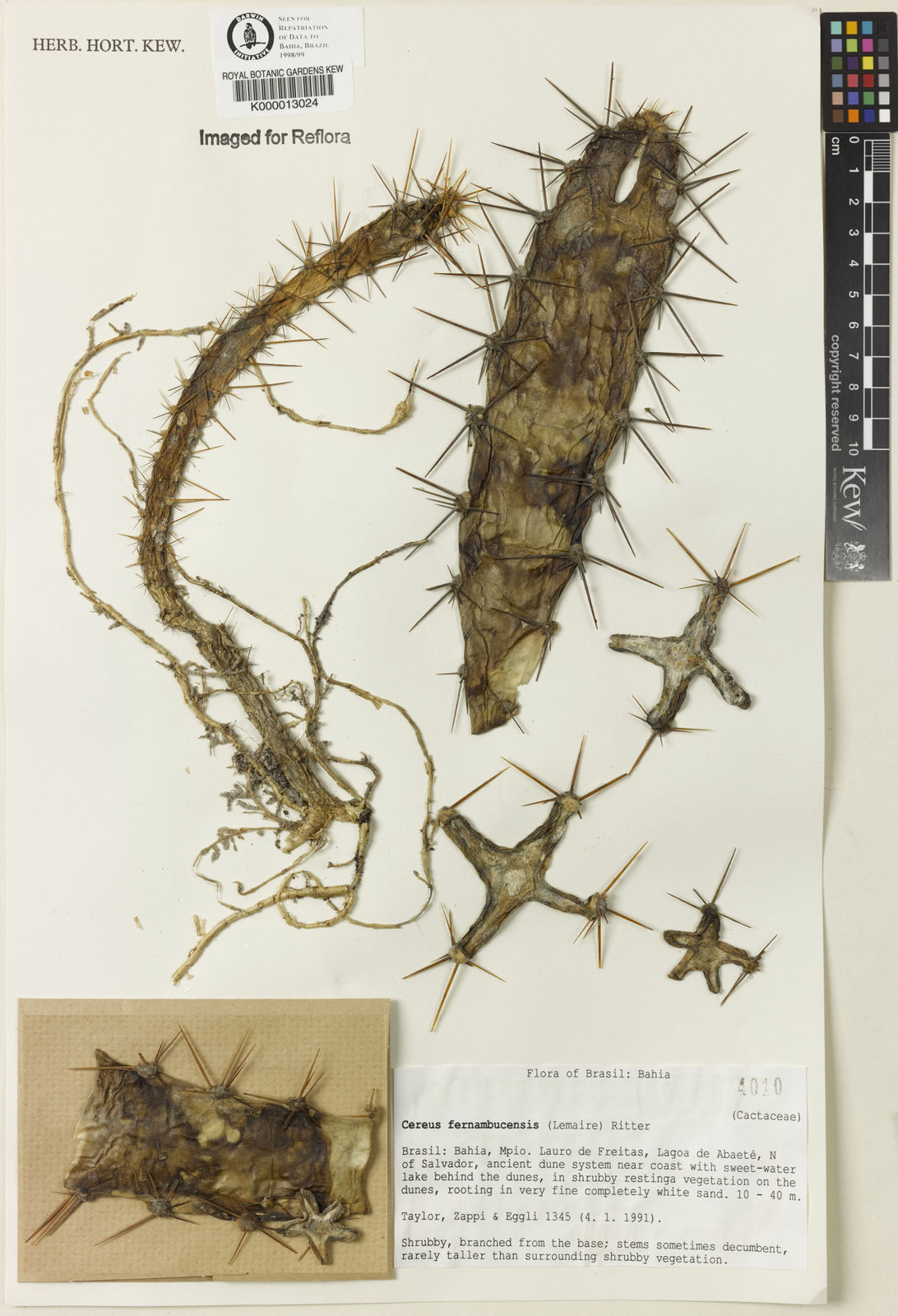 Reference image
Brazilian Coastal Columnar Cactus
Cereus fernambucensis is a columnar, shrubby cactus species belonging to the Cactaceae family, native to the coastal sand dunes and restinga habitats of Brazil. It is highly adapted to intense solar radiation, wind, and saline environments, making it incredibly resilient 1.
Historically associated with early descriptions from French botanists, the specific epithet fernambucensis honors the state of Pernambuco (historically Fernambuco) in northeastern Brazil, where the species is abundantly distributed 2. It belongs to the large genus Cereus, known for night-blooming columnar cacti.
This species is endemic to Brazil, spanning across various eastern states from Ceará to Rio de Janeiro. It thrives primarily in seasonally dry tropical biomes, particularly in restinga coastal scrubs and rocky hillsides near the Atlantic Ocean 1.
Cereus fernambucensis forms multi-branched, sprawling clumps up to several meters wide. Its light green to glaucous blue-green stems feature 3 to 5 prominent, wavy ribs with areoles bearing sharp spines. In summer, it produces large, nocturnal white flowers that open for just one night, followed by attractive crimson-red edible fruits 1.
In cultivation, this cactus requires maximum light, thriving in full sun or very bright patios. A gritty, mineral-based soil mixture with superb drainage is mandatory. Watering should follow a soak-and-dry method during active growth, with a near-complete drought regime during winter dormancy.
Growing this cactus in dark corners causes rapid etiolation, where stems grow thin and pale. Overwatering or planting in dense, peat-heavy soils leads to root rot, which is the most frequent cause of cultivation failure.
Requires at least 6 hours of direct sun daily. Ideal for south-facing windows or sunny balconies.
Water only when the soil is dry to the bottom. Reduce to once a month in winter.
Use a specialized cactus mix enriched with pumice, coarse sand, and perlite.
Spines can cause minor injuries; keep out of reach of active pets and small children.
Extremely easy to care for once established in a very sunny spot with well-draining soil.
Native to the coastal areas of Brazil, where it thrives in sandy soils of restinga scrublands and dry tropical microclimates near the coast.
