
Light
Bright Indirect Light
Bright, indirect or filtered sunlight; protect from harsh midday sun.
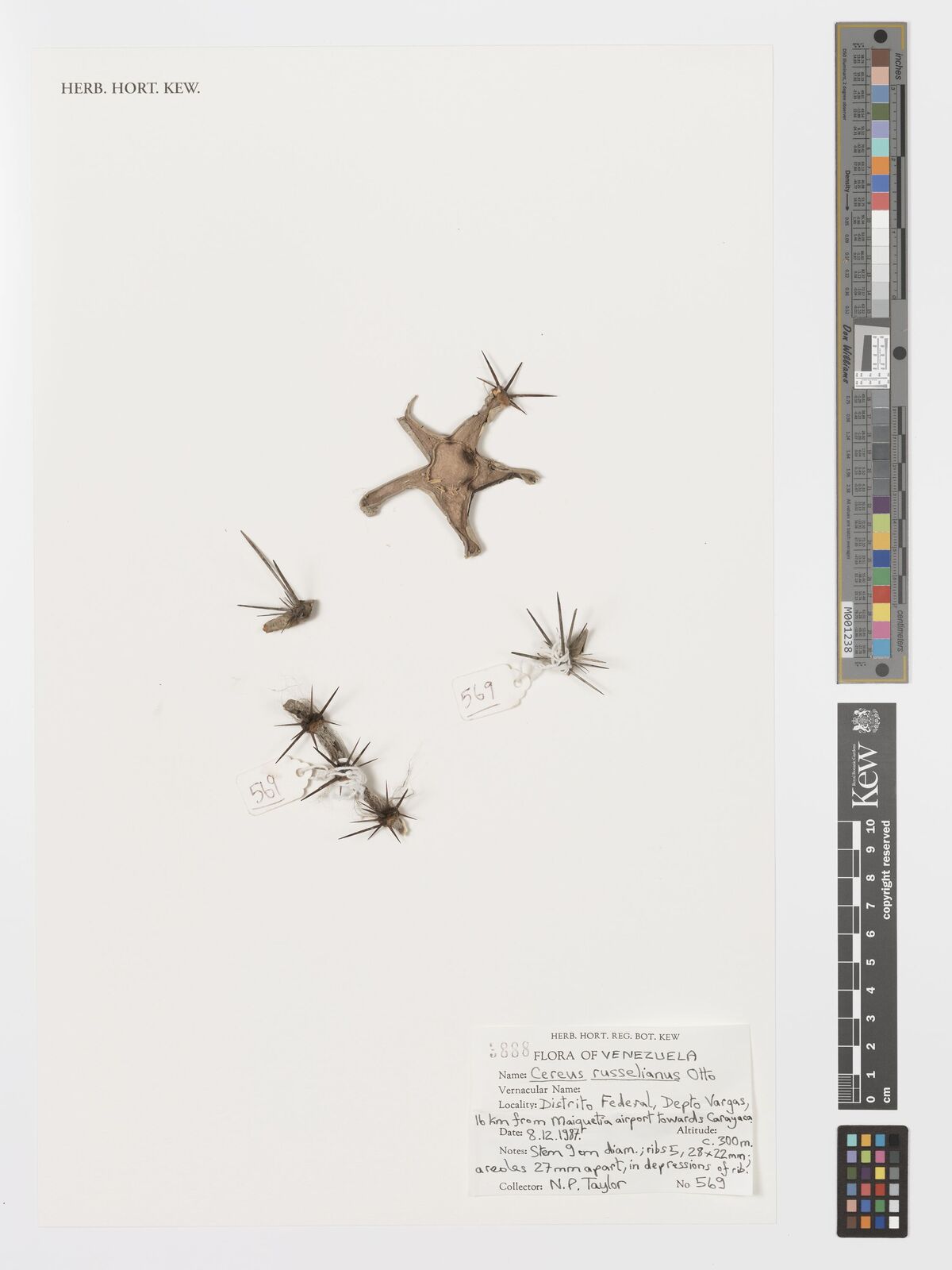 Reference image
Cereus Fricii
Cereus fricii is a distinctive and relatively rare climbing succulent within the Cactaceae family. Unlike many of its upright, columnar relatives in the Cereus genus, this species displays a sprawling or climbing habit 1. This unique growth form makes it highly sought after by cactus enthusiasts and collectors worldwide.
Named in honor of the famous Czech botanist and plant hunter Alberto Vojtěch Frič, this species belongs to the diverse Cereus genus. Its climbing lifeform and adaptation to seasonal tropical dry biomes differentiate it from other shrubby or arborescent cacti 1.
This species is native to northern and western South America, with established populations primarily in Colombia and Venezuela 2. It thrives in seasonally dry tropical forests, where it utilizes surrounding vegetation for support or sprawls over rocky substrates.
Cereus fricii features slender, green, cylindrical stems with moderate ribbing. The areoles are spaced along the ribs, bearing short, fine spines that are less formidable than those of desert-dwelling cacti. During the warm season, it produces large, nocturnal, tubular white or cream flowers that open for just one night.
In cultivation, it requires bright, indirect sunlight or filtered sun rather than harsh direct midday rays. A highly porous substrate rich in pumice and coarse sand is essential to prevent root issues. Water thoroughly when the soil is completely dry during the growing season, and restrict watering significantly in winter.
The most prevalent issue is root rot caused by overwatering or compacted soil with poor drainage 2. Exposure to freezing temperatures or cold drafts can also cause permanent cosmetic damage to its succulent stems.
Bright, indirect or filtered sunlight; protect from harsh midday sun.
Water only when substrate is dry; drastically reduce in winter.
Porous, sandy cactus mix enriched with ample pumice.
Non-toxic, but fine spines warrant safe placement away from pets.
Moderate difficulty due to climbing support needs and seasonal watering adjustments.
Native to northern and western South America, thriving in the seasonally dry tropical environments of Colombia and Venezuela.
