
Light
Direct Sun
Thrives in full direct sun; requires at least 6 hours of sunlight daily.
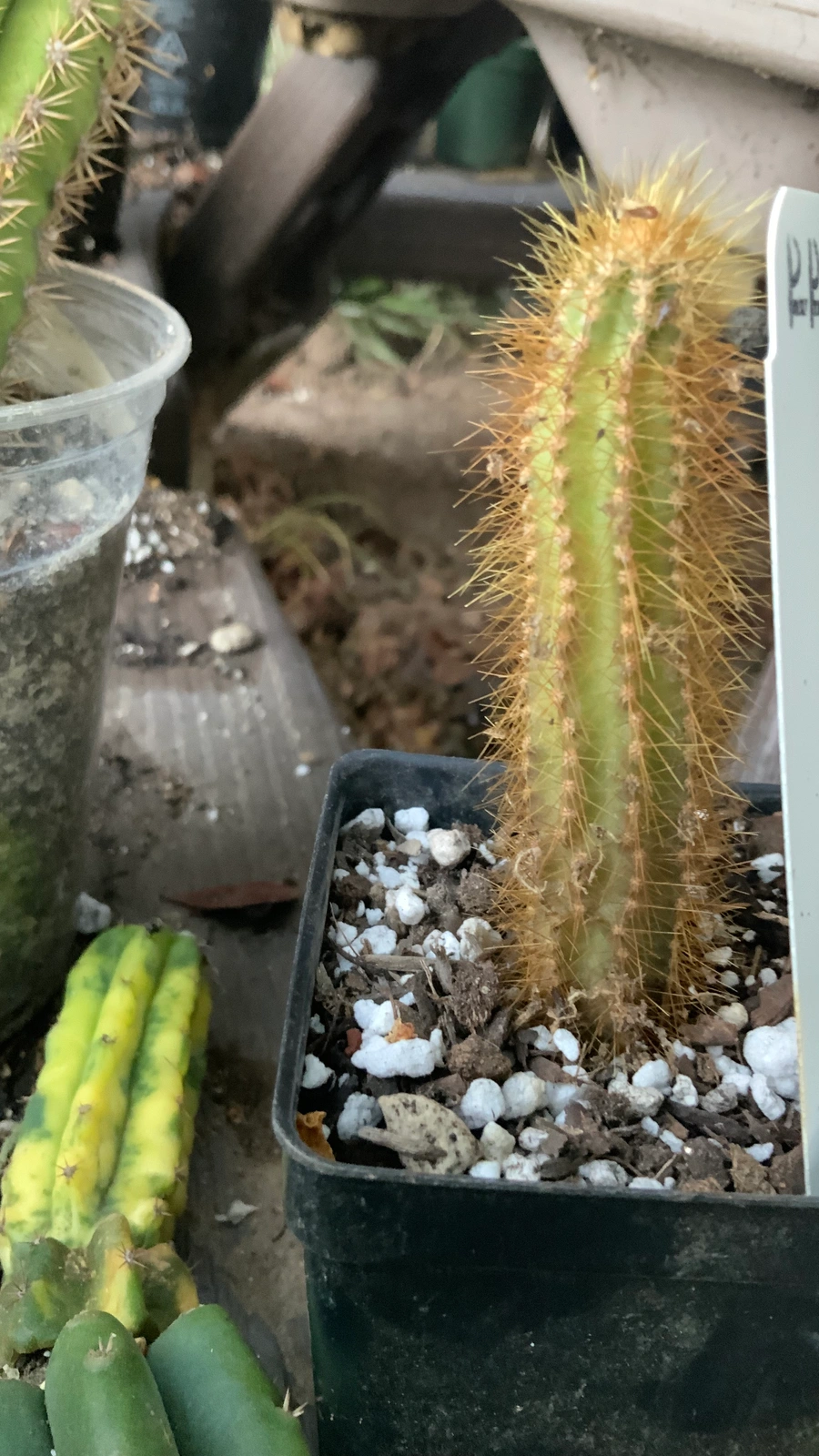 Reference image
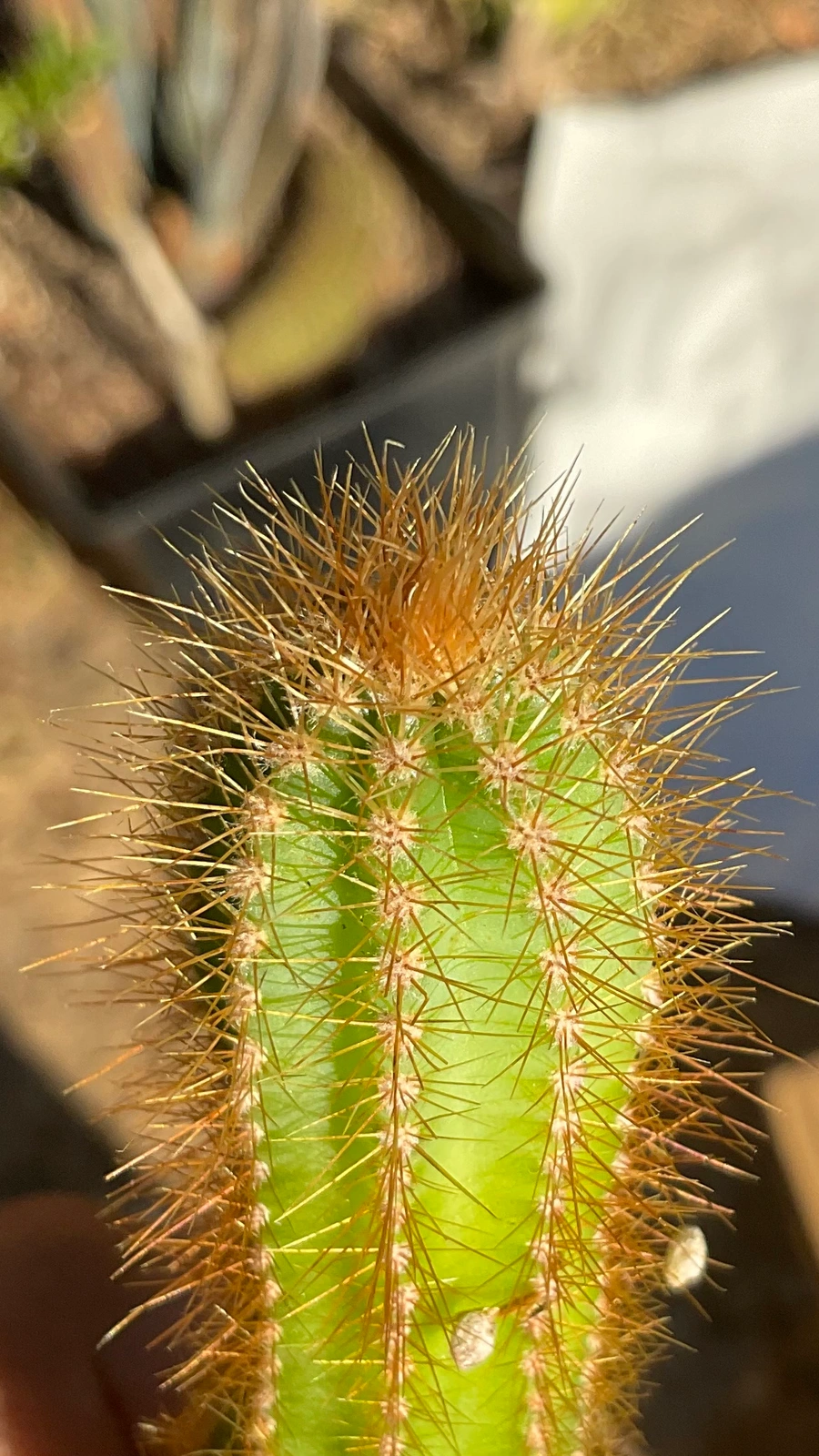 Reference image
Gerard's Columnar Cactus
Cereus gerardi is a striking, columnar, succulent tree cactus belonging to the family Cactaceae. Highly appreciated in cultivation for its sculptural and majestic habit, this species is relatively easy to care for and represents an outstanding specimen for sunny patios, xeriscapes, and bright indoor spaces.
The genus name Cereus is derived from the Latin word meaning "wax" or "torch", referencing the elongated, candle-like growth form typical of these columnar cacti 1. The specific epithet "gerardi" honors the botanist or naturalist Gerard. This species is taxonomically accepted and detailed within Kew's Plants of the World Online 2.
This species is native to Southern America, specifically restricted to various states in Northern and Central-Western Brazil, including Amapá, Amazonas, Rondônia, Tocantins, Acre, and Pará 3. It thrives predominantly in seasonally dry tropical biomes, growing among rocky outcrops and deciduous scrublands.
Cereus gerardi develops thick, bluish-green to deep green ribbed columns. The stems feature defined longitudinal ribs with distinct woolly areoles bearing sharp, rigid spines. Large, nocturnal, funnel-shaped white flowers bloom along the stem margins during the warmer months, adapted for nocturnal pollinators.
This cactus requires full, direct sun to maintain its structural integrity and health. It grows best in highly porous, mineral-based soils. Watering should be conducted on a "soak and dry" basis, ensuring the substrate dries out completely between waterings.
Overwatering in poorly drained soil is the most common cause of failure, rapidly leading to root rot. Insufficient sunlight will cause the plant to stretch unnaturally, resulting in weak, pale green growth (etiolation).
Thrives in full direct sun; requires at least 6 hours of sunlight daily.
Allow soil to dry out completely. Water sparingly in summer, almost none in winter.
Use a specialized cactus mix with excellent drainage, enriched with pumice and sand.
Features sharp spines. Keep away from pets and children to avoid injury.
Very low maintenance and highly resilient, making it perfect for beginners.
Native to the dry tropical forests and rocky savannah-like regions of northern and mid-western Brazil, spanning areas like Amazonas, Pará, and Tocantins.
