
Light
Full Sun
Requires full sun, preferring at least 6 hours of direct sunlight daily for robust growth.
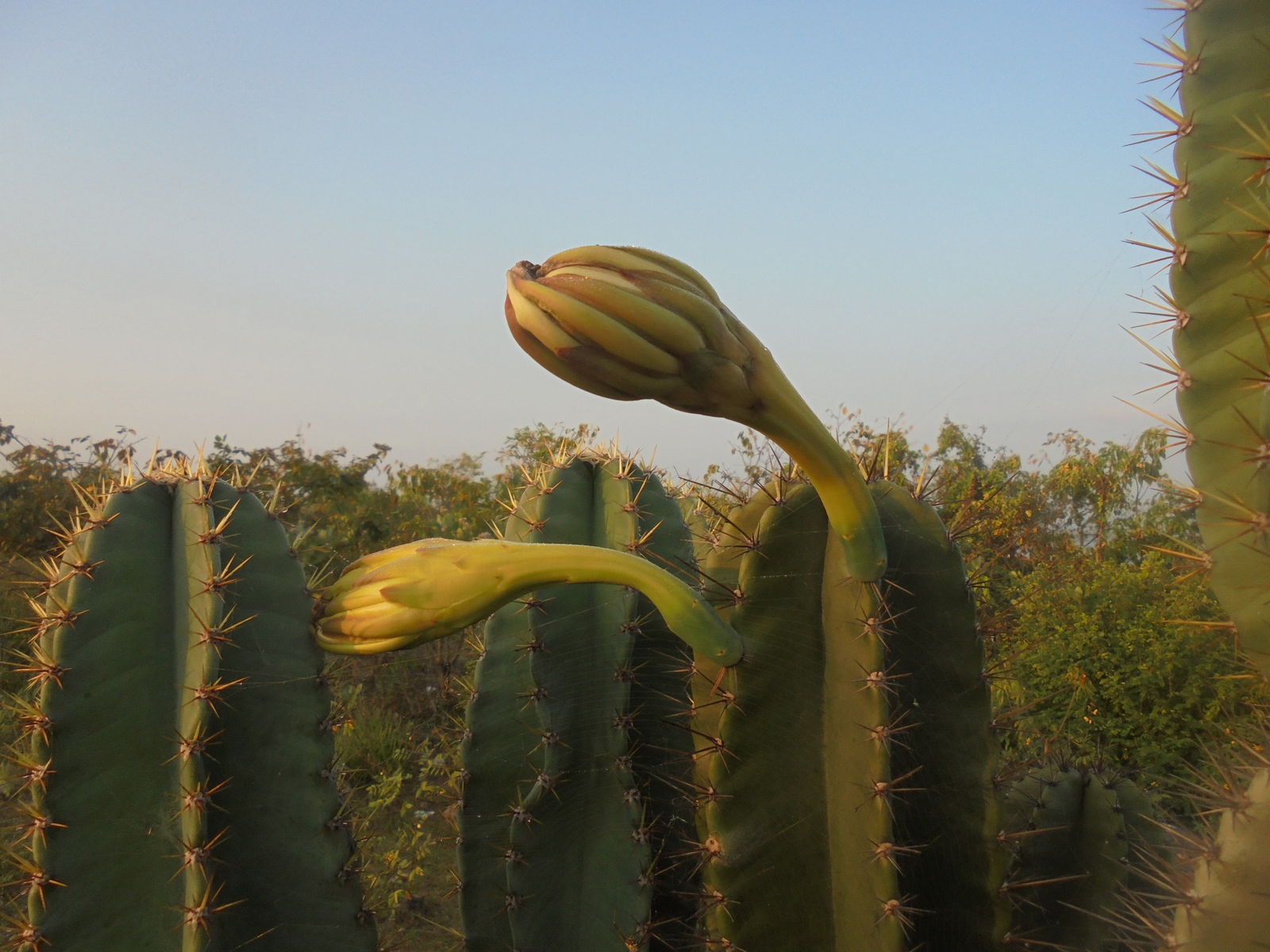 Reference image
Queen of the Night Cactus
Cereus hildmannianus, commonly known as the Queen of the Night or Hedge Cactus, is a majestic, tree-like columnar cactus belonging to the family Cactaceae. It is highly valued for its dramatic stature and stunning nocturnal flowers 1.
This species was formally described by the German botanist Karl Moritz Schumann. The specific epithet hildmannianus honors Heinrich Hildmann, a respected 19th-century German cactus collector and nurseryman 2.
Native to southern South America, its range spans Brazil, Uruguay, Paraguay, and northern Argentina. It thrives in seasonally dry tropical biomes, rocky outcrops, and scrublands where soil drainage is exceptional.
In its natural habitat, it can reach heights of up to 10 meters, producing a branched, woody trunk. The stems are bluish-green to dark green with deep, well-defined ribs. Large, nocturnal white flowers bloom briefly, followed by smooth, thornless, edible red fruits.
It is highly popular in xeriscaping and as an indoor specimen. It requires direct sunlight and porous, well-aerated soil. During the active growing season, watering should be moderate, transitioning to near-total dryness in winter.
Overwatering is the single most common cause of failure, leading to root rot. Additionally, placing the cactus in low-light environments causes etiolation, where the stems become pale, thin, and structurally weak.
Requires full sun, preferring at least 6 hours of direct sunlight daily for robust growth.
Allow the potting medium to dry out 100% between waterings, and keep dry in winter.
Thrives in a fast-draining, mineral-heavy substrate with plenty of pumice or perlite.
Features sharp spines that require careful handling; however, it is non-toxic to pets.
Very easy to care for and highly drought-tolerant, making it great for beginners.
Widely distributed across southern Brazil, Uruguay, Paraguay, and northern Argentina. It is adapted to open, sunny grasslands and dry forests, growing on rocky soils with minimal organic matter.
