
Light
Full Sun
Requires full sun, ideally 6+ hours of direct sunlight daily.
 Reference image
Horrid-spined Cereus
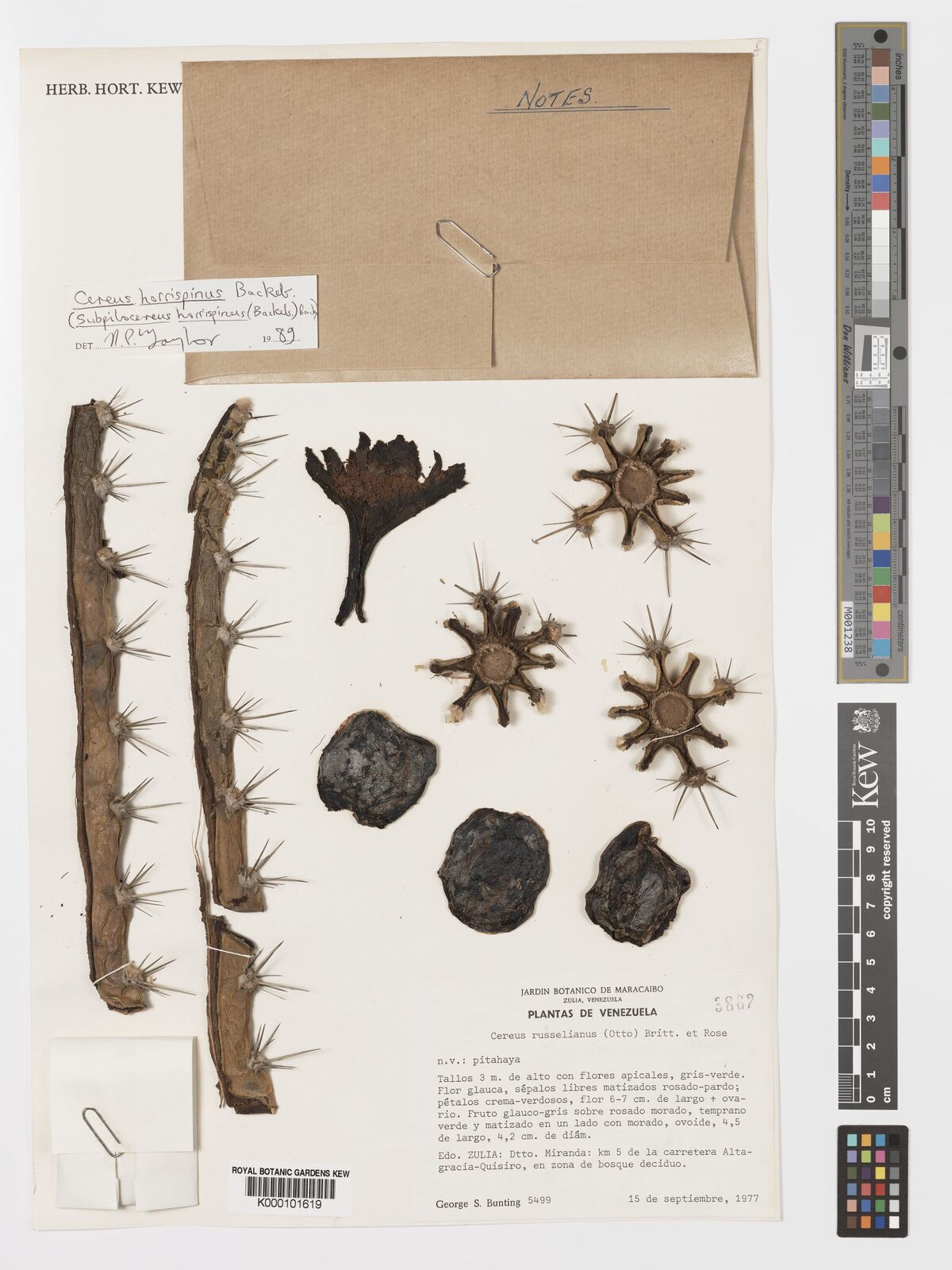
Cereus horrispinus is a striking columnar cactus belonging to the family Cactaceae, characterized by its formidable spination and robust, shrubby growth habit. Perfectly adapted to arid and seasonally dry environments, it is a highly prized species among succulent enthusiasts for its architectural form 1.
Described in botanical literature with significant contribution by Backeberg, this species resides within the genus Cereus. Its specific epithet, horrispinus, is derived from Latin words meaning "frightful or bristling" (horridus) and "spine" (spinus), directly describing the heavily armed nature of its mature stems 2.
This species is native to northern South America, particularly within Colombia and Venezuela. It thrives in seasonally dry tropical biomes, often found growing on rocky hillsides, open scrublands, and gravelly soils that receive intense sunlight 1.
Cereus horrispinus features erect, cylindrical stems that present a glaucous blue-green or grayish coloration. The prominent vertical ribs bear woolly areoles from which long, stiff, and exceptionally sharp gray-to-brown spines emerge. Large, white, nocturnal flowers bloom from the sides of the stems, followed by fleshy fruits.
In cultivation, it is a low-maintenance cactus. It requires full sun exposure and an exceptionally porous potting substrate. Watering should follow a soak-and-dry method during the active spring and summer growth periods, while water must be withheld almost entirely during the winter rest 2.
Overwatering is the primary cause of failure, quickly leading to root rot. Additionally, placing the cactus in low-light environments causes etiolation, where the stem stretches, becomes thin, and loses its natural bluish-green hue.
Requires full sun, ideally 6+ hours of direct sunlight daily.
Allow substrate to dry completely; winter dormancy requires dry soil.
Gritty, mineral-heavy cactus soil mix with plenty of pumice.
Equipped with extremely sharp spines; keep out of reach of pets and children.
Very resilient and easy for beginners if overwatering is avoided.
Indigenous to the dry tropical forests and semi-arid rocky scrublands spanning Colombia and Venezuela in northern South America.
