
Light
Full Sun
Requires full sun or bright direct sunlight for at least 6 hours daily to maintain its structural form.
 Reference image
Bright-seeded Cereus
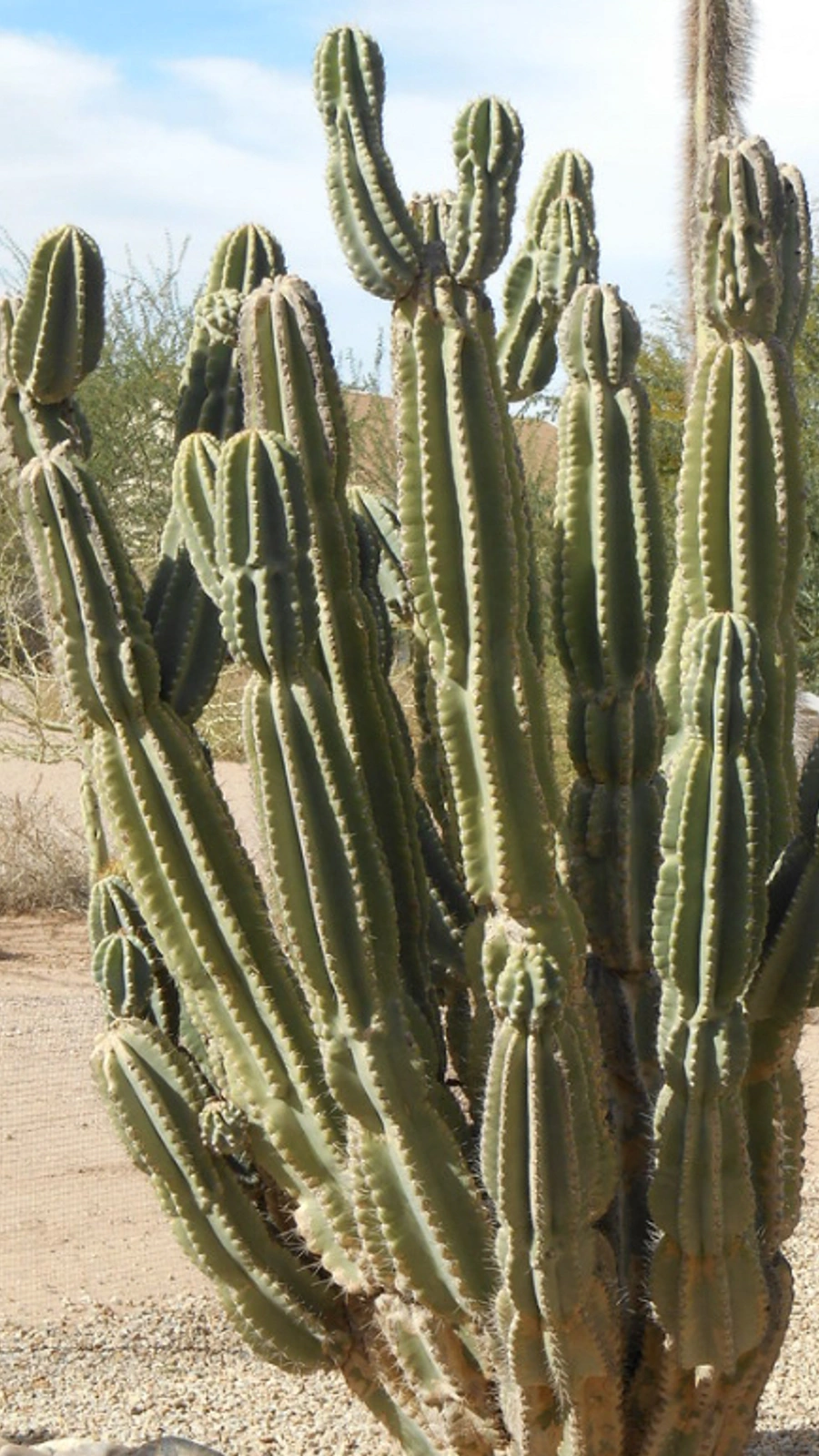
Cereus lamprospermus is an impressive, arborescent columnar cactus belonging to the Cactaceae family 1. It is highly appreciated for its dramatic architectural shape and nocturnal blooming habit.
This species was formally described by the German botanist Karl Moritz Schumann. The specific epithet lamprospermus translates to 'bright-seeded' or 'shiny-seeded' in Greek, referring to the characteristic glossy texture of its seeds 2.
Native to southern tropical South America, its wild populations are primary found in Bolivia and Paraguay. It thrives in seasonally dry tropical biomes, rocky outcrops, and deciduous scrublands 1.
In its natural habitat, it forms a branched succulent tree reaching up to 6–8 meters in height. The stems are glaucous green with prominent ribs. Large, nocturnal white flowers bloom during the warm season, followed by fleshy, reddish fruits containing shiny black seeds.
This species requires high light levels, ideally full direct sun. It should be potted in highly porous, mineral-rich substrates that mimic rocky soils 2. Water deeply but allow the soil to dry out completely between sessions.
Overwatering in low-light environments is the most common cause of failure, quickly leading to root rot. High humidity without adequate air circulation can also encourage fungal spots on the columnar stems.
Requires full sun or bright direct sunlight for at least 6 hours daily to maintain its structural form.
Water deeply only when soil is 100% dry. Reduce watering to once a month during winter dormancy.
Needs highly porous soil, ideally a blend of coarse sand, pumice, and minimal organic matter.
Non-toxic chemically, but possesses sharp spines that can cause physical injury to curious pets and children.
Very easy to care for, making it ideal for beginners who tend to forget to water their plants.
Grows natively in the dry forest regions and gravelly slopes of Bolivia and Paraguay, well-adapted to prolonged drought periods.
