
Light
Direct Sun
Requires at least 6 hours of direct sun daily; low light causes weak, leggy growth.
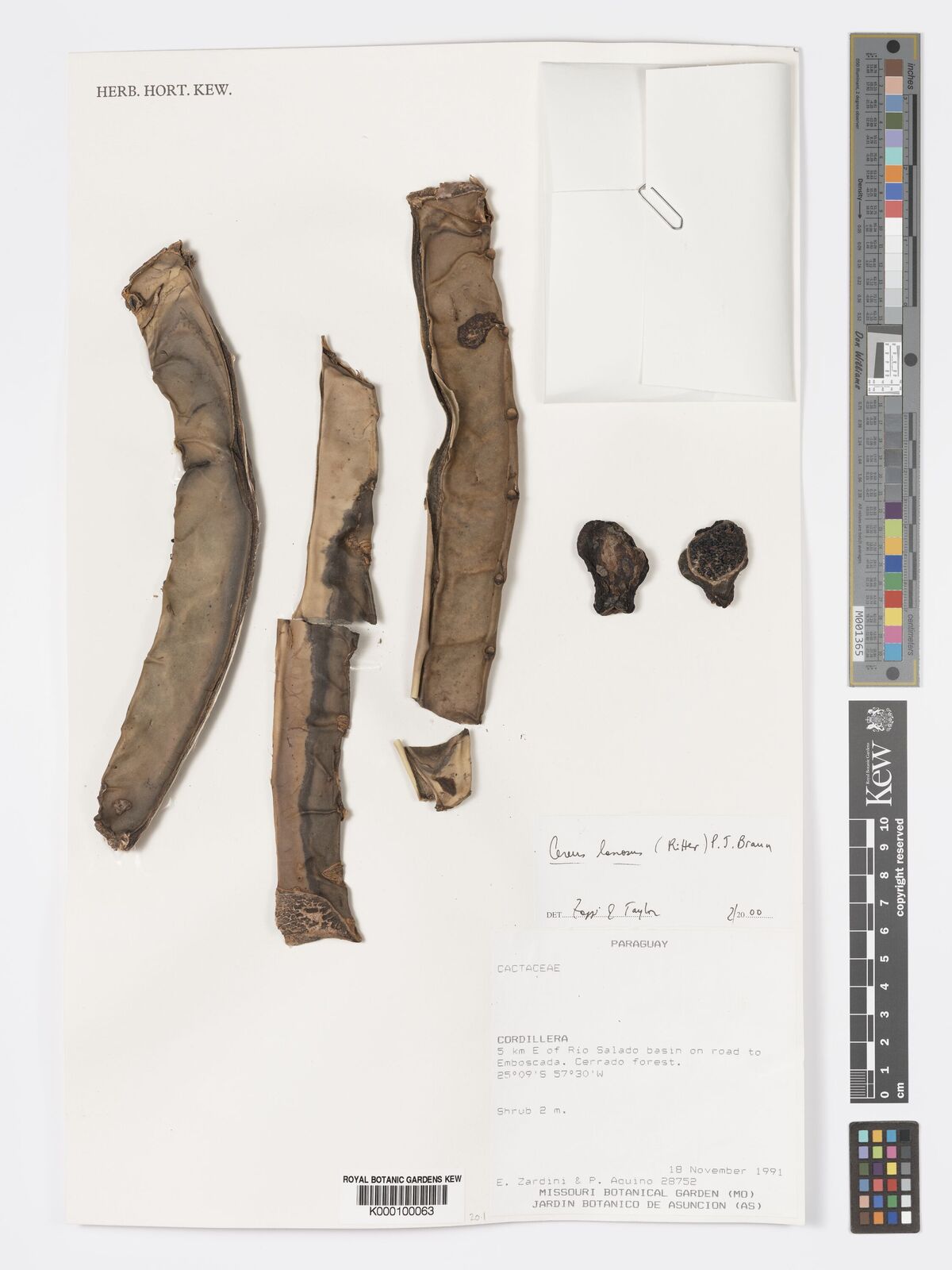 Reference image
Woolly Column Cactus
Cereus lanosus is a distinct, columnar cactus species belonging to the family Cactaceae. Appreciated by succulent collectors, this plant stands out due to its beautifully woolly areoles and architectural growth habit 1.
The species name lanosus derives from the Latin word for "woolly", referencing the prominent dense tufts of white, cotton-like wool produced on its areoles 2. It belongs to the celebrated genus Cereus, known for its majestic nocturnal-blooming columnar cacti.
Native to the seasonal dry tropical regions of Southern America, particularly within Paraguay and neighboring parts of Brazil, Cereus lanosus thrives on rocky outcrops, granite slabs, and well-drained slopes 1.
The plant features cylindrical, blue-green stems with 5 to 7 well-defined ribs. The areoles are heavily felted with whitish-gray wool, sporting sharp, yellowish-brown spines. Its large, white, funnel-shaped nocturnal flowers bloom in summer, attracting nocturnal pollinators like moths and bats 2.
In cultivation, it requires a very bright position with direct sunlight. An open, mineral-rich, and extremely porous soil mix is essential to prevent root rot 3. Watering should be thorough but infrequent, allowing the potting medium to dry out completely between sessions.
Overwatering during the cold, dormant winter months is the primary cause of plant death due to root rot. Lack of adequate light results in weak, thin, and stretched stems, a condition known as etiolation.
Requires at least 6 hours of direct sun daily; low light causes weak, leggy growth.
Water only when the substrate is fully dry. Keep almost dry throughout the winter.
Requires extremely porous soil with high ratios of pumice, perlite, and coarse sand.
Non-toxic to pets, but the sharp spines pose a physical hazard to curious animals.
Very easy to maintain provided you do not overwater or block sunlight access.
Naturally distributed in the seasonally dry tropical zones of Southern America, primarily found on rocky slopes and granite outcrops within Paraguay and Brazil.
