
Light
Full Sun
Requires at least 6 hours of direct sunlight daily. Low light causes thin, weak growth.
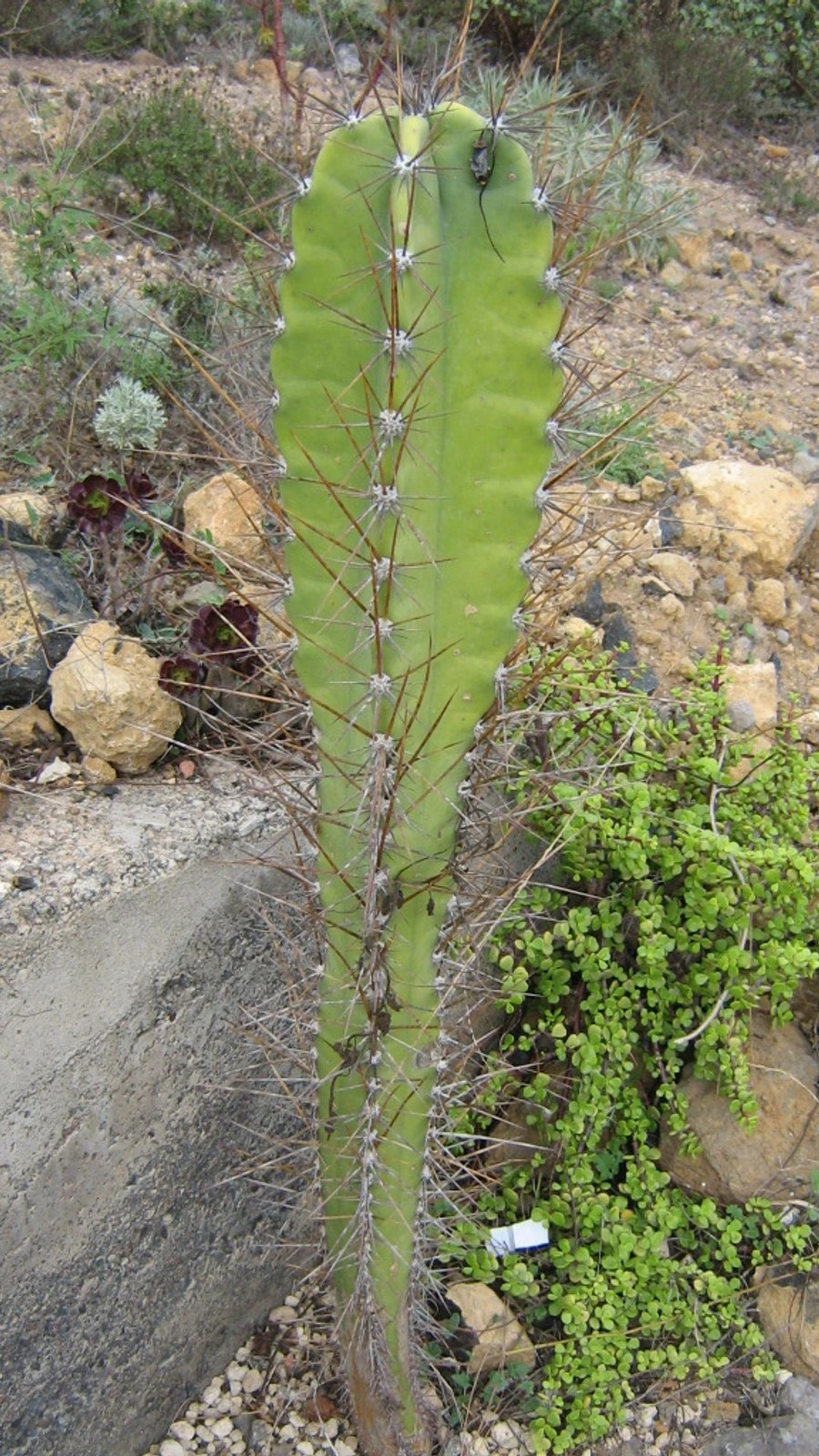 Reference image
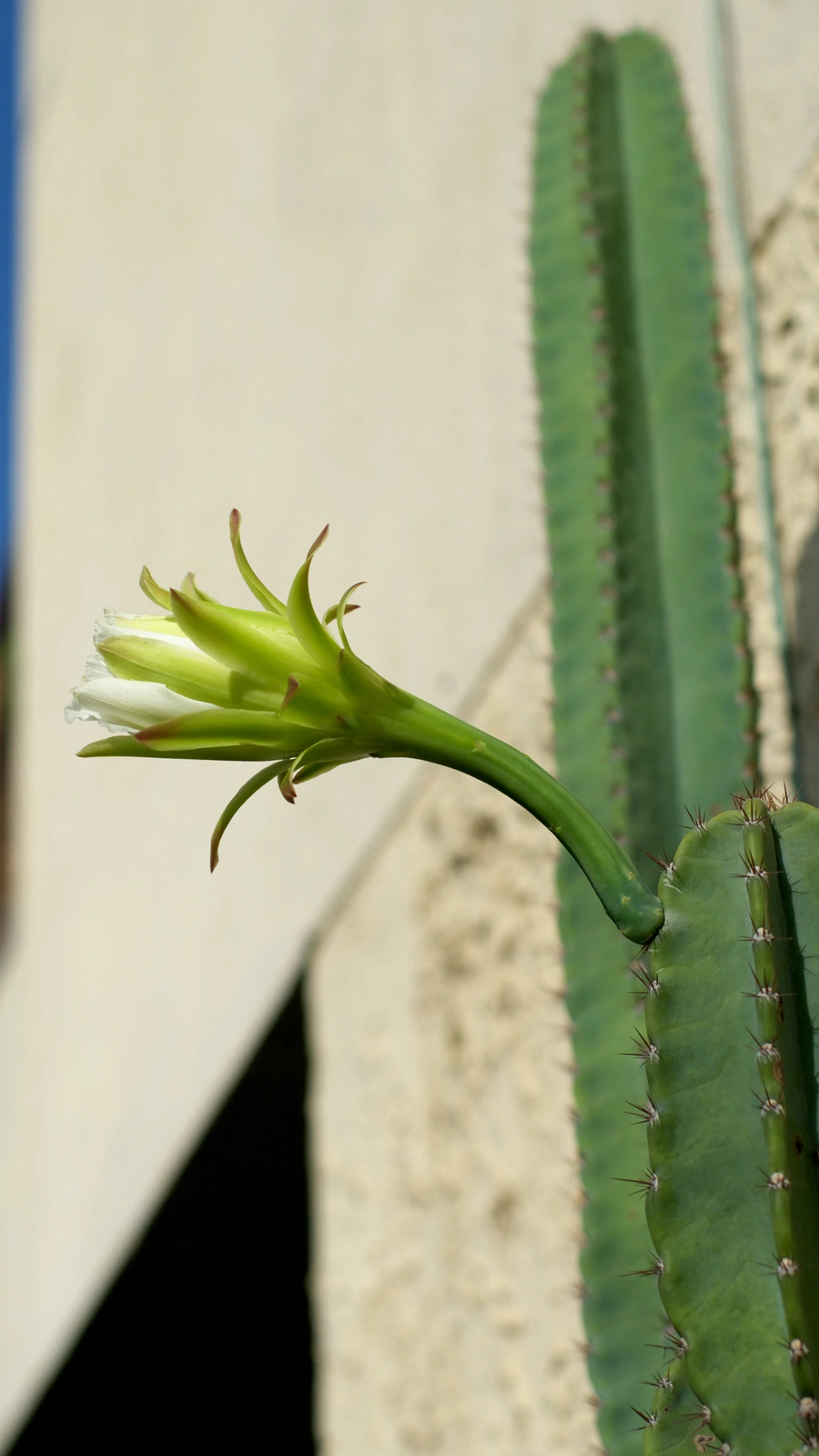 Reference image
Grand Column Cactus
Cereus magnus is an impressive columnar cactus belonging to the genus Cereus within the Cactaceae family. Known for its majestic height and sculptural form, this species serves as a dramatic architectural element in both arid landscapes and spacious indoor collections 1.
The genus Cereus is historically one of the earliest established groups in cactus taxonomy. The specific epithet magnus translates from Latin as "great" or "grand," directly referencing the plant's robust and towering stem development 2.
This species is native to the Caribbean, particularly dominant in the Dominican Republic. It thrives in dry, sun-drenched, rocky slopes and semi-arid shrublands 1. It is well-adapted to limestone soils with minimal organic matter.
Cereus magnus features thick, glaucous blue-green to grayish-green columnar stems with prominent, sharp ribs. The areoles bear strong, rigid spines. During the summer, it produces large, nocturnal white flowers that are highly fragrant, designed to attract night-pollinating insects 2.
In cultivation, it requires full sun exposure and an exceptionally well-draining soil mix. Water thoroughly during the active spring and summer growing seasons only when the substrate has dried out completely. During winter, watering should be severely restricted. It is frost-tender and must be protected from freezing temperatures 1.
Overwatering and using heavy, poorly-drained potting soils are the primary causes of root rot. Insufficient light exposure leads to etiolation, where the plant grows weak, thin, and loses its signature robust form.
Requires at least 6 hours of direct sunlight daily. Low light causes thin, weak growth.
Water only when the substrate is fully dry. Overwatering is highly detrimental.
Highly porous substrate with plenty of pumice, coarse sand, and perlite.
Features sharp spines. Keep out of reach of curious pets and small children.
Very easy to maintain as long as you do not overwater.
Native to the arid coastal regions and dry rocky slopes of the Dominican Republic and surrounding Caribbean islands, where it thrives in limestone soils.
