
Light
Full Sun
Thrives in direct, abundant sunlight on south-facing windows.
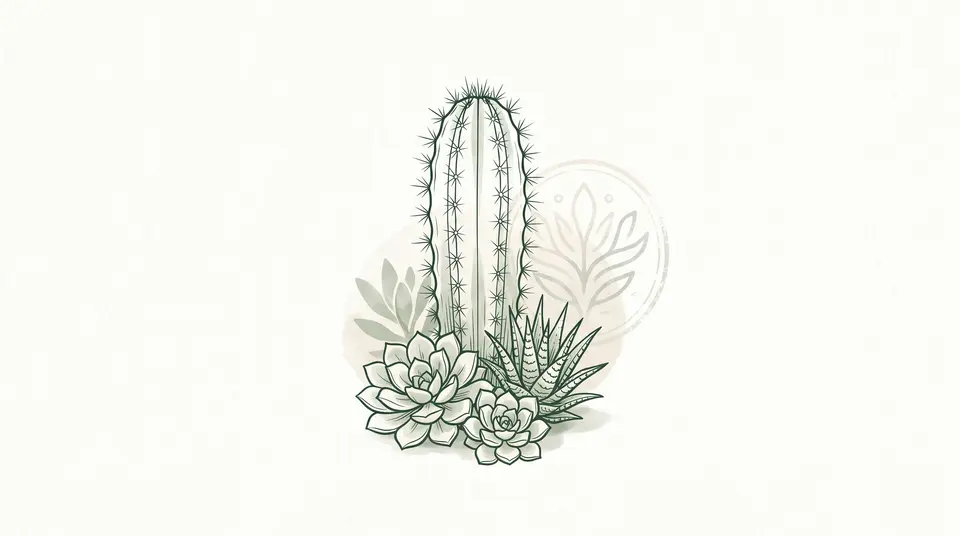 Reference image
Many-Stemmed Cereus
Cereus myriacaulon is a unique and highly branched columnar cactus belonging to the family Cactaceae 1. Known for its densely clustering growth habit, its specific epithet refers to its characteristic "myriad stems."
Classified under the genus Cereus, this taxon exhibits distinct branching patterns that differentiate it from more singular, massive columnar cacti 2. It shares historical taxonomic discussions with other shrubby South American cereids.
This species is native to the arid and semi-arid scrublands of South America, particularly thriving in rocky outcrops and dry deciduous forests 1. It is highly adapted to long dry seasons in well-drained terrains.
The stems are slender, cylindrical, and display a dusty blue-green to olive hue. Prominent areoles carry short, sharp spines. During the warm season, it produces nocturnal, tubular white flowers that are pollinated by bats or moths 2.
It thrives in full sun or bright, filtered light. Watering should follow a "soak and dry" method, allowing the substrate to dry out completely. A highly porous mineral substrate containing pumice, coarse sand, and perlite is essential for root health.
Overwatering and poor soil drainage are the leading causes of root rot and plant loss 2. Keeping the cactus in cold, damp conditions during winter dormant periods can also cause fungal infections and stem scarring.
Thrives in direct, abundant sunlight on south-facing windows.
Never water until the soil is bone dry; keep dry in winter.
Keep the ratio of pumice and sand high to ensure fast drainage.
Keep away from children and pets due to its sharp spines.
Easy to care for as long as overwatering is strictly avoided.
Distributes naturally within the arid and rocky semi-desert zones of Brazil, commonly found thriving on rocky slopes and shallow soils of the caatinga biome.
