
Light
Direct Sun
Thrives in direct, unfiltered sunlight and warm locations.
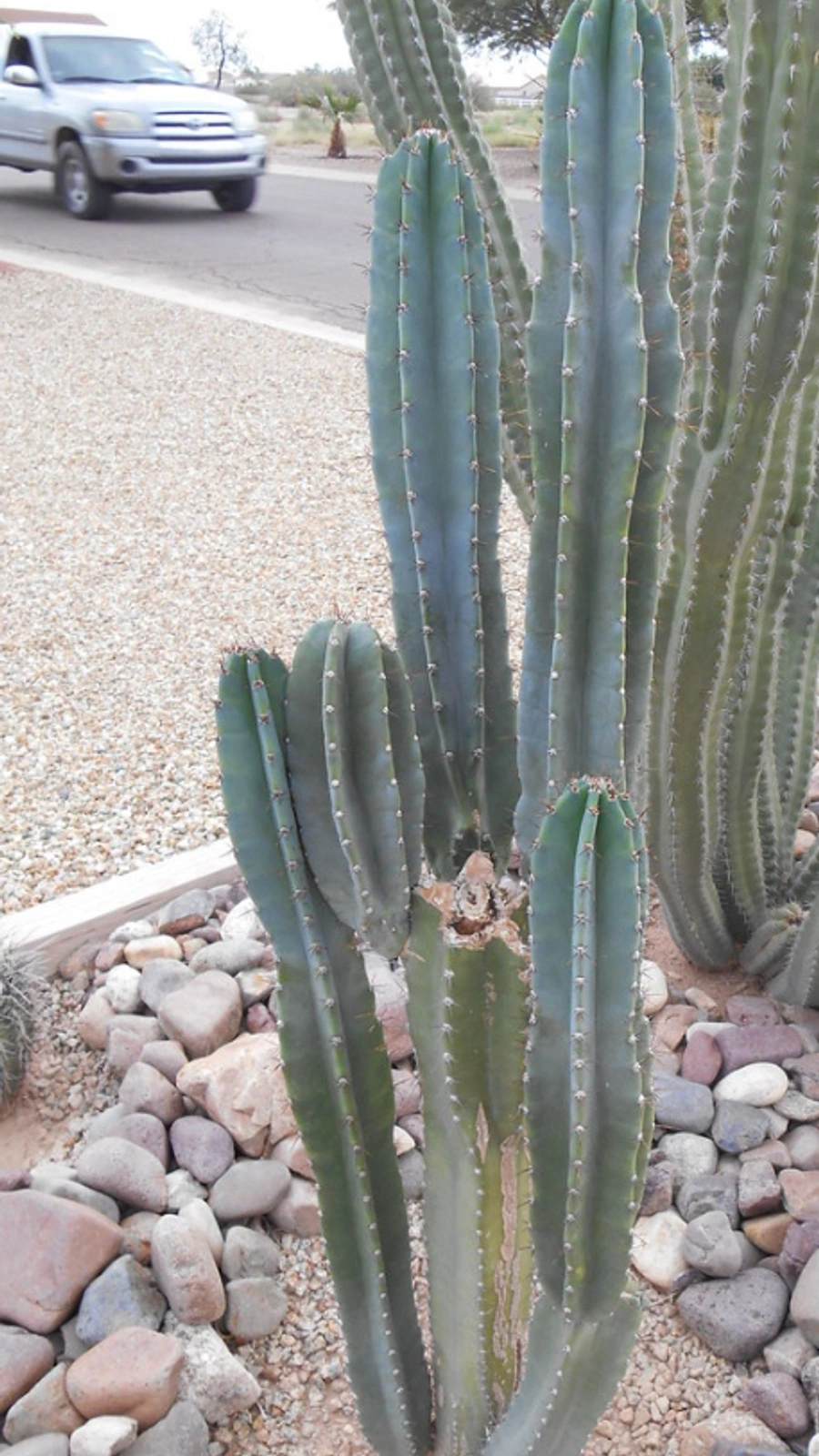 Reference image
Thick-rooted Cereus
Cereus pachyrrhizus is a distinctive columnar member of the Cactaceae family 1. Renowned for its thickened, tuber-like root system and erect growth habit, this cactus species exhibits remarkable resilience to extremely arid conditions.
Classified under the genus Cereus, the specific epithet pachyrrhizus is derived from the Greek words "pachys" (thick) and "rhiza" (root) 2. This nomenclature directly refers to the plant's robust, swollen underground storage roots.
Native to southern South America, particularly within Paraguay, this species thrives in dry shrublands and arid deciduous forest margins 1. It is typically found in nutrient-poor, rocky soils under intense, direct sunlight.
This columnar cactus grows upright, occasionally branching with age. The stems feature prominent, sharp ribs lined with grayish-brown areoles that bear stiff, defensive spines 2. Its hallmark subterranean feature, the tuberous root system, serves as an essential water and nutrient reservoir during prolonged droughts.
In cultivation, Cereus pachyrrhizus is highly accommodating. It demands full sun and an extremely well-draining, sandy or pumice-rich cactus substrate. Watering should follow a soak-and-dry method during the active spring and summer growth phases, transitioning to a strict dry spell in the cold winter months.
The most prevalent issue is waterlogged soil due to poor drainage, which rapidly induces root rot in its thickened underground structure 1. Keeping the cactus in warm, humid indoor conditions during its winter dormancy can also cause etiolation and fungal infections.
Thrives in direct, unfiltered sunlight and warm locations.
Allow soil to dry out 100% before watering; keep almost dry in winter.
Use a specialized cactus mix heavily amended with coarse sand and pumice.
Features sharp spines; handle with gloves and keep away from pets. Non-toxic.
Extremely low-maintenance and highly recommended for beginners.
Occurs naturally in the arid scrublands and dry open ecosystems of Paraguay and neighboring parts of southern South America.
