
Light
Direct Sun
Requires at least 6 hours of direct sunlight daily to maintain its compact form and spine density.
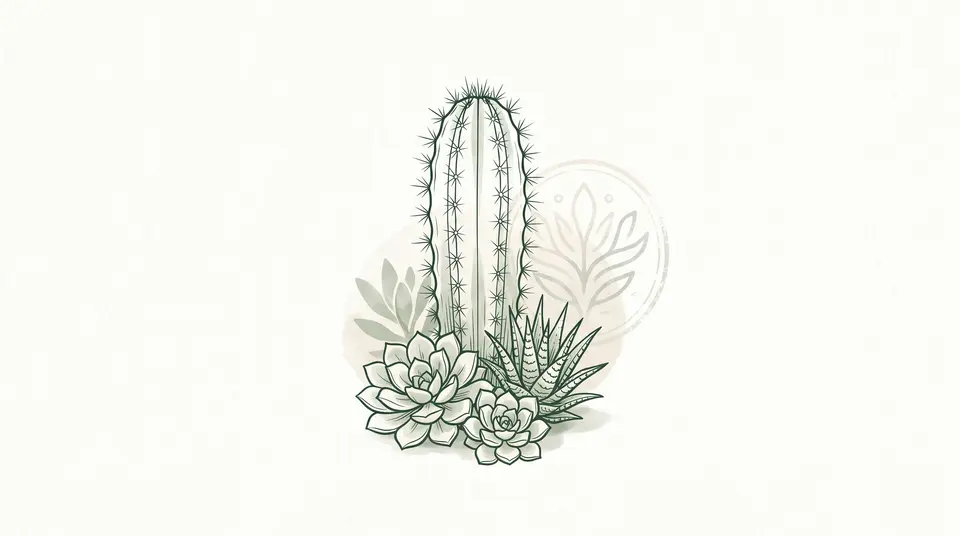 Reference image
Spotted Columnar Cactus
Cereus punctatus is a columnar cactus belonging to the family Cactaceae. Known for its historical botanical record and distinct structural aesthetics, this species represents a fascinating subject for succulent collectors and taxonomists alike.
Historically described in classical botanical literature, the specific epithet punctatus refers to the distinct, spot-like appearance of its areoles along the ribs 1. While some modern taxonomists associate or synonymize this name with taxa like Espostoa lanata or other Andean cereoid species, it retains its historical identity in specialized archives 2.
Native to the semi-arid regions and Andean foothills of South America, Cereus punctatus thrives on steep, rocky slopes. These habitats are characterized by intense solar radiation, low precipitation, and exceptionally free-draining rocky soils.
This cactus exhibits a columnar growth habit with defined vertical ribs. The stems are covered in woolly, distinct areoles resembling punctate dots, from which fine, needle-like spines emerge. The epidermis ranges from a dull grayish-green to glaucous blue.
In cultivation, it demands a bright location with ample direct sunlight. Watering must be sparse, allowing the substrate to dry completely between applications. During the cold winter months, the plant enters dormancy and should be kept dry.
The most prevalent errors in cultivating this species include using heavy clay-rich soils that retain moisture and overwatering during cold spells, both of which trigger root rot. Insufficient light leads to etiolation.
Requires at least 6 hours of direct sunlight daily to maintain its compact form and spine density.
Water thoroughly only when the soil is 100% dry. Avoid wet feet at all costs.
Requires an extremely porous mineral mix consisting of pumice, perlite, and coarse sand.
Non-toxic, but the sharp spines pose a physical hazard to curious pets and children.
Moderately easy if watering is strictly controlled and adequate light is provided.
Naturally distributed along the rocky, arid foothills of South America's Andean regions.
