
Light
Full Sun
Requires full, unfiltered sun; lack of adequate light causes weak and thin growth.
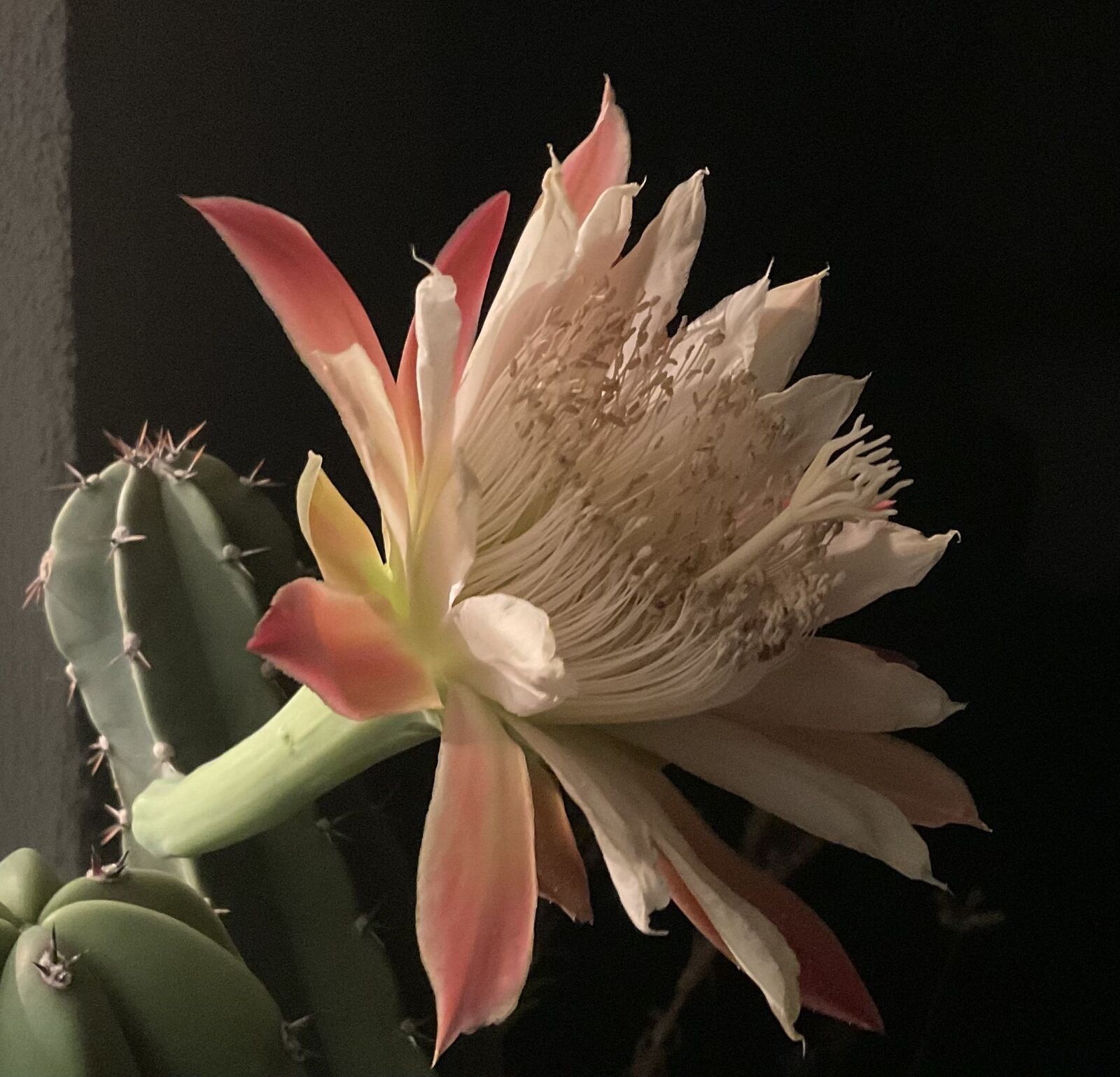 Reference image
Peruvian Apple Cactus
Cereus repandus, commonly known as the Peruvian Apple Cactus, is a large, columnar, tree-like succulent species belonging to the Cactaceae family. Celebrated for its giant nocturnal white flowers and edible, thornless red fruits, it is widely used in xeriscaping and interior design 1.
Originally described by Carl Linnaeus, this species is frequently encountered in horticultural literature under the synonym Cereus peruvianus. However, modern phylogenetic and taxonomic databases accept Cereus repandus as the correct botanical name 2.
This species is native to the Caribbean, Venezuela, and Colombia. It thrives in seasonally dry tropical biomes, growing on rocky slopes, arid plains, and scrublands where soil moisture is highly seasonal 1.
In its natural habitat, this cactus can reach heights of up to 10 meters, presenting a branched, tree-like habit. The cylindrical stems have 9 to 14 deep ribs covered in greyish-brown spines. The large, funnel-shaped white flowers open for a single night. The subsequent fruits, called pitayas, are smooth, apple-sized, and sweet.
This species is highly adaptable and easy to care for. It requires full sun and a highly porous, gritty mineral substrate. Water thoroughly only when the soil has dried out completely. It can tolerate brief light frosts down to -2°C, but performs best in warm climates 2.
The most prevalent issue is root rot caused by poorly drained soil or overwatering. Insufficient sunlight leads to etiolation, where the stems grow weak, thin, and pale.
Requires full, unfiltered sun; lack of adequate light causes weak and thin growth.
Allow the potting mix to dry out completely between waterings. Reduce to a minimum in winter.
Prefers a highly mineralized, coarse substrate containing pumice, gravel, and perlite.
Non-toxic to humans and pets, with edible fruits, but caution is advised due to its sharp spines.
Very easy and forgiving, making it ideal for beginners who tend to forget watering.
Native to the dry coastal scrubs, deciduous forests, and arid rocky slopes of Northern South America and the Caribbean islands.
