
Light
Full Sun
Requires full sun, ideally 6 to 8 hours of direct sunlight daily on a south-facing windowsill.
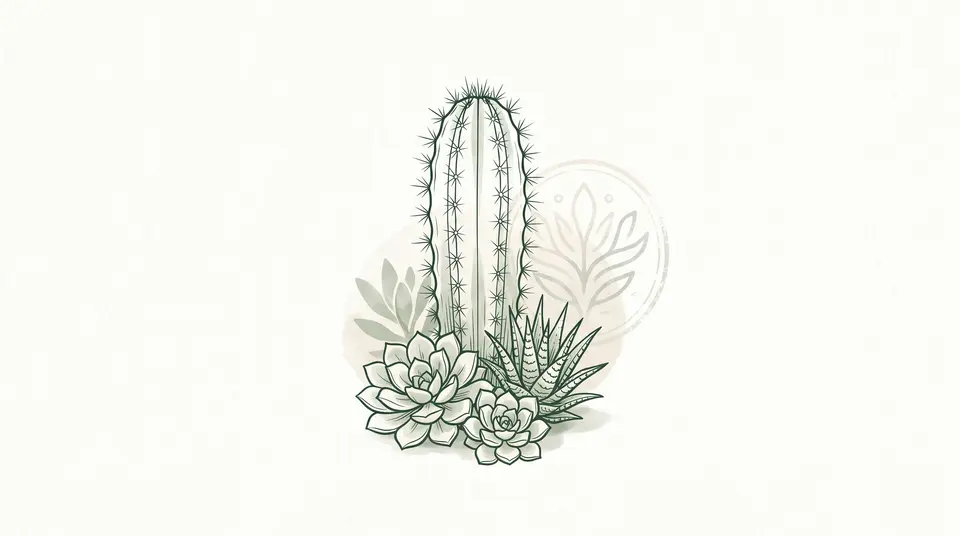 Reference image
Rigid-Spine Columnar Cactus
Cereus rigidispinus is a unique and sought-after member of the Cactaceae family, highly appreciated by collectors for its robust columnar form and exceptionally rigid spine structure 1.
Classified under the genus Cereus, the specific epithet rigidispinus translates from Latin as 'stiff or rigid spines'. While historically and colloquially confused with certain Echinocereus species due to overlapping common names, true Cereus rigidispinus displays the classic columnar growth and floral characteristics of the Cereus genus 2.
This cactus is native to the arid semi-desert regions of North America, particularly northern Mexico. It thrives on rocky slopes, alluvial fans, and gravelly soils where solar radiation is intense and rainfall is sparse 3.
It develops a cylindrical, columnar stem with distinct vertical ribs. The areoles bear thick, stiff, radial spines that press flat against the stem or flare outwards, providing protection from intense sun. In late spring and summer, it produces funnel-shaped, nocturnal flowers that open to shades of white or pale cream 2.
Cultivating this species requires maximum sunlight and exceptionally porous substrate. Watering should strictly follow the 'soak and dry' method during the active growing season, and must be completely suspended during the cold winter dormancy to prevent decay 1.
The most fatal mistakes are overwatering and placing the plant in low-light environments. These lead to root rot and etiolation, causing the stout stems to stretch and weaken.
Requires full sun, ideally 6 to 8 hours of direct sunlight daily on a south-facing windowsill.
Water deeply in summer only after the soil dries completely. Keep completely dry in winter.
Use a specialized mineral-heavy cactus soil mix with plenty of pumice, perlit, and sand.
Non-toxic, but the extremely rigid and sharp spines pose a physical hazard to pets and children.
Very easy to maintain, provided you avoid overwatering and keep it in a bright location.
Found naturally in the arid zones of northern Mexico, growing in gravelly soils on sun-baked hillsides with minimal vegetation cover.
