
Light
Full Sun
Requires at least 6 hours of direct, unfiltered sunlight daily.
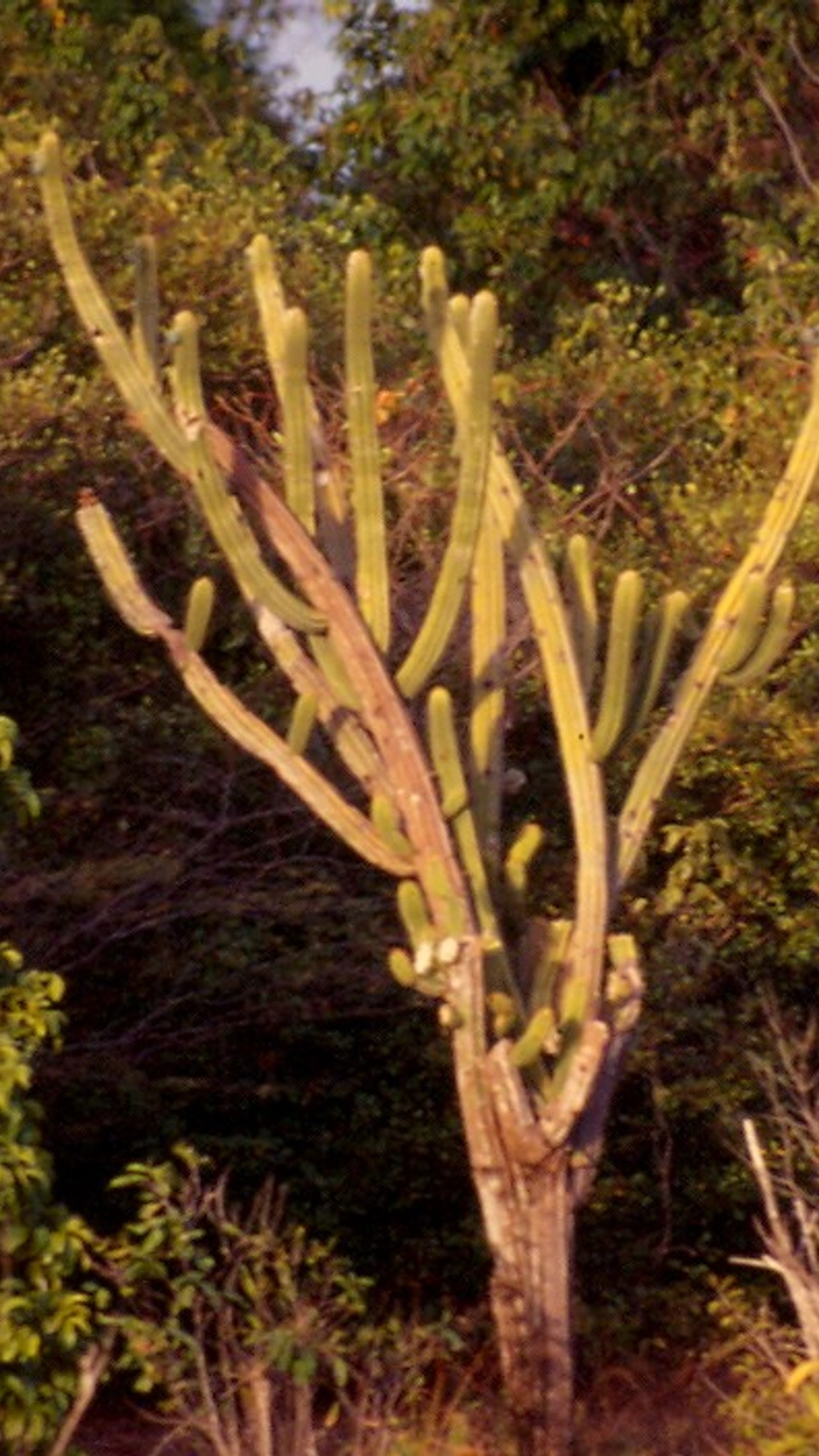 Reference image
 Reference image
Robust Blue Columnar Cactus
Cereus robustus is one of the most majestic and massive columnar cacti of the Cactaceae family. Known for its thick stems and heavily branched growth habit, this species is highly valued in arid landscaping for its dramatic, sculptural appearance 1.
The species was first described in botanical literature by Karwinski and Pfeiffer. The genus name Cereus translates from Latin as "wax torch", referring to the upright, candelabra-like growth of these cacti, while the specific epithet "robustus" highlights its remarkably stout and powerful stem structure 2.
Native to the arid valleys of Mexico, particularly within the states of Puebla and Oaxaca. It thrives on steep limestone slopes and within xerophytic shrublands, adapted to intense sunlight and rocky soils 1.
This perennial, tree-like cactus can reach heights of 5 to 10 meters. The stems are glaucous blue-green, featuring 5 to 8 deep ribs. The areoles bear strong, rigid, greyish to brownish spines. Large, nocturnal white flowers bloom during the summer, opening at night and closing by early morning.
Full sun exposure and exceptionally well-draining, sandy-gritty soils are vital for its health. Watering should be deep but infrequent during the growing season, allowing the substrate to dry out completely, and kept to a minimum in winter 2.
Overwatering is the most critical issue, rapidly causing root and stem rot. Insufficient light exposure leads to weak, pale, and stretched growth (etiolation).
Requires at least 6 hours of direct, unfiltered sunlight daily.
Allow soil to dry out completely between waterings; keep dry in winter.
Highly porous cactus mix enriched with pumice, coarse sand, and perlit.
Non-toxic to pets, but possesses sharp, stout spines that can cause injury.
Highly resilient and extremely easy to care for under proper light.
Native to the arid valleys and steep limestone slopes of Puebla and Oaxaca in Mexico, where it grows under intense sun and low precipitation.
