
Light
Full Sun
Requires full sun, preferably at least 6 hours of direct sunlight daily.
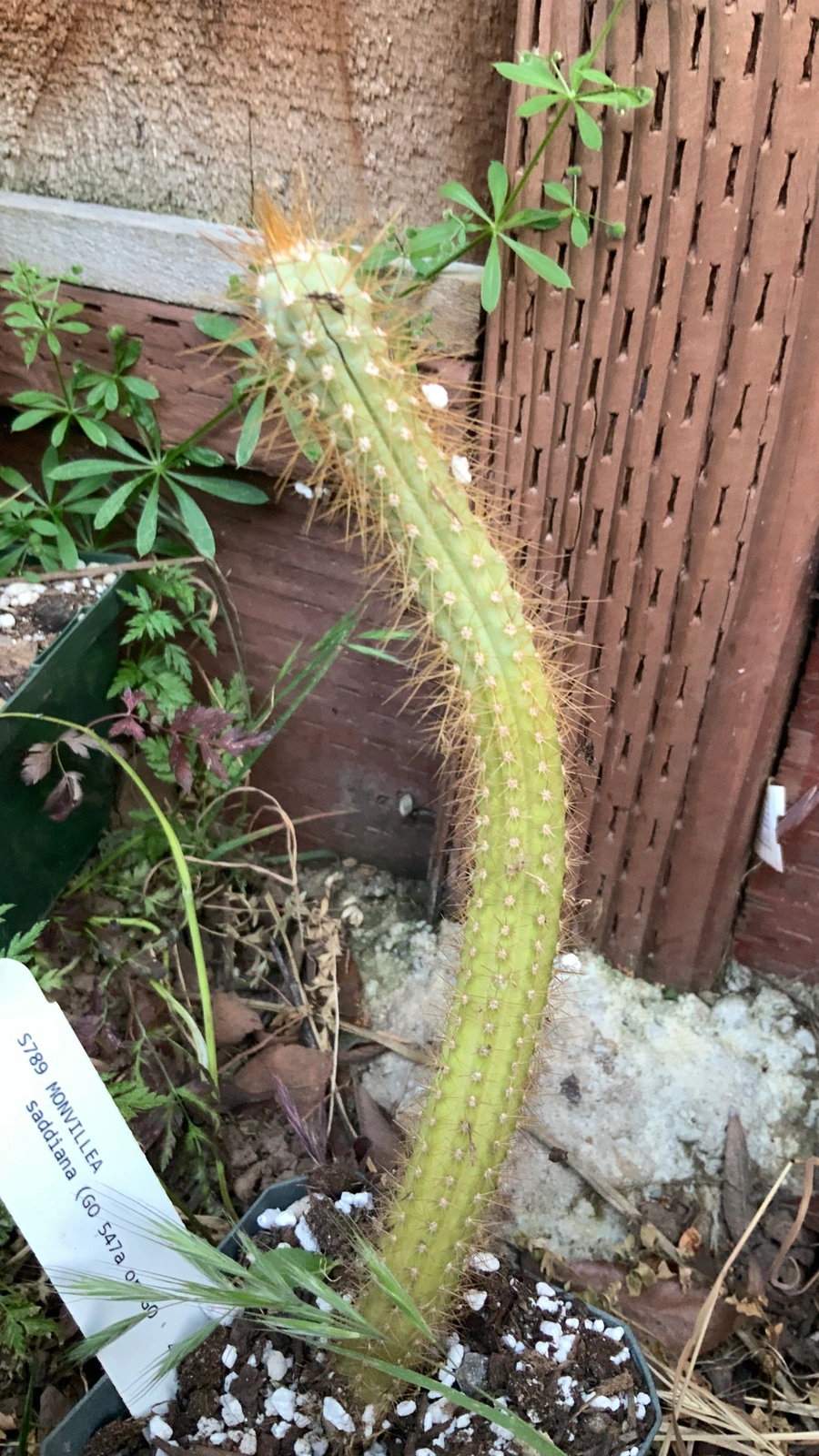 Reference image
Cereus saddianus is an upright, tree-like cactus species belonging to the Cactaceae family. Known for its columnar growth form in its native habitats, it is highly valued by succulent enthusiasts for its resilience to drought and structured architectural appeal.
The species was formally described within the genus Cereus, which represents a diverse group of columnar cacti 1. The specific epithet "saddianus" honors local botanical figures who contributed to the exploration of the South American flora.
Cereus saddianus is native to the seasonally dry tropical biomes of Brazil, particularly within the states of Mato Grosso, Distrito Federal, and Goiás 2. It thrives in the sandy, rocky soils of the Cerrado, where it is adapted to distinct wet and dry seasons.
This cactus produces sturdy, bluish-green to grayish-green stems with prominent ribs. Spines are typically gray or pale yellow, emerging from distinct areoles. Mature specimens produce large, nocturnal white flowers that open for only one night during the summer.
In cultivation, it requires full sun exposure and extremely sharp drainage. Watering should be thorough but infrequent, allowing the potting substrate to dry out completely between sessions.
The most prevalent issue is overwatering combined with heavy, water-retaining soils, which rapidly leads to root and stem rot. Insufficient sunlight will cause the stems to etiolate, losing their robust shape and pale blue coloration.
Requires full sun, preferably at least 6 hours of direct sunlight daily.
Water deeply only after the potting mix is fully dry. Prevent waterlogging at all costs.
Requires a gritty, well-aerated cactus mix with excellent drainage.
Non-toxic, but features sharp spines; handle with care and keep away from pets and children.
Very easy to maintain if provided with bright light and kept dry.
Native to the inland Cerrado region of Brazil, thriving in rocky savannas characterized by a seasonally dry tropical climate.
