
Light
Direct Sun
A south-facing location receiving at least 6 hours of direct sunlight is ideal.
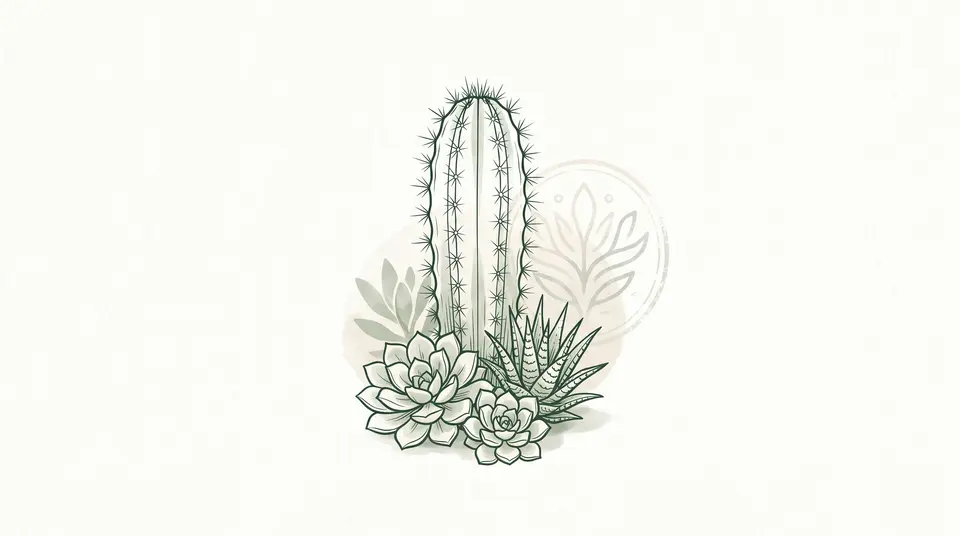 Reference image
Cereus Tenuatus
Cereus tenuatus is a rare, upright columnar cactus species belonging to the genus Cereus within the Cactaceae family. Named for its relatively slender stem structure, this species is highly valued by succulent collectors 1.
In botanical literature, Cereus tenuatus derives its specific epithet from the Latin "tenuatus" (slender or thinned) 2. This directly references its more graceful, narrow column compared to other giant members of the Cereus genus.
This species is native to the semi-arid scrublands and rocky slopes of South America. It thrives in well-draining, stony soils with low humidity and high direct sun exposure 1.
It features cylindrical, blue-green to pale green stems with prominent longitudinal ribs. The areoles bear thin but sharp spines. During the summer, it produces large, night-blooming white flowers that are highly fragrant 2.
In cultivation, it is remarkably easy to care for. It demands abundant direct sunlight and is highly drought-tolerant. Watering should be thorough but only performed once the substrate has dried completely. Winter watering should be drastically reduced.
The most common mistake is overwatering, which quickly leads to root and stem rot 1. Insufficient light causes the plant to become pale, weak, and stretched out, a process known as etiolation.
A south-facing location receiving at least 6 hours of direct sunlight is ideal.
Water deeply only when the potting medium is entirely dry.
Use a specialized cactus mix enriched with pumice and perlite for superior drainage.
Non-toxic, but keep away from children and pets due to sharp protective spines.
An extremely easy-care, neglect-tolerant cactus perfect for beginners.
Found naturally across dry, rocky hillsides and semi-arid scrub environments of South America.
