
Light
Full Sun
Requires full sun or bright direct light. Insufficient light causes the stem to stretch and weaken.
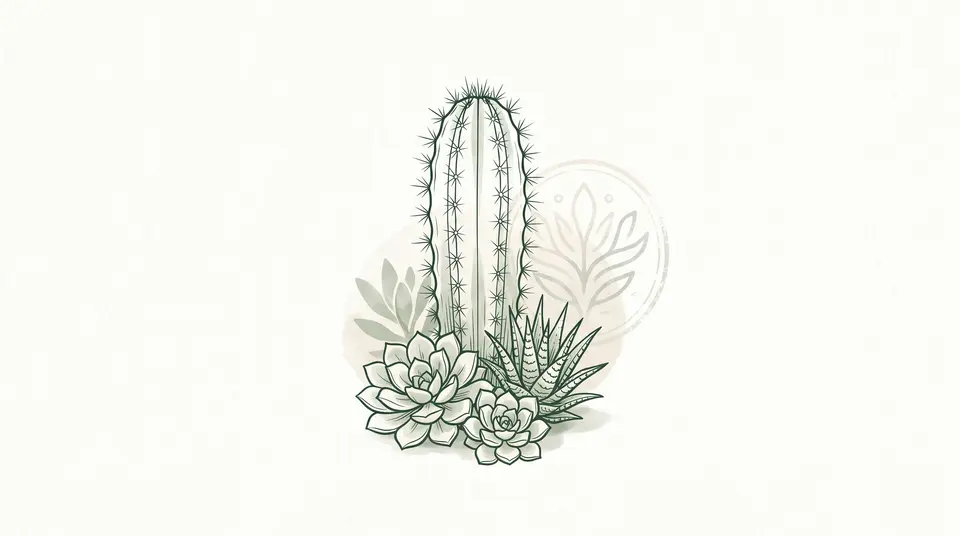 Reference image
Tineo's Columnar Cactus
Cereus tineoi is an elegant, columnar, and erect member of the Cactaceae family. Highly appreciated by succulent collectors, this species is known for its structural silhouette and architectural appeal in modern interiors 1.
Belonging to the prominent genus Cereus, the species name honors the botanist Vincenzo Tineo. Within taxonomic classifications, it shares morphological characteristics with other Neotropical columnar cacti, sometimes leading to identification challenges 12.
While its precise native range remains poorly mapped, it is primarily associated with the semi-arid, rocky terrains and dry shrublands of South America 2. It thrives in well-draining, gravelly soils exposed to intense sunlight.
This cactus features a bluish-green or matte green epidermis with pronounced vertical ribs. Areoles along the ribs bear sharp greyish-brown spines. It produces stunning, large, nocturnal white flowers designed to attract nocturnal pollinators 2.
In cultivation, Cereus tineoi requires full sun exposure and warm conditions. Watering should follow a soak-and-dry method during spring and summer, while watering should be virtually suspended in winter when the plant enters dormancy 1.
The most prevalent issue is root rot triggered by overwatering in heavy, clay-rich soil. Insufficient light leads to etiolation, causing the stems to stretch and weaken, while freezing drafts can permanently scar the epidermis.
Requires full sun or bright direct light. Insufficient light causes the stem to stretch and weaken.
Water thoroughly only when the soil is completely dry. Extremely drought tolerant.
Requires highly porous soil with excellent drainage, such as a coarse sand and pumice mix.
Equipped with sharp spines. Place away from high-traffic areas and out of reach of pets.
Very easy to maintain, provided you avoid overwatering and heavy clay soils.
Native to the semi-arid and rocky regions of South America. It is perfectly adapted to intense direct sunlight and periods of prolonged drought.
