
Light
Full Sun
Requires at least 6 hours of direct sun daily. Low light causes weak, thin growth.
 Reference image
 Reference image
Blue Columnar Cactus
Cereus validus is an imposing, column-forming cactus species from the Cactaceae family, widely recognized for its beautiful blue-green stem coloration and architectural silhouette. Highly resilient, it is a favored choice for both xeriscaping and indoor collection displays.
Described in 1837 1, Cereus validus is often taxonomically associated with its well-known synonym Cereus forbesii. The genus name 'Cereus' stems from the Latin word for candle, referencing the upright, torch-like growth habit, while the specific epithet 'validus' means strong or robust, highlighting its vigorous growth.
This species is native to the arid and semi-arid regions of South America, primarily within Argentina, Bolivia, and Paraguay 2. It thrives in dry shrublands, chaco ecosystems, and open plains characterized by sandy, well-draining soils and intense solar radiation.
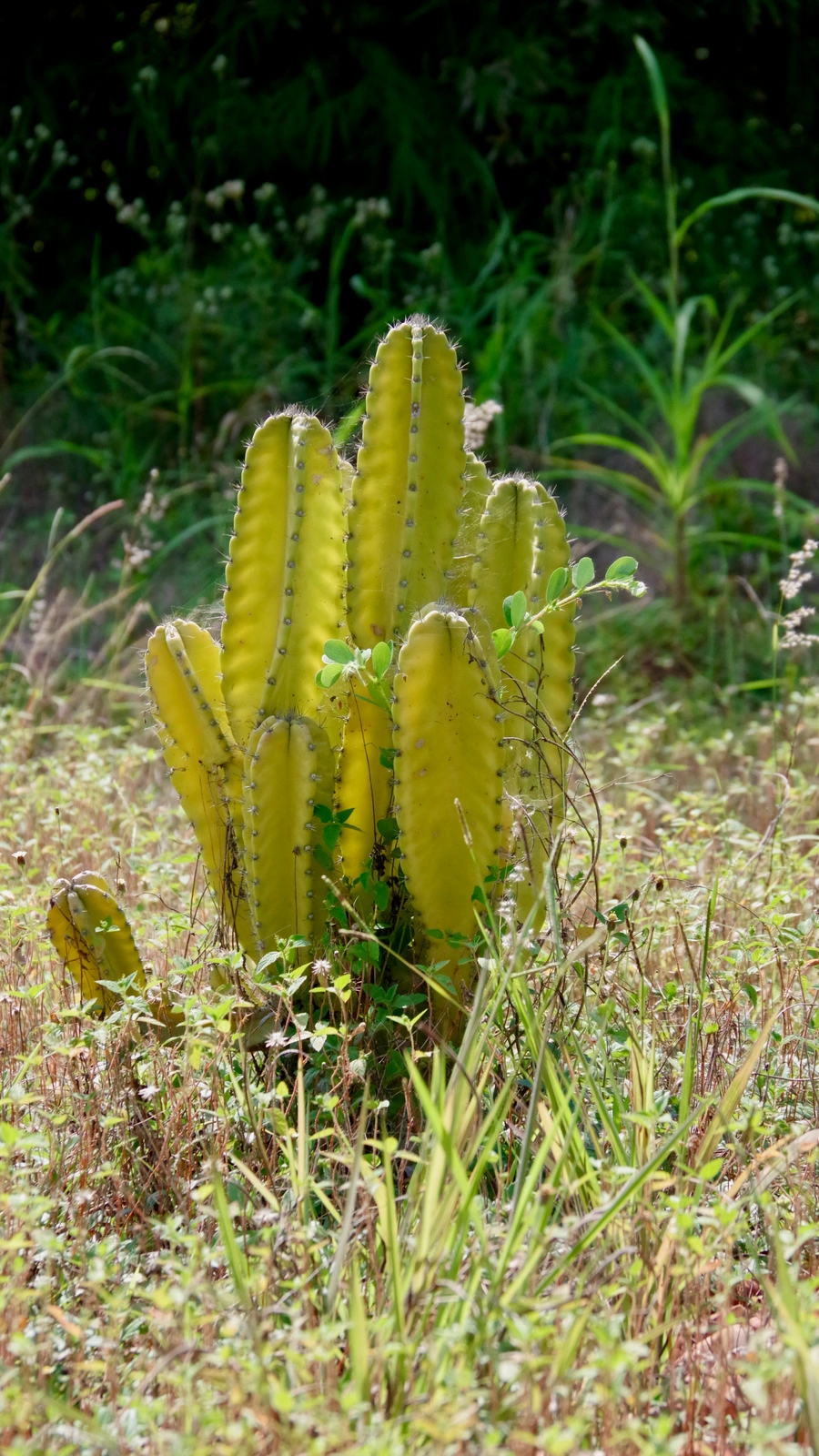
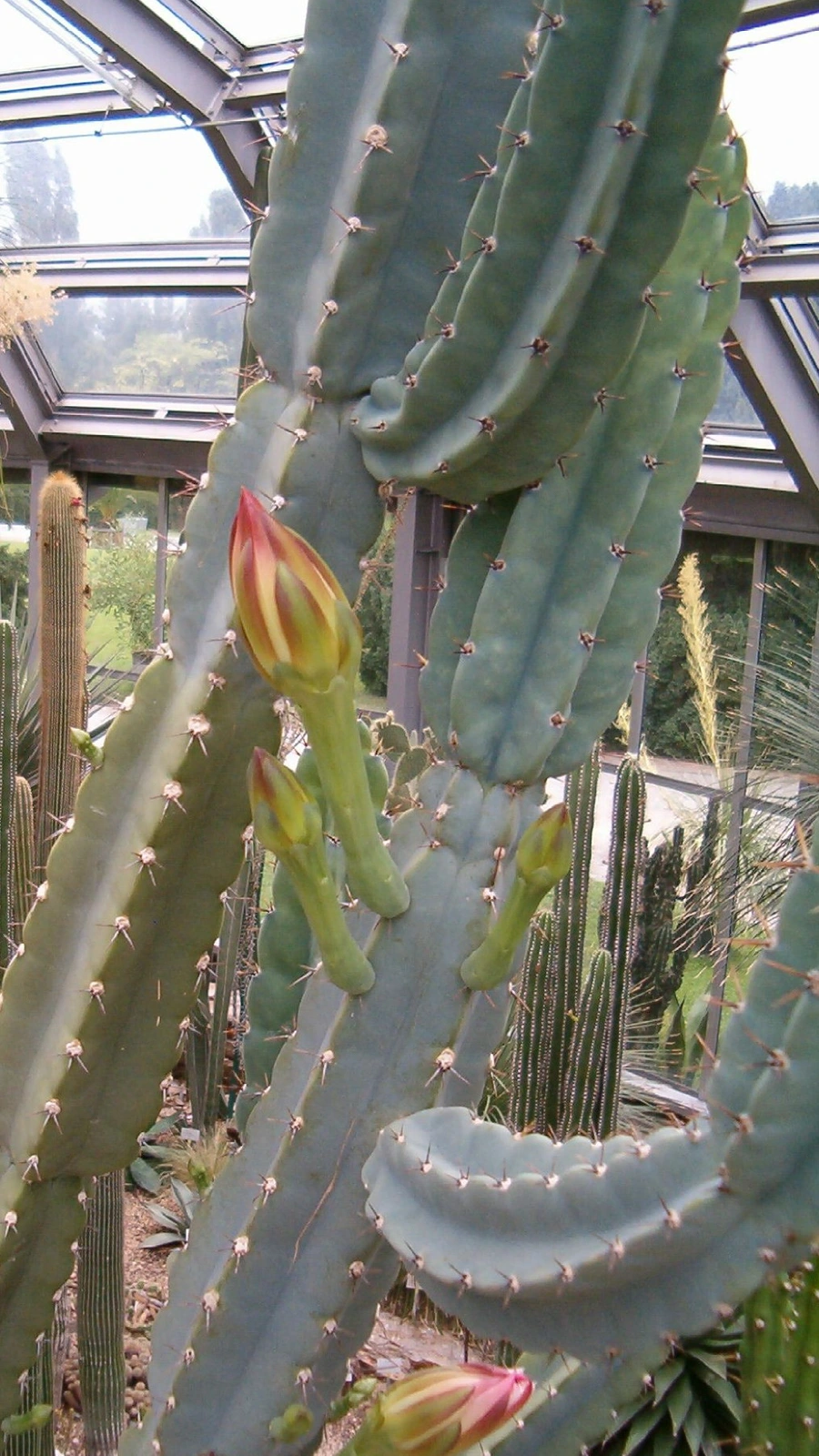
Cereus validus features upright, ribbed stems that branch near the base as the plant matures. The epidermis is covered in a distinctive glaucous, blue-green waxy coating that helps prevent water loss. Areoles house sturdy, greyish-brown spines. In summer, it produces large, funnel-shaped nocturnal flowers that are white inside with reddish-pink outer petals, followed by edible, fleshy red fruits.
It prefers full sun, requiring at least six hours of direct sunlight daily to maintain its blue hue and compact form. The soil must be highly porous and mineral-rich. Water thoroughly during the active growing season (spring and summer) only when the substrate has dried out completely, and keep virtually dry in winter.
Overwatering and placing the plant in heavy, moisture-retaining soils are the primary causes of root rot. Lack of adequate sunlight results in etiolation, causing the stems to grow thin, weak, and pale.
Requires at least 6 hours of direct sun daily. Low light causes weak, thin growth.
Water deeply only when the soil is completely dry. Keep dry in winter.
Thrives in mineral-rich, porous cactus soil with plenty of pumice or perlite.
Equipped with sharp spines. Keep away from pets and small children.
Very easy to care for, making it ideal for beginners who tend to underwater.
Native to the dry shrublands and plains of Argentina, Bolivia, and Paraguay, where it thrives in sandy, stony soils under intense heat.
