
Light
Full Sun
Requires maximum, unobstructed direct sunlight to maintain its signature chalky-white protective waxy coating.
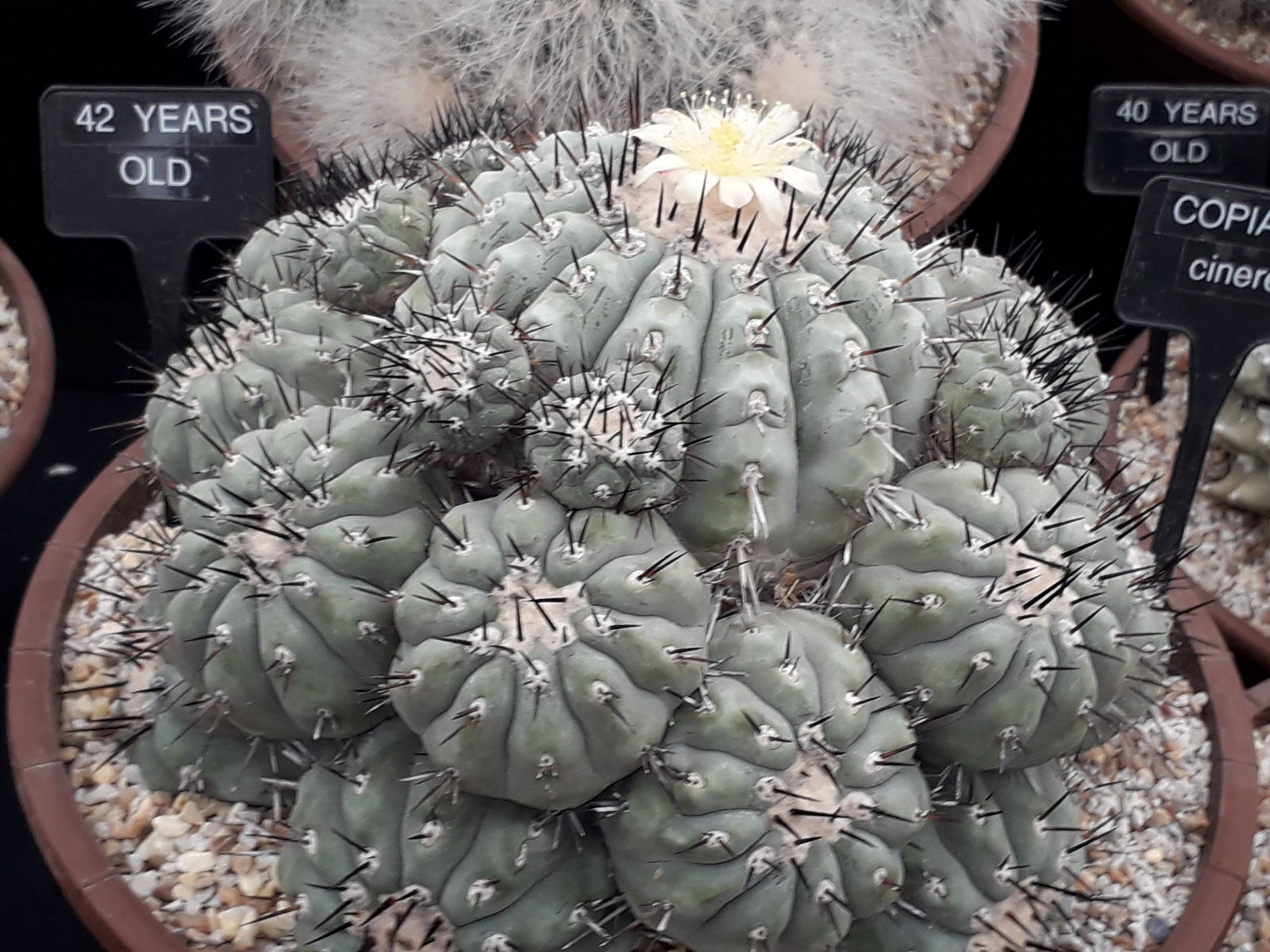 Reference image
Gray Copiapoa
Copiapoa cinerea is a highly prized, extremely slow-growing succulent subshrub native to the hyper-arid Atacama Desert in Chile. Recognized for its striking white-gray epidermis contrasted against jet-black spines, it represents one of the most iconic and coveted species within the family Cactaceae 1.
Originally described by Rudolf Amandus Philippi in 1860 as Echinocactus cinereus, the species was later reassigned to the genus Copiapoa by Britton and Rose 2. The specific epithet cinerea is derived from Latin, translating to 'ash-colored' or 'grayish,' a direct reference to the protective waxy epicuticular layer.
Endemic to the coastal hills of the Antofagasta region in northern Chile, this species survives in some of the driest conditions on Earth. Rainfall is virtually non-existent; instead, the plants rely heavily on the dense coastal fog known locally as 'Camanchaca' to meet their moisture requirements 1.
The globose to cylindrical stems can eventually reach up to one meter in height in the wild. The epidermis is covered with a thick, chalky-white waxy coating that reflects harsh solar radiation. Sharp, dramatic black or dark brown spines emerge from felted areoles, and yellow, bell-shaped flowers bloom at the apex 2.
Cultivating Copiapoa cinerea is a test of patience and skill. It requires maximum light exposure, excellent ventilation, and an entirely mineral-based substrate. Watering should be extremely sparse and restricted exclusively to the active growing period in warm weather.
The most prevalent errors in cultivation are using soil mixes rich in organic matter (which leads to root rot) and overwatering during the dormant winter phase. Insufficient sunlight will cause the plant to etiolate and lose its signature ash-gray coloration.
Requires maximum, unobstructed direct sunlight to maintain its signature chalky-white protective waxy coating.
Water strictly from below or around the base to avoid washing away the delicate white epicuticular wax on the stem.
Requires an almost 100% mineral substrate composed of pumice, perlite, lava grit, and coarse sand.
Non-toxic, but the extremely rigid, sharp black spines require careful handling with thick gloves during repotting.
Highly sensitive to humidity and moisture; recommended primarily for experienced succulent collectors.
Hails from the coastal cliffs and gravelly plains of the Atacama Desert in northern Chile. In this unique biome, it occupies hyper-arid zones where rain may not fall for years, surviving solely on moisture condensed from the daily sea fog.
