
Light
Full Sun
Requires full sun or very bright indirect light to maintain its compact form and rich spine color.
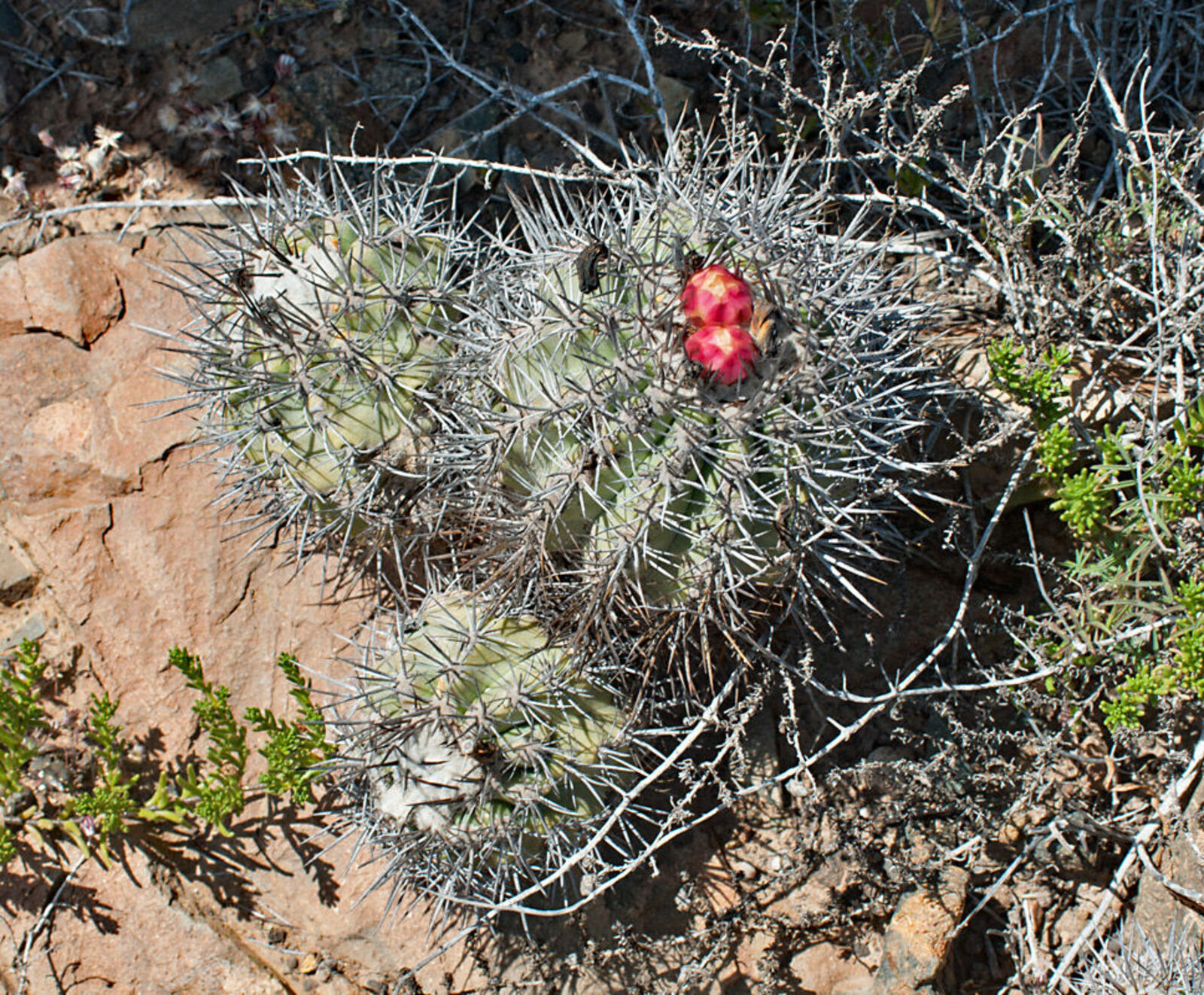 Reference image
Coquimbo Copiapoa
Copiapoa coquimbana is a clump-forming perennial cactus species in the family Cactaceae, endemic to the coastal desert regions of northern Chile. Renowned for its resilience and striking spination, it is a highly sought-after species among succulent enthusiasts.
Belonging to the genus Copiapoa, this species was originally described as Echinocactus coquimbanus by Friedrich Philippi in 1885 and later combined into the genus Copiapoa by Friedrich Ritter 1. The specific epithet "coquimbana" refers to its primary distribution region of Coquimbo in Chile.
It is native to the coastal hills of the Coquimbo and Atacama regions in Chile. The habitat is characterized by extremely low rainfall, but a high presence of coastal fog known locally as "Camanchaca," which provides vital atmospheric moisture to the plants 2. It grows on stony slopes and sandy coastal terraces.
The stems are globose to short-cylindrical, branching from the base over time to form large, dense mounds. Stem color ranges from dull green to glaucous blue-green, featuring 10 to 17 pronounced ribs. Areoles are covered with grayish wool. Spines are dark brown, black, or gray. It produces beautiful funnel-shaped, bright yellow flowers at the apex in summer.
When grown in cultivation, Copiapoa coquimbana requires maximum light exposure and exceptional soil drainage. It thrives in a sunny greenhouse or a south-facing window. Watering should follow a strict soak-and-dry method, with irrigation completely withheld during the cold winter dormancy 1. A low-organic, highly mineral substrate is mandatory.
Overwatering and poor soil aeration are the most common causes of failure, rapidly leading to root rot. Insufficient light exposure will result in etiolation, causing the stems to stretch abnormally and lose their compact shape.
Requires full sun or very bright indirect light to maintain its compact form and rich spine color.
Water thoroughly only when the potting medium is 100% dry. Keep dry in winter.
Requires a gritty, highly porous mineral substrate with very little organic compost.
Non-toxic, but possesses sharp spines that can cause physical injury. Handle with care.
Moderate. Easy if light is abundant and overwatering is strictly avoided.
Native to the coastal areas of the Atacama Desert, where plants rely on coastal fog rather than rainfall for their hydration.
