
Light
Full Sun
Requires full sun to bright indirect light; south-facing windows are ideal.
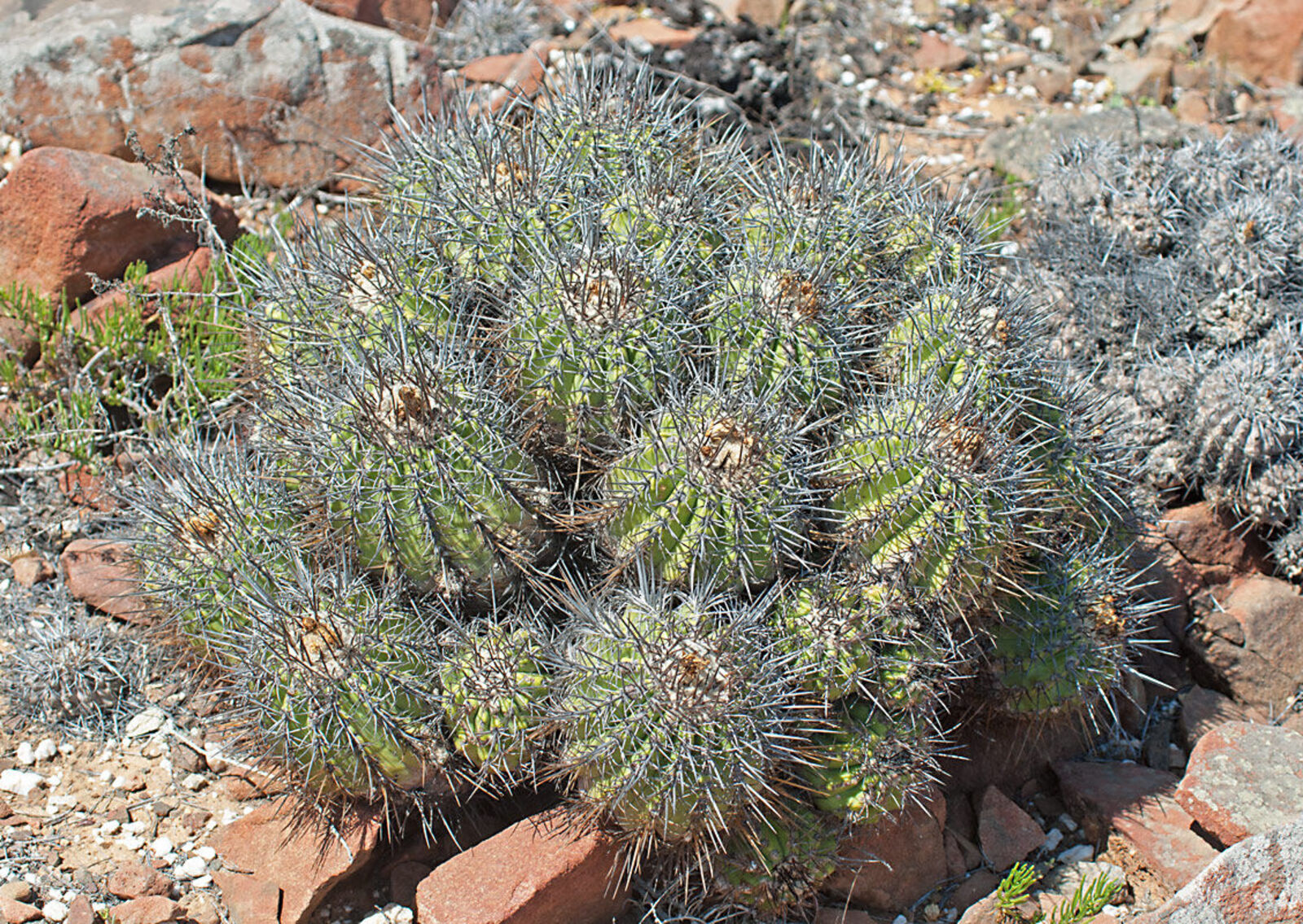 Reference image
Fiedler's Copiapoa
Copiapoa fiedleriana is a highly sought-after, slow-growing succulent subshrub belonging to the Cactaceae family, native to the hyper-arid regions of Chile 1. Known for its remarkable adaptation to extreme desert environments, this species is a prized specimen among cacti collectors worldwide due to its rugged aesthetics and extreme drought tolerance.
Classified within the genus Copiapoa, the species honors German botanist and cactus enthusiast Carl Fiedler. Taxon synonyms include Echinocactus fiedlerianus, and it is closely related to the Copiapoa echinoides complex, sometimes exhibiting intermediate morphological traits along its geographical range 2.
This species is endemic to northern Chile, particularly in the southern margins of the Atacama Desert, ranging through Coquimbo and Huasco 1. It thrives in rocky coastal hillsides and sandy gravel plains. In this habitat, rainfall is practically non-existent, and the plants rely almost entirely on the heavy coastal fog, known locally as 'camanchaca', for moisture 3.
Copiapoa fiedleriana has a globose to shortly cylindrical stem that can offset to form dense clumps over time. The epidermis is covered with a grayish-green to glaucous-blue waxy coating that reflects harsh sunlight. It features pronounced, wavy ribs bearing woolly areoles equipped with dark brown to jet-black radial and central spines. The funnelform flowers are bright yellow, emerging from the woolly apex.
In cultivation, it requires an extremely porous, mineral-based substrate containing minimal organic matter. It demands full sun to maintain its compact form and dense spination. Watering must be sparse during the active summer growth phase, allowing the soil to dry completely, while being kept bone-dry in winter.
The most frequent mistake is utilizing standard potting soils rich in peat, which retain moisture and cause rapid root rot. Insufficient sunlight will result in etiolation, causing the stems to stretch abnormally and lose their protective waxy coloration.
Requires full sun to bright indirect light; south-facing windows are ideal.
Allow the potting medium to dry out 100% before watering. Dry winter rest is mandatory.
Requires extremely gritty, mineral-based soil with pumice, lava rock, and coarse sand.
Sharp spines can cause physical injury. Keep out of reach of children and pets.
Moderate; highly sensitive to overwatering but very resilient to extreme neglect.
Native to the coastal areas of northern Chile, where it survives in hyper-arid conditions on barren slopes, relying almost entirely on moisture condensed from dense coastal fog.
