
Light
Full Sun
Requires full sun or very bright indirect light; perfect for south-facing windows or greenhouses.
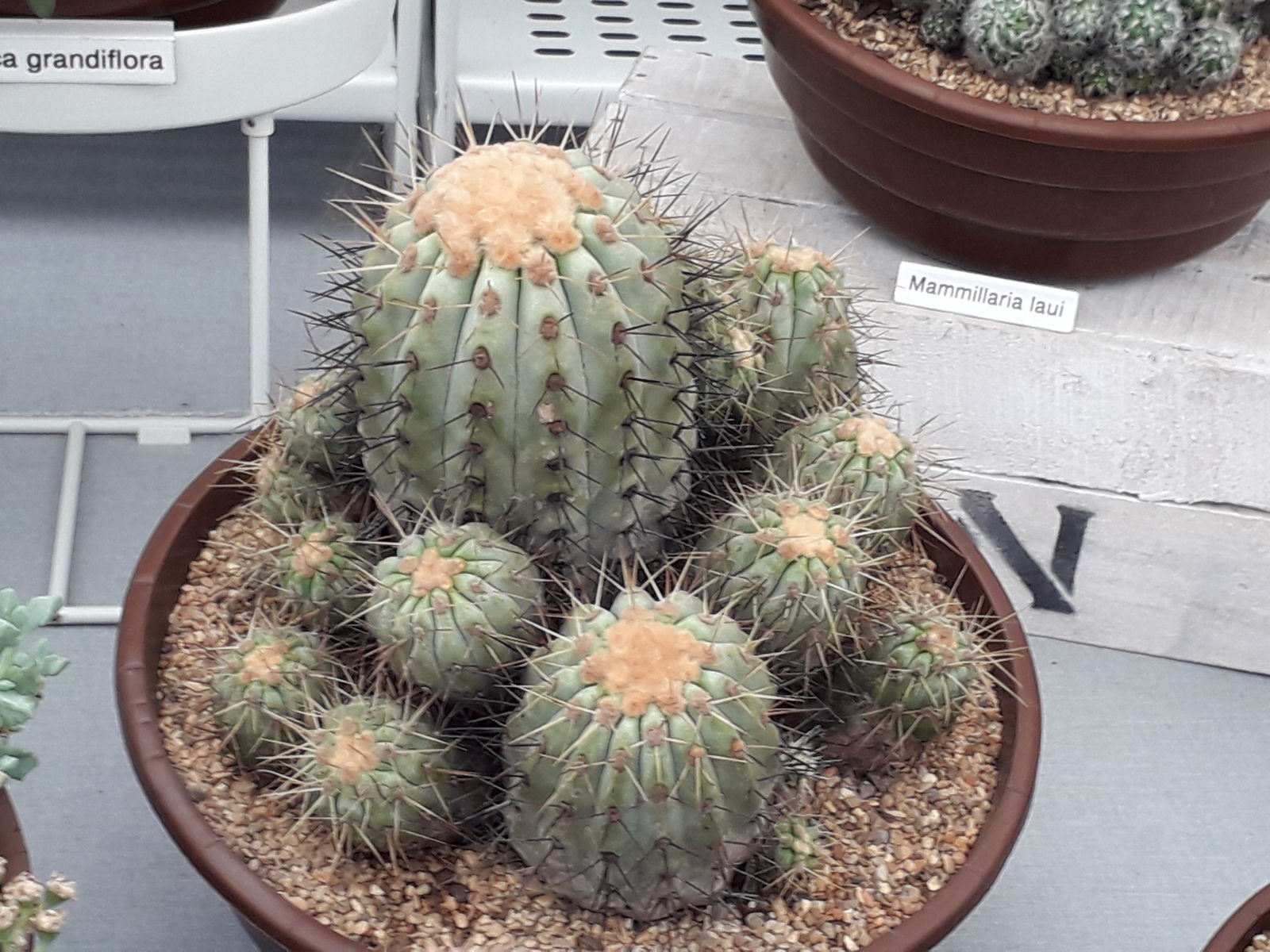 Reference image
Giant Copiapoa
Copiapoa gigantea is a slow-growing, globose to columnar succulent subshrub in the family Cactaceae. Endemic to the harsh coastal regions of the Atacama Desert in Chile, this species is highly prized among succulent enthusiasts for its striking glaucous-grey, waxy epidermis and dense spination 1.
Belonging to the genus Copiapoa, which is named after the province and city of Copiapó in northern Chile, the specific epithet 'gigantea' highlights its capacity to form massive clumps that are significantly larger than most other species in the genus 2.
This species is restricted to the coastal cliffs and hills of northern Chile, particularly in the Antofagasta and Atacama regions 1. It thrives in hyper-arid habitats where rainfall is virtually non-existent. Survival depends heavily on the 'Camanchaca', a dense coastal fog that rolls in from the Pacific Ocean, providing essential atmospheric moisture 2.
Copiapoa gigantea forms massive mounds over time, consisting of multiple individual globose heads. The stems are covered in a dense, powdery wax coating that reflects sunlight, giving them a yellow-green or bluish appearance. The sharp, robust spines vary from amber-yellow to dark brown. Bright yellow, funnel-formed flowers emerge from the woolly crown of the plant during summer.
In cultivation, it requires an extremely gritty, fast-draining mineral substrate and maximum sunlight to preserve its compact form and waxy coating. Water should be applied only when the soil is completely dry, and the plant must be kept dry and cool throughout the winter dormancy.
The most frequent errors include overwatering in low-light environments, which causes root rot, and using peat-heavy organic soils. Lack of proper air circulation and low light lead to etiolation, where the stems stretch and lose their distinctive form.
Requires full sun or very bright indirect light; perfect for south-facing windows or greenhouses.
Water sparingly in summer only after the soil dries completely. Keep completely dry in winter.
Requires a porous, mineral-heavy substrate with pumice, lava rock, and coarse sand.
Non-toxic, but features sharp, stiff spines that can cause physical injury to pets and children.
Moderately challenging; requires strict watering discipline and intense light levels.
Native to the coastal mountains and slopes of Antofagasta and Atacama in northern Chile. It lives in a hyper-arid climate, receiving moisture primarily from dense ocean fogs known locally as Camanchaca.
