
Light
Full Sun
Requires full sun; direct sunlight is essential for rich spine coloration.
 Reference image
 Reference image
Mountain Copiapoa
Copiapoa montana is a slow-growing, perennial cactus species belonging to the family Cactaceae. Famously adapted to the hyper-arid environment of the Atacama Desert, this species is highly valued by collectors for its rugged appearance and clustering habit.
This species was first described in 1959 by the German cactus specialist Friedrich Ritter 1. The genus name Copiapoa refers to the province of Copiapó in northern Chile, while the specific epithet montana means "of the mountains" in Latin, indicating its high-elevation coastal habitat 2.
Copiapoa montana is endemic to northern Chile, particularly in the Antofagasta and Atacama regions 1. It inhabits rocky slopes and coastal hills where rainfall is extremely scarce, and survival depends almost entirely on the dense coastal fogs known locally as "camanchaca."
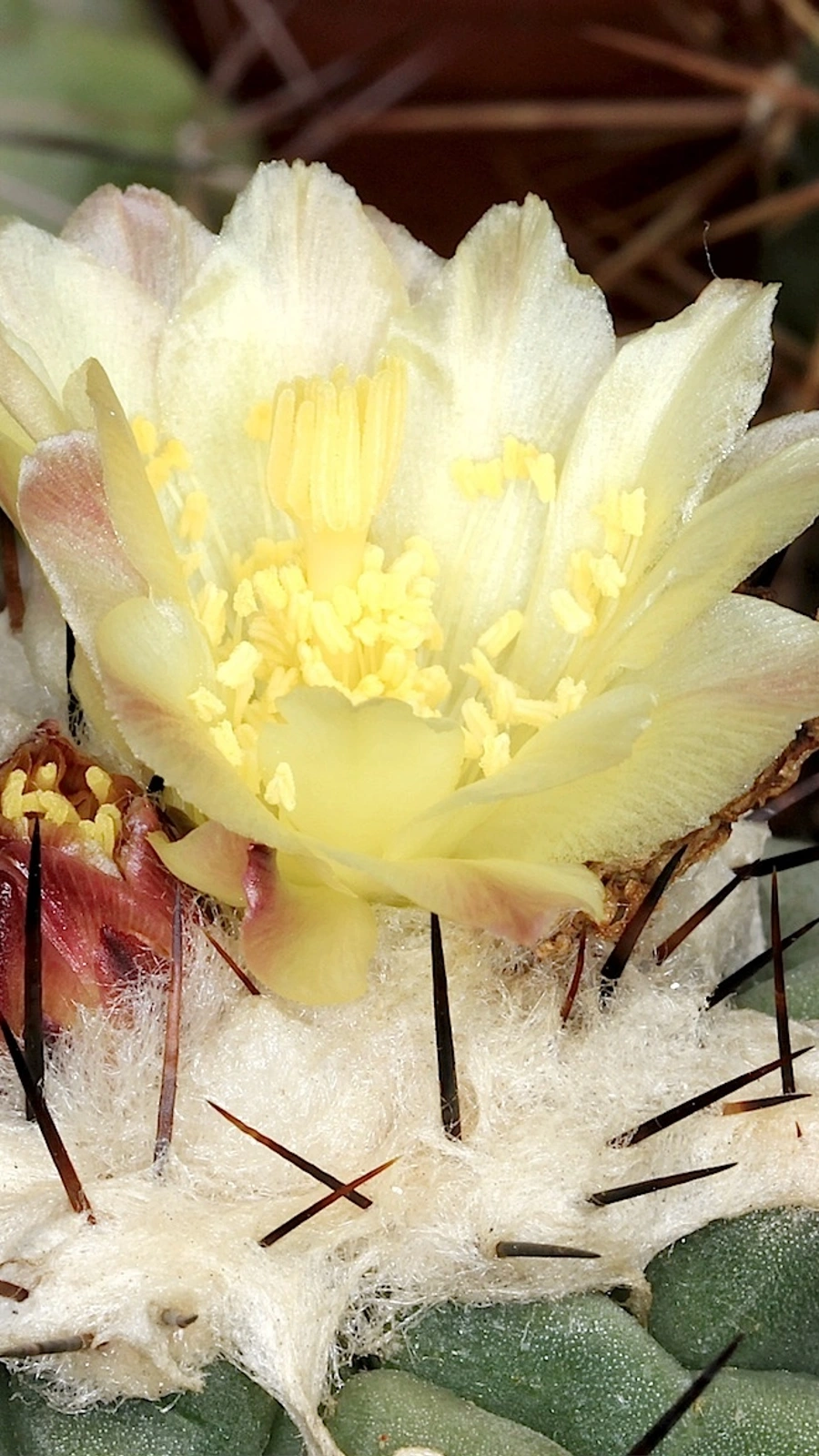
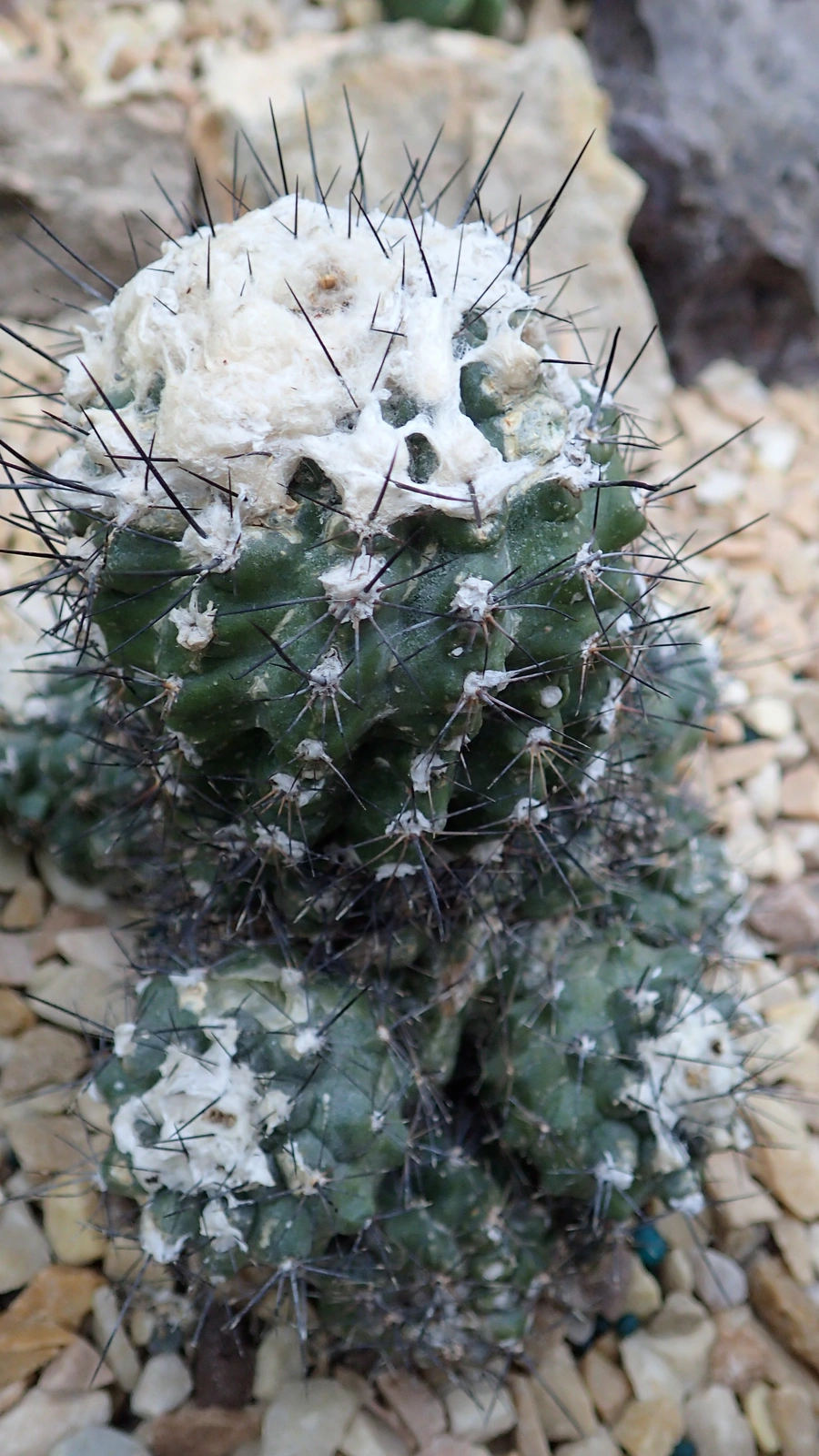
The plant produces cylindrical, dark green to bronze-colored stems that offset from the base to form dense mounds. The prominent ribs carry large woolly areoles with stout, dark brown to black spines that fade to gray with age. Bell-shaped, yellow flowers emerge from the woolly crown of mature stems during summer.
In cultivation, this cactus requires maximum light intensity and superb ventilation to maintain its compact shape and dark spination. A strictly mineral substrate with negligible organic matter is crucial. Water should be applied only during the active growing season once the soil has completely dried, and withheld during the winter.
Excessive watering and lack of direct sunlight are the primary causes of failure. Wet soils quickly induce root rot, while low light levels cause etiolation (stretching), which permanently ruins the plant's natural compact shape.
Requires full sun; direct sunlight is essential for rich spine coloration.
Allow soil to dry out completely between waterings; keep dry in winter.
Strictly mineral mix rich in pumice, grit, and coarse sand.
Non-toxic, but features sharp spines that require careful handling.
Moderate; requires strict discipline with watering and maximum light exposure.
Endemic to the extremely arid coastal mountains of northern Chile, where it thrives in hyper-dry desert conditions sustained primarily by dense coastal fog rolling off the Pacific Ocean.
