
Light
Full Sun
Requires full, direct sun all year round. Ideal for south-facing windows, greenhouses, or outdoor patios.
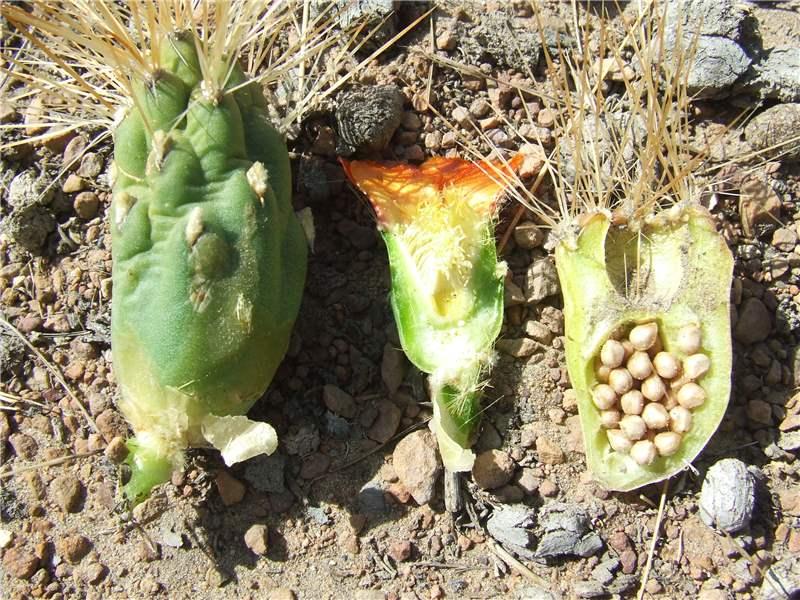 Reference image
Fiery Cumulopuntia
Cumulopuntia ignescens is a striking, cushion-forming succulent subshrub belonging to the Cactaceae family. This species is highly adapted to the extreme alpine conditions of the high-altitude Andean mountains 1.
The genus name Cumulopuntia combines the Latin "cumulus", meaning heap or mound, with Opuntia, describing its growth habit. The specific epithet ignescens translates to "becoming fiery" or "glowing like fire", a vivid reference to its dense, bright coppery-red and golden-yellow spines 2. It is synonymously known as Opuntia ignescens.
Native to Peru, Bolivia, and northern Chile, this species thrives in dry, high-altitude Altiplano regions at elevations between 3,000 and 4,500 meters 1. It is found growing in gravelly, volcanic soils subject to intense solar radiation and freezing night temperatures.
This cactus forms dense, low-growing mounds up to 30 cm tall and over 1 meter wide. The individual segments are globose to ovoid, heavily armed with stiff, erect, colorful spines that range from yellow to deep reddish-brown. Bright yellow, orange, or copper-colored flowers emerge from the upper areoles in summer 2.
In cultivation, it requires maximum direct sunlight and excellent ventilation. It is remarkably cold-hardy if kept completely dry during the winter. Watering should be deep but infrequent, restricted only to the active growing season when the soil dries out fully.
Inadequate sunlight leads to etiolation, causing the segments to lose their compact shape and dense spination. Excess moisture and heavy, organic-rich soils will quickly cause root rot.
Requires full, direct sun all year round. Ideal for south-facing windows, greenhouses, or outdoor patios.
Water deeply only when the potting mix is fully dry. Suspend watering completely in winter.
Extremely porous mineral mix consisting mostly of pumice, coarse sand, and a small amount of loam.
Armed with very sharp, stiff spines. Handle with thick leather gloves and keep away from pets.
Moderate. Easy if light is abundant and water is kept to a bare minimum, but prone to rot in humid settings.
Grows naturally in the barren, wind-swept high Andean Altiplano on rocky slopes and volcanic soils under extreme temperature fluctuations.
