
Light
Full Sun
Requires full sun or bright direct light for at least 6 hours daily to maintain its dense, glowing spine structure.
 Reference image
Sheathed Cholla
Cylindropuntia tunicata, commonly known as the sheathed cholla or glowing cactus, is an extremely drought-tolerant and heavily armed succulent shrub belonging to the Cactaceae family. It is easily distinguished by its dense cover of long spines enclosed in reflective, papery sheaths.
Originally described by Antonio José Cavanilles in 1791 as Cactus tunicatus, it was later reassigned to the genus Cylindropuntia by Frederik Marcus Knuth 1. The specific epithet tunicata refers to the translucent, coat-like (tunic) sheaths that loosely cover each of its formidable spines.
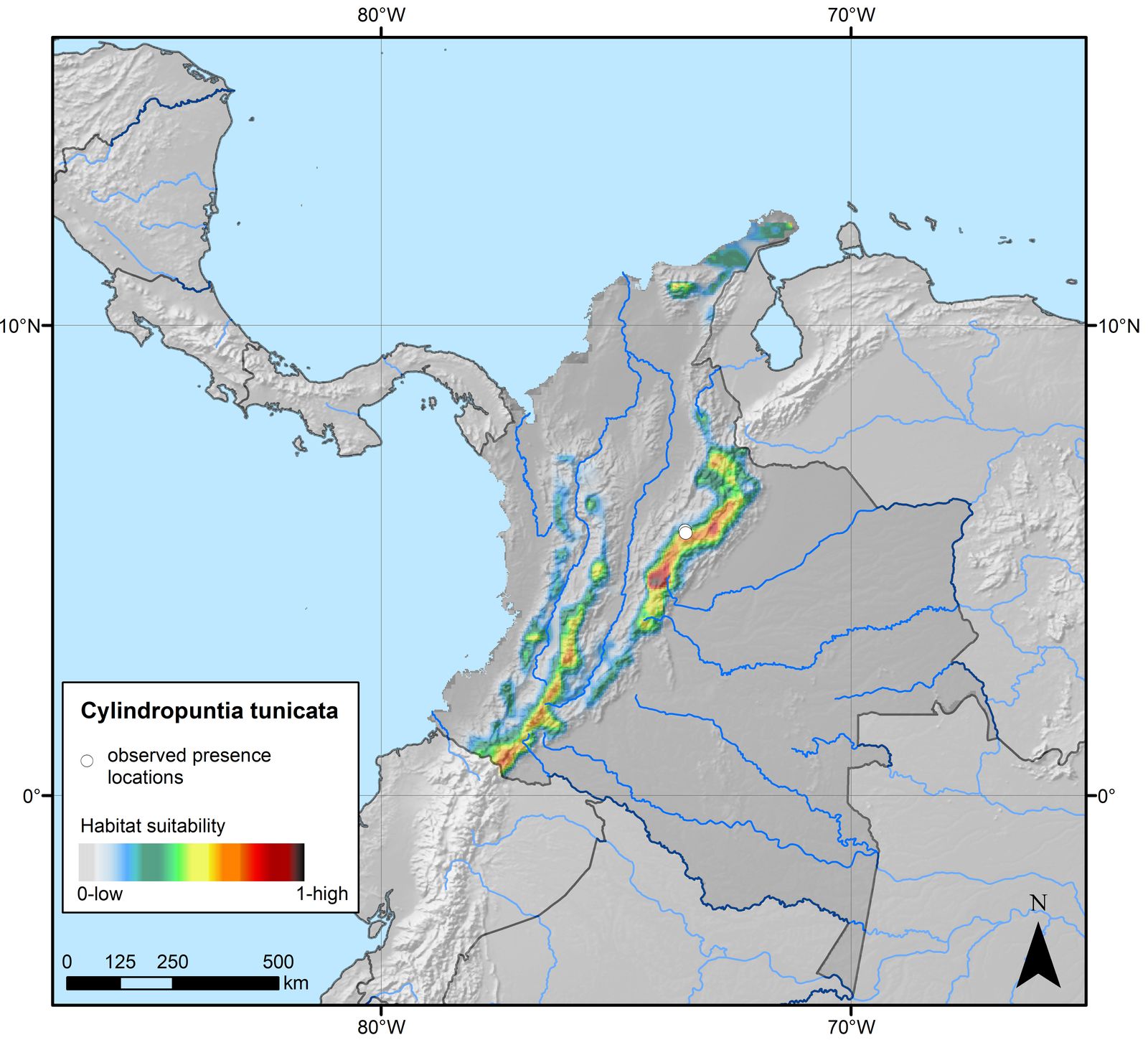
This species is native to the arid regions of northern and central Mexico and the south-central United States, particularly Texas. However, due to its resilient nature, it has become naturalized in parts of southern South America, Spain, and Australia, where it can sometimes exhibit invasive behavior in fragile dryland ecosystems 2. It thrives in desert scrublands and rocky slopes.
Cylindropuntia tunicata grows as a low, heavily branched shrub reaching about 30 to 60 cm in height. The stems are cylindrical, segmented, and pale green to blue-green. Each areole bears 1 to 5 long, brownish spines covered with conspicuous, silver-white or yellowish papery sheaths that shimmer under sunlight. The flowers are greenish-yellow, giving way to rare, sterile spiny fruits. Propagation is primarily vegetative, through easily detached stem joints.
In cultivation, this cactus requires maximum sunlight and exceptionally gritty, well-draining soil. It is highly drought-tolerant but susceptible to root rot in waterlogged conditions. It exhibits notable cold-hardiness, enduring temperatures down to -10 °C if kept completely dry.
The most frequent mistakes include overwatering in low-light indoor environments and using standard organic potting soils that retain moisture, which quickly triggers stem and root rot.
Requires full sun or bright direct light for at least 6 hours daily to maintain its dense, glowing spine structure.
Water thoroughly only when the soil is 100% dry. Keep dry in winter to prevent cold-season rot.
Requires an extremely porous mineral mix consisting of pumice, coarse sand, and minimal organic matter.
Highly dangerous spines that detach easily. The papery sheaths and barbed tips cause severe skin irritation.
Moderate care difficulty. Safe handling and strict watering control are essential.
Mainly distributed across the Chihuahuan Desert of Mexico and western Texas. It has also adapted to arid pastures and shrublands in parts of South America, South Africa, and southern Europe.
