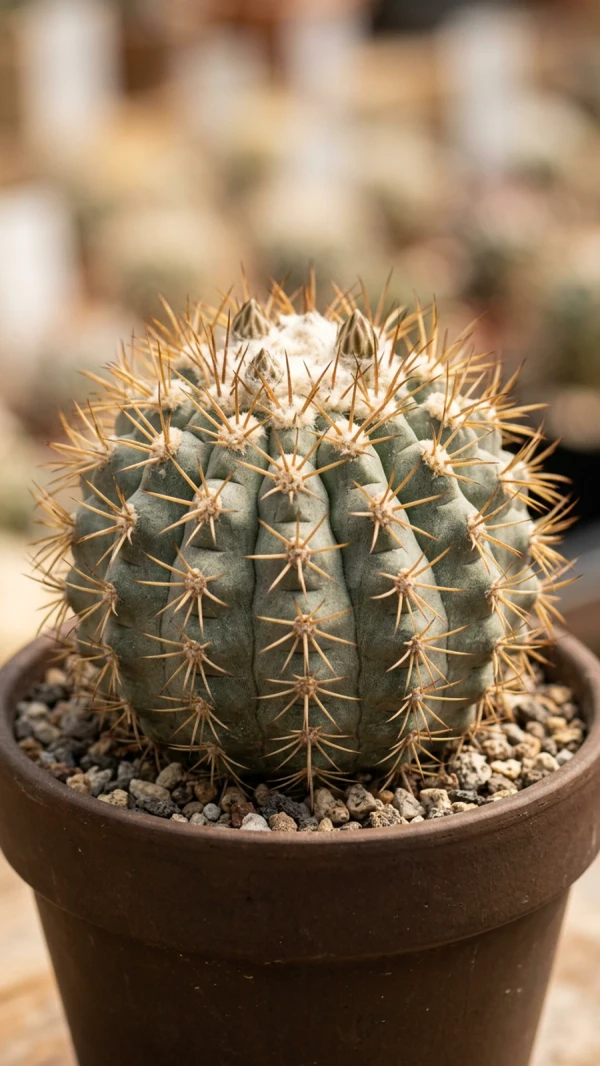
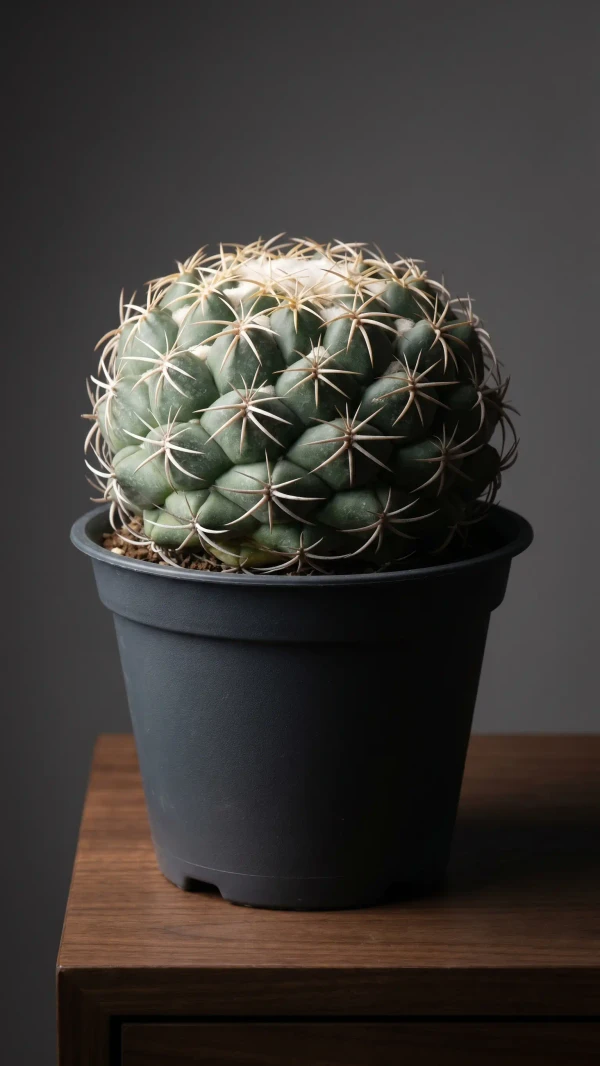
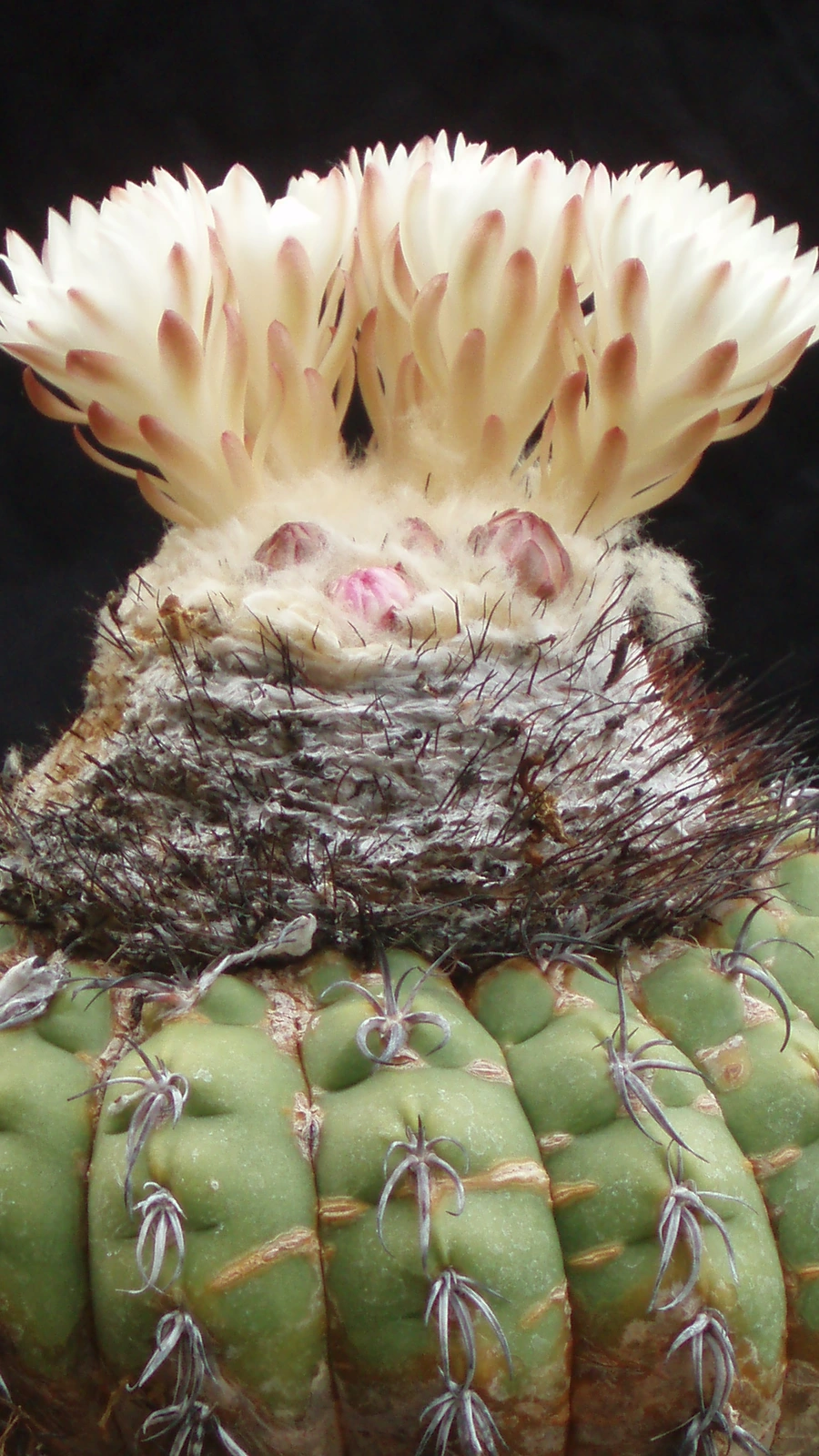
Discocactus placentiformis is a rare cactus species native to Brazil, distinguished by its distinctly flattened, disc-shaped body and the characteristic white, woolly cephalium that develops at its apex when mature. This cephalium is a specialized structure that bears the plant's flowers and fruits. Typically growing to 10-20 cm in diameter, this cactus derives its name from its flat, compressed "disc" appearance. Its body is characterized by prominent, few ribs, upon which sharp, short spines are found. The nocturnal, white or cream-colored, tube-shaped flowers usually open for only a few hours at night, emitting a strong, sweet fragrance . Flowering generally occurs during the summer months.
Natural Habitat and Ecology
D. placentiformis is endemic to the semi-arid, rocky, and savanna regions of eastern and central Brazil. These habitats are characterized by seasonally dry tropical climate conditions with distinct wet and dry periods. The plant typically thrives in well-drained, mineral-rich soils in open, sunny areas. In its natural environment, it is usually found growing individually or in small clusters.
Cultivation and Growing Tips
- Light: Prefers intense, direct sunlight, but light shading may be beneficial if the midday sun is too harsh.
- Watering: During the growing season (spring-summer), water regularly as the soil dries out; in winter, water very sparingly or not at all.
- Soil: Fast-draining, specially formulated cactus and succulent soil mixes are preferred.
- Temperature: It is sensitive to frost and should be kept above a minimum of 12°C (54°F).
Conservation Status
Unfortunately, Discocactus placentiformis is classified as "Endangered (EN)" on the IUCN Red List of Threatened Species . This status is primarily due to factors such as habitat destruction, illegal collection, and climate change. Efforts such as habitat restoration and prevention of illegal trade are necessary for the conservation of this rare species. Cultivation at home can help reduce pressure on natural populations, but plants should always be sourced responsibly.