
Light
Bright Indirect Light
Requires full sun to bright indirect light to maintain a compact shape.
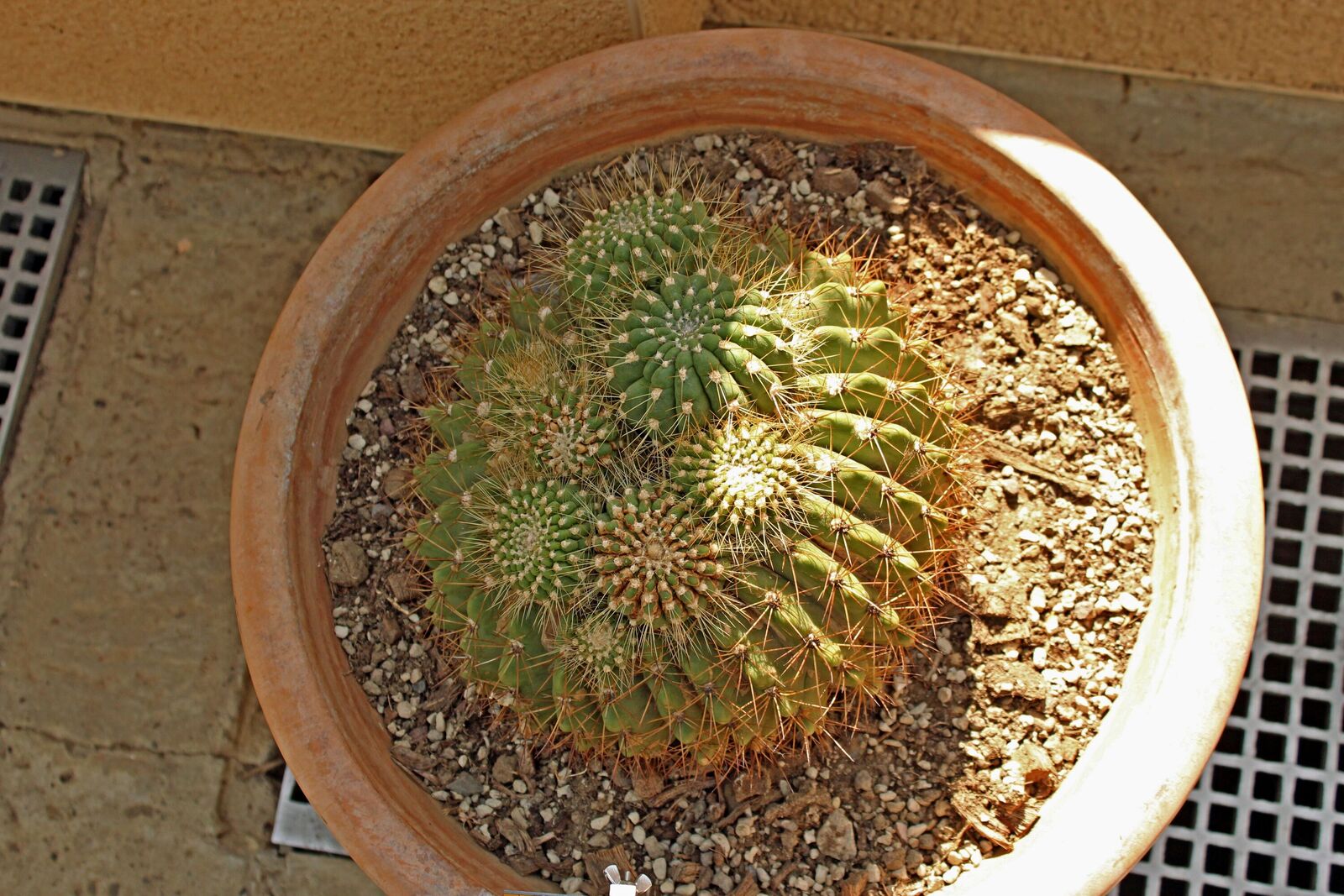 Reference image
Red Mountain Cactus
Echinopsis bruchii (syn. Lobivia bruchii or Soehrensia bruchii) is a cold-hardy, slow-growing, multi-ribbed succulent cactus in the family Cactaceae, famous for its magnificent and large red-orange flowers 1.
Named after the Argentine entomologist Carlos Bruch, this species has historically been moved between the genera Lobivia, Soehrensia, and Echinopsis. Modern molecular studies confirm its placement within the broadly defined Echinopsis genus 2.
Native to northwestern Argentina, including provinces such as Catamarca, Tucumán, Salta, and Jujuy. It grows at high altitudes of 2,000 to 3,000 meters above sea level along dry, rocky slopes in the Andes mountain range 12.
Initially globose, the stem becomes short-cylindrical with age, reaching up to 50 cm in diameter. It features up to 50 or more pronounced ribs densely covered in areoles with stiff, yellowish-brown spines. During late spring and summer, it produces spectacular, funnel-shaped, deep red or bright orange flowers near the apex 2.
This alpine cactus requires intense sunlight and exceptionally porous soil. Water moderately during the active growing season, and keep completely dry in winter. It can tolerate severe frosts (down to -10°C) if the soil is kept bone-dry.
Overwatering, poorly draining soil mixtures, and lack of direct sunlight are the primary causes of root rot and pale, stretched growth (etiolation).
Requires full sun to bright indirect light to maintain a compact shape.
Allow soil to dry out completely between waterings; keep dry in winter.
Highly porous mix consisting of pumice, perlite, and coarse sand.
Has sharp spines that can cause physical injury, but it is non-toxic.
Very easy to grow if overwatering is avoided and winter rest is provided.
Originates from the high-altitude rocky slopes of the Andes mountains in northwestern Argentina, where it survives cold and arid conditions.
