
Light
low_light
The live `low_light` operational enum is preserved exactly and is not presented as a newly researched light class; acclimate toward bright indirect light while observing stem elongation and colour change.
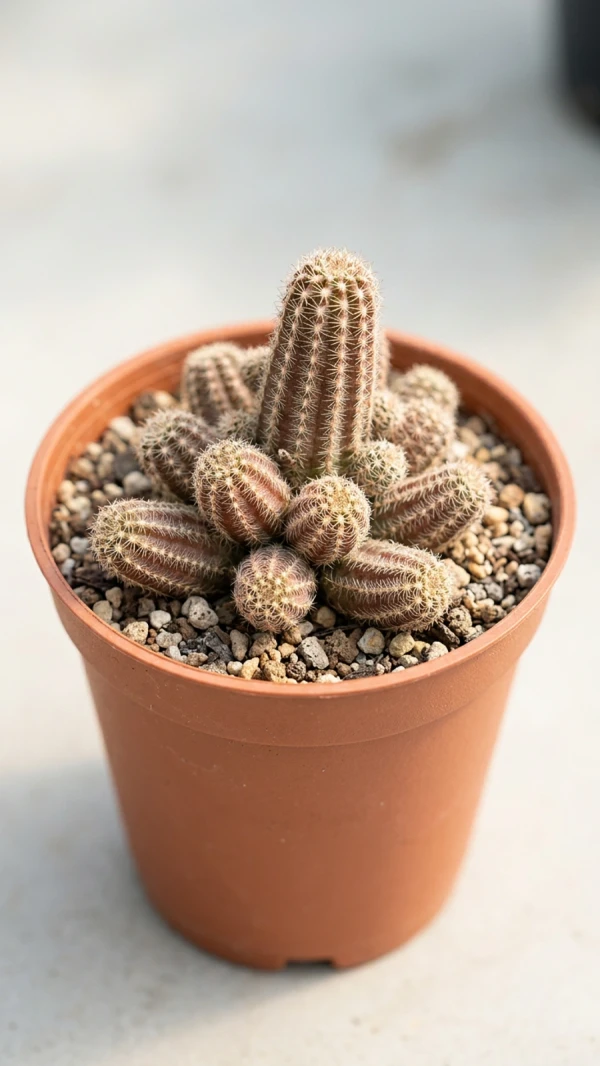
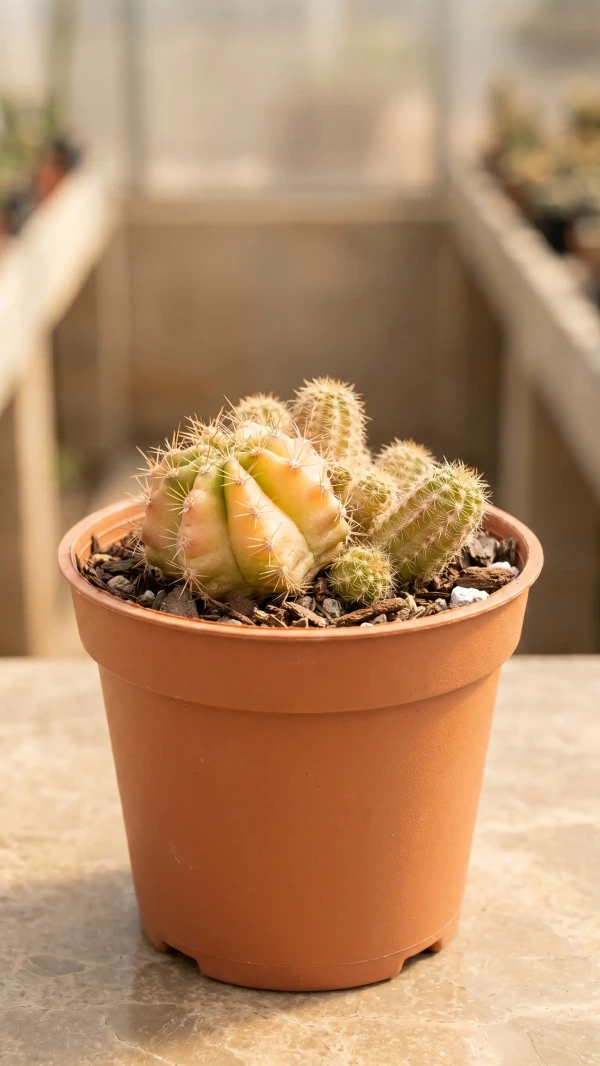
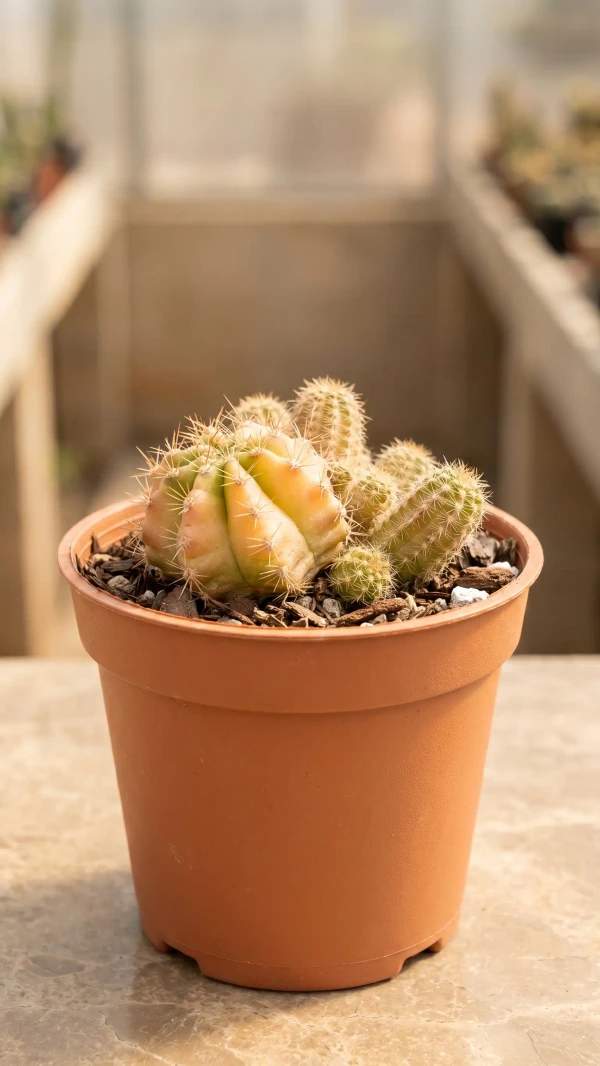
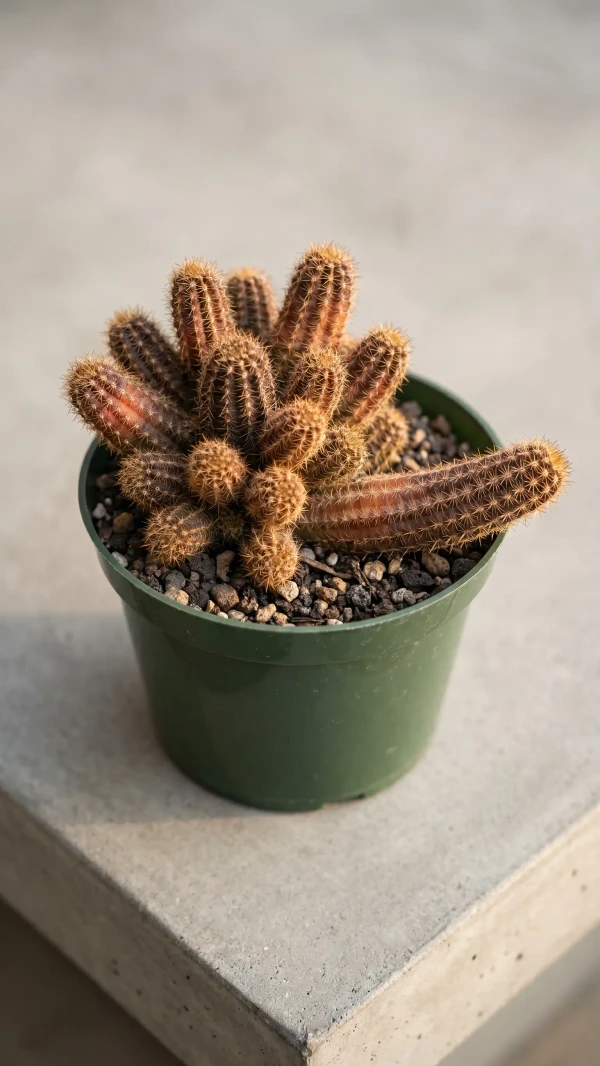
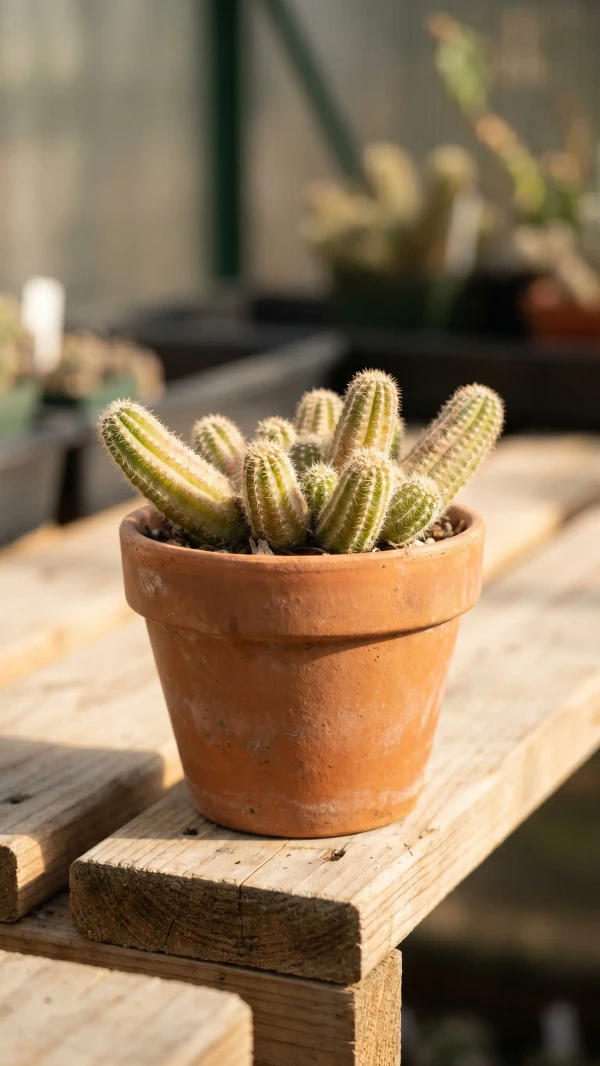
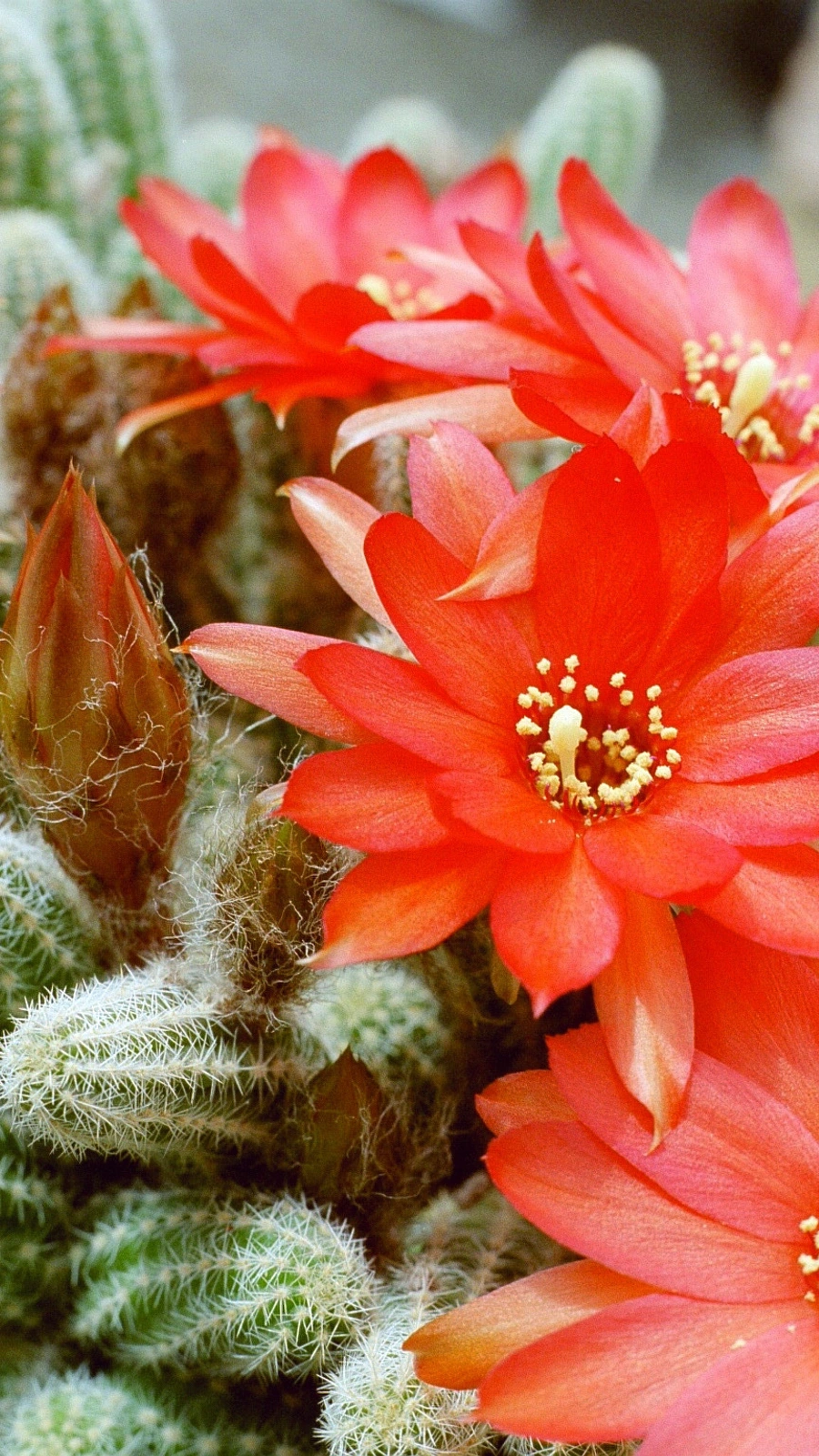 Reference image
Peanut Cactus
Echinopsis chamaecereus is an Echinopsis that can form clumps of elongating finger-like stems. Slender elongating finger-like stems that form clumps, rib and areole pattern, short spines, flowers and provenance should be evaluated together. Identification should not rely on a product label or one image; body form, ribs, areoles, spines, flowers and documented provenance should be evaluated together.1
Use a stable pot that supports the clumping slender stems and an airy, fast-draining mineral-forward mix. Do not use a fixed-day calendar; water in a controlled cycle after the mix and root zone have dried throughout, and extend the interval in cool or low-light periods. A dry-looking surface is insufficient; inspect the root zone as well. After repotting, allow injured roots time to dry and callus, and leave no standing water.
The live low_light operational enum is preserved exactly and is not presented as a newly researched light class; acclimate toward bright indirect light while observing stem elongation and colour change. Never test cold tolerance with wet roots; observe growth rate, wrinkling, colour changes and root health together. Grafting, low light or heavy feeding does not automatically change scientific identity.
Kew lists three homotypic historical combinations: Cereus silvestrii, Chamaecereus silvestrii and Lobivia silvestrii. The historical silvestrii combinations share the same nomenclatural type and are not separately accepted species routes.
The live safe operational enum is preserved; use basic precautions for spines, fragile elongating stems and unstable pots. The conservation record is DD.2 The official Kew/IUCN-linked target is DD, replacing the former live NE; Data Deficient does not mean absence of threat. Documented legal nursery provenance should be preferred, and wild collection should not be encouraged.
The live `low_light` operational enum is preserved exactly and is not presented as a newly researched light class; acclimate toward bright indirect light while observing stem elongation and colour change.
Do not use a fixed-day calendar; water in a controlled cycle after the mix and root zone have dried throughout, and extend the interval in cool or low-light periods.
Use a stable pot that supports the clumping slender stems and an airy, fast-draining mineral-forward mix.
The live `safe` operational enum is preserved; use basic precautions for spines, fragile elongating stems and unstable pots.
Live operational care class: moderate.
Northwest Tucumán, Argentina.[^1] [^1]: Plants of the World Online. “Echinopsis chamaecereus H.Friedrich & Glaetzle.” Royal Botanic Gardens, Kew. Accessed: 2026-08-06. https://powo.science.kew.org/taxon/urn%3Alsid%3Aipni.org%3Anames%3A907548-1 [^2]: Plants of the World Online. “Echinopsis chamaecereus — General Information.” Royal Botanic Gardens, Kew. Accessed: 2026-08-06. https://powo.science.kew.org/taxon/urn%3Alsid%3Aipni.org%3Anames%3A907548-1/general-information
