
Light
Bright Indirect Light
Thrives in bright, indirect sunlight or filtered sun. Protect from intense mid-day glass-magnified heat.
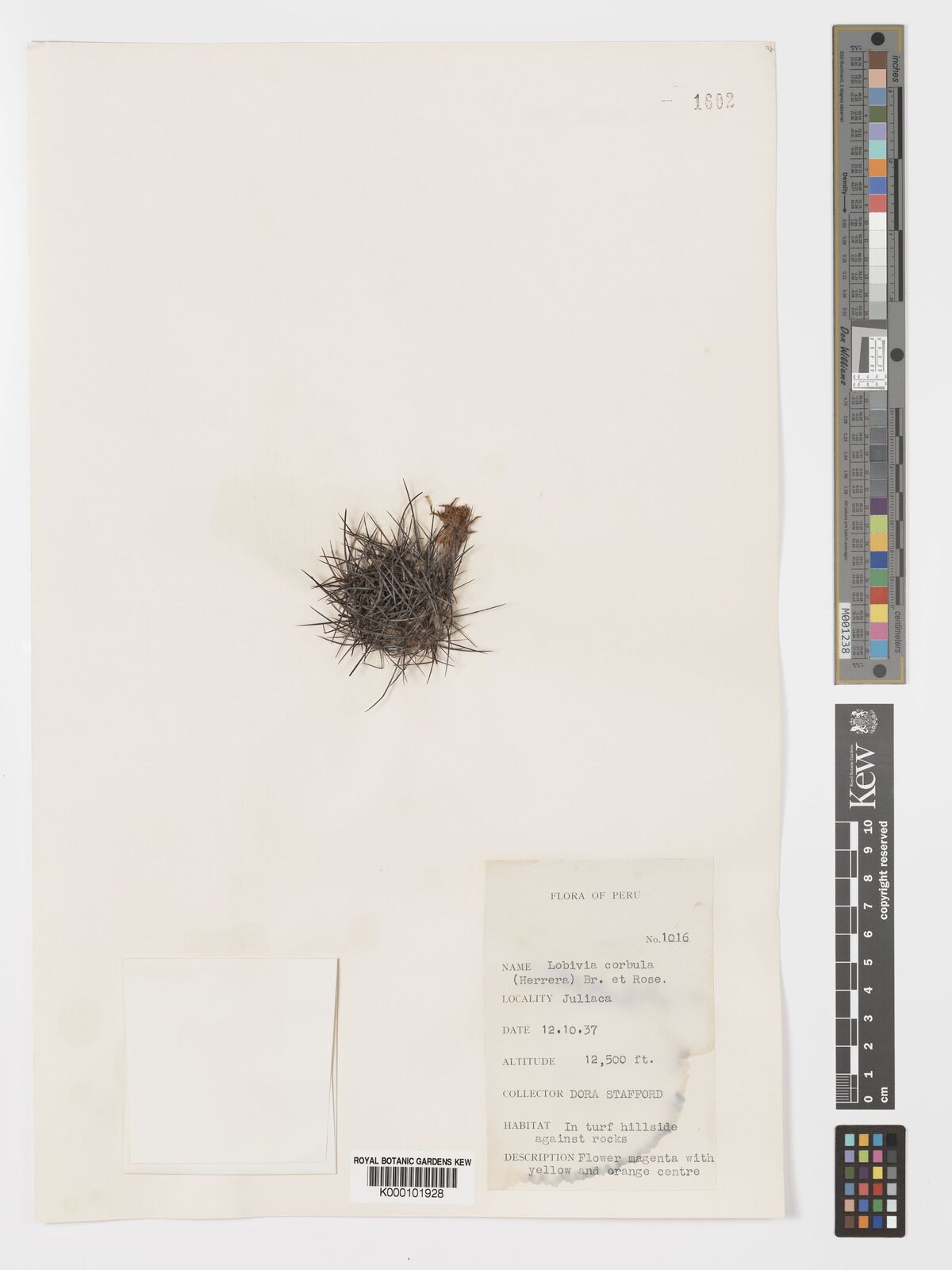 Reference image
Maximilian's Hedgehog Cactus
Echinopsis maximiliana is a highly resilient, globose to short-cylindrical cactus species in the family Cactaceae, well-adapted to high-altitude montane environments 1.
Originally described in the mid-19th century, the species was named in honor of Archduke Maximilian of Austria. Within cactus taxonomy, it is also frequently referenced under its synonym Lobivia maximiliana, reflecting its alpine characteristics 2.
This species is native to the high-altitude regions of the Andes in Peru and Bolivia, particularly around Lake Titicaca at elevations between 3,000 and 4,100 meters above sea level 1. It thrives in rocky grasslands subject to intense UV radiation and cold nights.
It typically forms clustering mounds. Individual stems are dark green, 5-20 cm high, and about 5 cm in diameter, featuring prominent ribs. The areoles carry curved, dense spines. Its most striking feature is the summer-blooming, funnel-shaped flowers that display brilliant shades of red, orange, or yellow.
In cultivation, it requires bright, filtered sunlight and highly porous, mineral-rich soil. Watering should be deep but infrequent, allowing the substrate to dry completely between applications. A cold, dry winter dormancy is crucial for healthy development.
Overwatering and poor soil drainage are the primary causes of root rot. Additionally, keeping the cactus in warm indoor spaces during winter prevents it from entering the necessary dormancy required for spring flowering.
Thrives in bright, indirect sunlight or filtered sun. Protect from intense mid-day glass-magnified heat.
Water thoroughly only when the potting mix is dry. Keep completely dry in winter.
Use a specialized, mineral-heavy cactus soil with plenty of pumice or grit for perfect drainage.
Non-toxic, but possesses sharp, curved spines; keep out of reach of curious pets and children.
Very low-maintenance, provided the winter dormancy period and drainage requirements are met.
Naturally distributed across the high Andes of Bolivia and Peru, often found growing in clefts of rocks and high-altitude grasslands near Lake Titicaca.
